
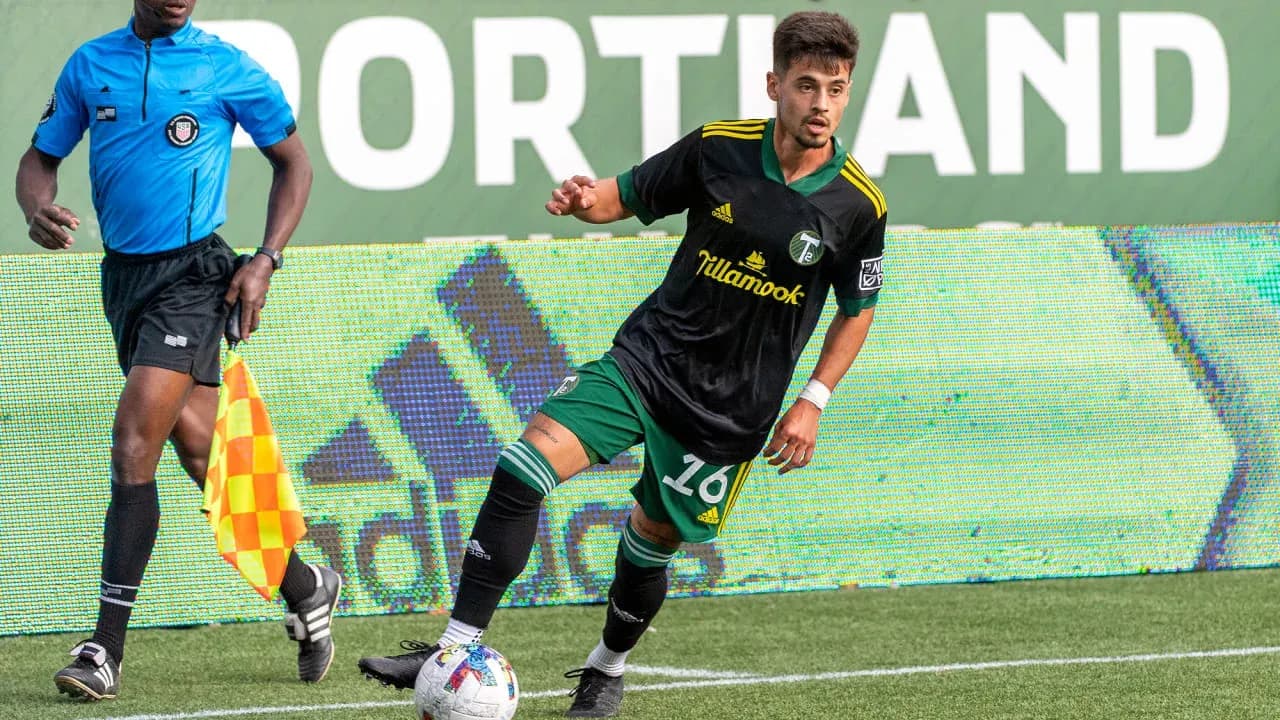
Portland Timbers II Edge Tacoma Defiance 1-0 in MLS Next Pro
Providence Park under the floodlights has a way of shrinking the league table into something more intimate, almost personal. Following this result, a narrow 1-0 win for Portland Timbers II over Tacoma Defiance in the MLS Next Pro Group Stage, the numbers and narratives around these two squads feel less like abstractions and more like the logical end of their seasonal DNA.
Portland came into this one as a curious paradox: top of the Pacific Division and 4th in the Eastern Conference group with 23 points, yet with a goal difference of 0 overall. Across 12 matches they had scored 15 and conceded 15, an almost perfectly balanced ledger that spoke of volatility rather than control. At home they had been sharp and fragile in equal measure, with 10 goals for and 10 against in 8 fixtures, averaging 1.4 goals for and 1.6 against at Providence Park. This is a side that lives on a knife edge.
Tacoma, by contrast, arrived as a team trying to outrun its own defensive shadow. In total this campaign they had played 13 matches, winning 5 and losing 8, with 13 goals scored and 19 conceded for a goal difference of -6. On their travels, the pattern hardened: 5 goals for and 12 against in 6 away games, conceding at an average of 2.0 goals per away outing. Their place at 6th in the Pacific Division and 11th in the Eastern Conference group underlined the story of a squad still searching for equilibrium.
The lineups told their own tale of where each club stands in its development arc. Jack Cassidy sent out a Portland XI built around youth, energy and fluid roles more than rigid structure. With no formation listed, the shape had to be inferred from profiles and tendencies: S. Joseph in goal, a defensive platform likely involving A. Bamford, N. Lund and C. Ondo, and then a flexible band of technicians and runners in H. Mueller, C. Griffith, E. Izoita, V. Enriquez and N. Santos. Up front, L. Fernandez-Kim and D. Cervantes offered mobility and pressing more than classic target-man play.
The presence of Colin Griffith was particularly intriguing. Listed as the league’s top-rated player across scoring, assisting and disciplinary metrics for Portland, yet with no goals or assists in his statistical line so far, he represents potential more than production. Cassidy’s choice to start him here suggests the staff view him as a fulcrum piece in the medium term, someone who can eventually convert his forward profile into tangible end product.
On the Tacoma side, the absence of a named coach in the data and the lack of a recorded formation added to the sense of a team still defining itself. The XI of M. Shour, D. Alvarez, A. Lopez, G. Sandnes, C. Gaffney, X. Gnaulati, M. O’Neill, C. Phoenix, E. Carli, S. Gomez and M. Bronnik felt like a blend of physicality and transitional threat. Given Tacoma’s away record, the tactical blueprint was almost certainly pragmatic: stay compact, break in moments, and hope that the structural weaknesses that have led to 12 away goals conceded could be contained for one night.
If there was a hidden subplot to this fixture, it lived in the disciplinary data. Portland’s yellow-card distribution this season is dominated by a surge between 61-75 minutes, where 30.00% of their cautions arrive, followed by 20.00% in the 76-90 range and a further 13.33% from 91-105. This is a team that becomes increasingly stretched and combative as matches wear on, a trait that can be read as intensity or instability depending on the result. Tacoma, meanwhile, show their own spikes: 26.32% of their yellows come in the 31-45 window, another 26.32% between 46-60, with 15.79% in both 76-90 and 91-105. Their ill-discipline tends to cluster around the transition from control to chaos – just before and after half-time.
Overlay those tendencies on the game state, and the late stages of this match were always likely to be fraught. Portland, already a high-variance home side with 4 wins and 4 losses in 8 at Providence Park, had to manage their emotions while protecting a one-goal lead. Tacoma, used to chasing on their travels, would have been tempted into the kind of aggressive pressing and dueling that so often tips them over the disciplinary edge. That neither side saw red is a quiet testament to game management from both benches, especially in a context where Portland’s yellow cards in the 61-90 stretch form the heartbeat of their risk profile.
In terms of tactical voids, the most striking absence was not an individual but a pattern: neither team has drawn a match all season. Portland’s record of 7 wins and 5 losses, with 0 draws in 12, and Tacoma’s 5 wins and 8 losses, also with 0 draws in 13, reveal squads that play on extremes. There is no settling, no slow death by stalemate. That reality shaped this fixture’s rhythm: both sides are conditioned to push for resolution, even at the cost of structural security.
The “Hunter vs Shield” narrative is more conceptual than individual here, with no detailed goal tallies for specific players. For Portland, the “Hunter” is the collective front line that has pushed their home average to 1.4 goals scored, while the “Shield” is a back unit that still concedes 1.6 per home game. Tacoma’s own “Shield” has been porous away from home, allowing 12 in 6, and that broader trend was borne out again as they failed to keep Portland off the board.
In the “Engine Room,” Colin Griffith’s role becomes symbolic. Even without recorded goals or assists, his status across multiple statistical leaderboards marks him as a key connective tissue in Cassidy’s setup. Opposite him, players like X. Gnaulati and M. O’Neill represent Tacoma’s attempt to stitch together transition phases into something more controlled. On this night, Portland’s middle third found just enough coherence to tilt the match.
From a statistical prognosis standpoint, this result feels aligned with the underlying numbers rather than an upset against them. Portland, who in total average 1.3 goals for and 1.5 against per match, once again lived in a narrow band of margins, but their home attacking profile and perfect penalty record this season (2 scored from 2, 100.00% conversion, 0 missed) speak to a team that can produce decisive moments in tight games. Tacoma’s away defensive average of 2.0 goals conceded suggested vulnerability; that they limited Portland to a single strike is an incremental improvement, but not enough to alter the broader narrative.
Following this result, the table will continue to show Portland as a high-ceiling, high-risk leader, and Tacoma as a dangerous but flawed chaser. The story of this match, and of both squads, is one of edges: disciplinary edges, tactical edges, and the thin edge between control and chaos that, on this night at Providence Park, tilted just enough in green and gold.
Related News

MLS Winners and Losers: Rising USMNT Star Cavan Sullivan, St. Louis City's Smart Moves, and Chicago Fire's Struggles Without Hugo Cuypers

MLS Highlights: Portland Timbers End Drought, Josh Sargent Shines, Cavan Sullivan Impresses
Tacoma Defiance vs Colorado Rapids II Stats: Head-to-Head Record

St. Louis City II vs Vancouver Whitecaps II: Head-to-Head Stats and Match Preview
Atlanta United II vs New York City II Stats: Head-to-Head Record
Houston Dynamo FC II vs Austin II Stats: Head-to-head Record