
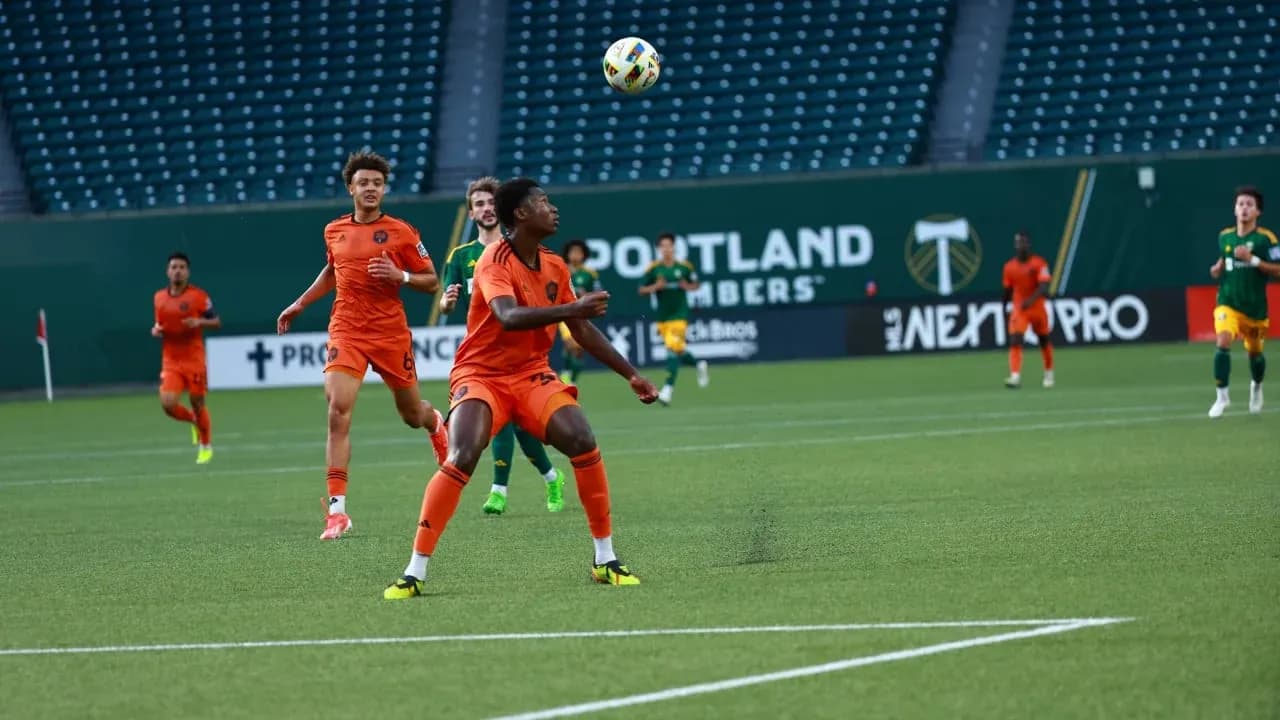
Portland Timbers II vs Houston Dynamo FC II: Key Clash in MLS Next Pro
Portland Timbers II host Houston Dynamo FC II at Providence Park in a high-stakes MLS Next Pro group-stage clash in 2026: the Pacific Division leaders Portland sit on 20 points, while Houston arrive as flawless Frontier Division leaders on 28 points. In the league phase, this is a benchmark game for Portland’s play-off ambitions and seeding, and a potential early statement in the wider title race for a Houston side with a perfect record.
Head-to-Head Tactical Summary
Across recent MLS Next Pro meetings, Houston Dynamo FC II have generally held the upper hand, especially at SaberCats Stadium. On 15 March 2026 at SaberCats Stadium, Houston beat Portland 5-0, leading 3-0 at half-time before closing out a dominant home win. On 22 September 2025, again at SaberCats Stadium, Houston won 3-1, having gone in 1-0 up at half-time.
At Providence Park, the pattern is more mixed. On 1 June 2024, Portland Timbers II drew 1-1 with Houston over 120 minutes (1-1 at half-time and full-time) before Portland edged the penalty shootout 4-3. Earlier, on 11 September 2023 at Providence Park, Houston won 3-1 after taking a 2-0 half-time lead. In their 16 June 2023 meeting at SaberCats Stadium, Portland claimed a 2-1 away victory, turning a 1-1 half-time score into three points. Overall, Houston have been more explosive in Texas, while Portland’s best results have come when they can slow the game and stretch it, as seen in the 2024 extra-time and penalties win at Providence Park.
Global Season Picture
- League Phase Performance: In the league phase, Portland Timbers II top the Pacific Division with 20 points from 10 matches (6 wins, 0 draws, 4 losses), scoring 14 goals and conceding 12. Their home record is volatile but dangerous (3 wins, 3 losses, 9 goals for, 7 against). Houston Dynamo FC II lead the Frontier Division with a perfect 28 points from 10 matches (10 wins, 0 draws, 0 losses), with 25 goals scored and only 5 conceded; they are flawless both at home (4 wins, 13 goals for, 0 against) and away (6 wins, 12 goals for, 5 against).
- Season Metrics: Scope detection shows team_statistics games played match the league phase (10 vs 10), so these metrics are in the league phase. Portland’s profile is high-variance: they have scored 15 and conceded 15 in 10 matches (1.5 goals for and 1.5 against per game), with only 4 clean sheets and 2 matches without scoring. Their disciplinary load is concentrated late, with 8 yellow cards between minutes 61-75 and 6 between 76-90, indicating rising defensive stress as games progress. Houston’s metrics are those of a dominant, balanced side: 27 goals scored and 5 conceded in 10 matches (2.7 scored, 0.5 conceded per game), 5 clean sheets, and zero matches without scoring. Their yellow cards are spread across all phases, but with peaks from 61-75 and 76-90, reflecting aggressive game management when ahead.
- Form Trajectory: Portland’s form string in the league phase, “WWLWL”, underlines inconsistency: they alternate wins and losses, suggesting a side that can hit a high ceiling but struggles for control over longer stretches. Houston’s “WWWWW” is a pure upward curve: five consecutive wins on top of an already perfect 10-game record, pointing to sustained momentum and a stable game model that travels well.
Tactical Efficiency
With no explicit Attack/Defense Index values provided in the comparison block, we infer efficiency through league-phase statistics and win patterns. Houston’s attacking efficiency is elite (27 goals in 10, 2.7 per game) combined with a very tight defense (5 conceded, 0.5 per game), and they have never failed to score. Their biggest wins (5-0 at home, 4-1 away) and 10-game winning streak show a side that consistently converts territorial and chance superiority into goals while limiting high-quality chances against.
Portland’s efficiency is far more volatile: 15 goals scored and 15 conceded in 10 matches, with their biggest loss a 5-0 away defeat and their biggest wins capped at a 3-goal margin. The equal goals-for and goals-against tally (1.5 per game both ways) points to an open, risk-tolerant approach that can produce both high-scoring wins and heavy defeats. Their four clean sheets show they can be structurally solid when the game script suits them, but the frequency and timing of yellow cards suggest that under sustained pressure, they are forced into reactive defending.
Against a Houston side that pairs high attacking output with defensive control, Portland’s margin for error is thin: they must improve defensive efficiency—reducing late-game fouls and transitions—while maintaining enough attacking threat to disrupt Houston’s rhythm, especially at Providence Park where they have previously extended matches into extra time and penalties.
The Verdict: Seasonal Impact
From a seasonal perspective, this match is a measuring stick and potential inflection point. For Portland Timbers II, a home win against an unbeaten Houston would validate their status as Pacific Division leaders and strengthen their position in the Eastern Conference play-off picture, reinforcing their “Promotion - MLS Next Pro (Play Offs: 1/8-finals)” trajectory. It would also signal that their high-variance profile can be refined into a more sustainable, top-end contender capable of competing with the league’s most efficient side.
For Houston Dynamo FC II, maintaining their perfect league-phase record would consolidate their role as early title favourites. Extending the winning run away at a strong division leader would confirm that their current metrics—2.7 goals scored and 0.5 conceded per game in the league phase—are not inflated by schedule, but representative of a team built for deep play-off progression. Dropped points would not immediately threaten their divisional lead, but could open the door psychologically for challengers and invite scrutiny on how their model copes when forced out of front-foot control, especially in hostile venues like Providence Park.
In forward-looking terms, the result will either compress the competitive landscape—if Portland win and show that Houston can be disrupted—or further separate Houston as the benchmark for the 2026 MLS Next Pro title race. For both clubs, it is less about qualification, which they are on track to secure, and more about seeding, confidence, and proof of concept ahead of the 1/8 final and beyond.
Related News

MLS Winners and Losers: Rising USMNT Star Cavan Sullivan, St. Louis City's Smart Moves, and Chicago Fire's Struggles Without Hugo Cuypers

MLS Highlights: Portland Timbers End Drought, Josh Sargent Shines, Cavan Sullivan Impresses
Tacoma Defiance vs Colorado Rapids II Stats: Head-to-Head Record

St. Louis City II vs Vancouver Whitecaps II: Head-to-Head Stats and Match Preview

Atlanta United II vs New York City II Stats: Head-to-Head Record
Houston Dynamo FC II vs Austin II Stats: Head-to-head Record