
Portland Thorns and Chicago Red Stars Draw in NWSL Showdown
Under the lights at Providence Park, a Group Stage night in the NWSL Women ended with a 1–1 draw that said as much about Portland Thorns W’s evolving identity as it did about Chicago Red Stars W’s stubborn survival instinct. Following this result, Portland remain the playoff-chasing heavyweight — 6th in the table with 39 points and a goal difference of 5 (38 scored, 33 conceded in total) — while Chicago stay marooned at the bottom in 16th, their total goal difference a stark -40 (14 for, 54 against).
I. The Big Picture – Structure, Stakes, and Styles
Robert Vilahamn (Karlsson) sent Portland out in their familiar 4-2-3-1, a shape that has underpinned a strong home body of work: at home this season they have played 12 league games, winning 7, drawing 4, and losing just 1, with 21 goals scored and only 8 conceded. That home average of 1.8 goals for and 0.7 against is the statistical skeleton of a side built to dominate in front of their own supporters.
Chicago, by contrast, arrived in Portland with the scars of a brutal campaign. On their travels, they have played 13 league matches, winning 1, drawing 1, and losing 11, scoring just 4 and conceding 32. An away average of 0.3 goals for and 2.5 against paints the picture of a team that usually buckles under pressure. Yet in this one, their 4-3-3 was less about expansive football and more about survival, compressing space and gambling on rare transitions.
Portland’s total season numbers underline the contrast. Overall they have played 24, winning 11, drawing 6, losing 7, with 38 goals for and 33 against — a balanced, playoff-calibre profile. Chicago’s total record over the same 24 games is 5 wins, 2 draws, and 17 defeats, with just 14 goals scored and 54 conceded. Everything about the data suggested this should have been a home banker; the 1–1 scoreline instead becomes a story of missed opportunity and Chicago’s resilience.
II. Tactical Voids – Discipline, Edge, and What Was Missing
With no official list of absentees provided, the voids here are less about missing names and more about missing control. Portland’s season-long disciplinary pattern is revealing: their yellow cards cluster late, with 21.43% coming between 61–75 minutes and another 21.43% between 76–90. This is a team that often gets stretched and emotional as the game wears on, precisely the phase when a side like Chicago, chasing scraps, can profit from chaos.
Red cards tell an even sharper story. Portland have shared dismissals across phases: 33.33% of their reds have arrived in 0–15, 33.33% in 46–60, and 33.33% in 61–75. J. Perry, who has accumulated 5 yellows and 1 red this season, embodies that edge. Even though she did not feature in this specific lineup, her profile hangs over the squad: a defender who can pass (508 total passes at 82% accuracy) and block (5 blocked shots), but whose aggression is a constant risk.
Reyna Reyes, starting here at right-back, carries her own disciplinary narrative with 1 red card this season despite no yellows. Her 23 tackles, 7 blocked shots, and 13 interceptions in the campaign show a defender who steps in decisively. That front-foot approach is a strength in Portland’s high line but can become a void if mistimed against quick wingers.
Chicago’s card map is different. Their yellows spike in the 31–45 (31.82%) and 46–60 (27.27%) windows — the middle third of games when intensity rises. They have no reds recorded this season, a sign of a team that bends but rarely snaps, even under siege. In a hostile venue like Providence Park, that restraint was a quiet tactical asset.
III. Key Matchups – Hunter vs Shield, and the Engine Room
The headline duel was always going to be Sophia Smith against Chicago’s beleaguered back line. Smith, starting as the lone forward, arrived as one of the league’s most complete attackers: 10 total goals and 1 assist, with 69 shots (39 on target), 31 key passes, and 63 dribble attempts with 30 successful. Her average rating of 7.18 across 24 appearances speaks to a player who can create her own chances and finish others’ work.
Against a Chicago defence that has allowed 32 away goals in 13 matches, Smith was the “hunter” facing a shield full of cracks. Maitane López and S. Staab at the heart of the 4-3-3 back line were tasked with crowding the box and denying her the half-spaces she thrives in. The fact that Portland scored only once despite their structural superiority hints at how disciplined Chicago’s central pairing and goalkeeper A. Naeher had to be.
Just behind Smith, P. Tordin was the creative hinge in the line of three. With 6 goals and 7 assists this season, plus 39 key passes and 412 total passes at 71% accuracy, Tordin is both playmaker and secondary scorer. Her duel with Chicago’s midfield trio — especially B. Pinto and B. Franklin — shaped the tempo. If Chicago could suffocate Tordin between the lines, they could blunt Portland’s most intricate patterns; when she found pockets, Portland’s attack looked like the playoff side their numbers suggest.
In the engine room, N. Nijstad and J. Fleming formed the double pivot, tasked with both recycling possession and shielding a back four that has been excellent at home but vulnerable on their travels. Across the season, Portland’s total average of 1.4 goals conceded contrasts sharply with Chicago’s 2.3, making this midfield zone the natural platform for Portland’s superiority.
For Chicago, the front three of J. Grosso, M. Alozie, and J. Bike offered vertical threat. With only 4 away goals in total this season, every run in behind was precious rather than routine. Their role was less about sustained pressure and more about exploiting any over-commitment from full-backs like Reyes and M. Vignola.
IV. Statistical Prognosis – What This Draw Tells Us
Following this result, the underlying trends remain clear. Portland still look like a side whose home numbers — 7 wins, 4 draws, 1 loss, 21 scored, 8 conceded — are worthy of the playoff description attached to their 6th place. Their total goal difference of 5 confirms a team that generally wins the margins.
Chicago, with a total goal difference of -40 and a travel record of 1 win, 1 draw, and 11 defeats, will treat this point as a small victory. Their season-long failure to score in 9 away matches out of 13 highlights how rare an away goal is for them.
In xG terms — even without explicit values — the profiles are obvious: Portland, with a total scoring average of 1.6 and conceding 1.4, are built to generate and allow chances in roughly equal measure, trusting superior talent in the final third. Chicago’s total averages of 0.6 for and 2.3 against suggest they typically lose the shot-quality battle heavily.
So the 1–1 at Providence Park reads as an underperformance for the hosts and an overperformance for the visitors. Tactically, it underlines two truths: Portland’s attacking core of Smith and Tordin remains one of the league’s most dangerous, but their inability to turn territorial dominance into a decisive margin leaves the door ajar. Chicago, for all their structural frailty, have shown that with disciplined lines and a compact 4-3-3, they can drag even the league’s playoff contenders into a knife-edge contest.
Related News

San Diego Wave W vs Kansas City W Predicted Lineups: Team News for NWSL Women
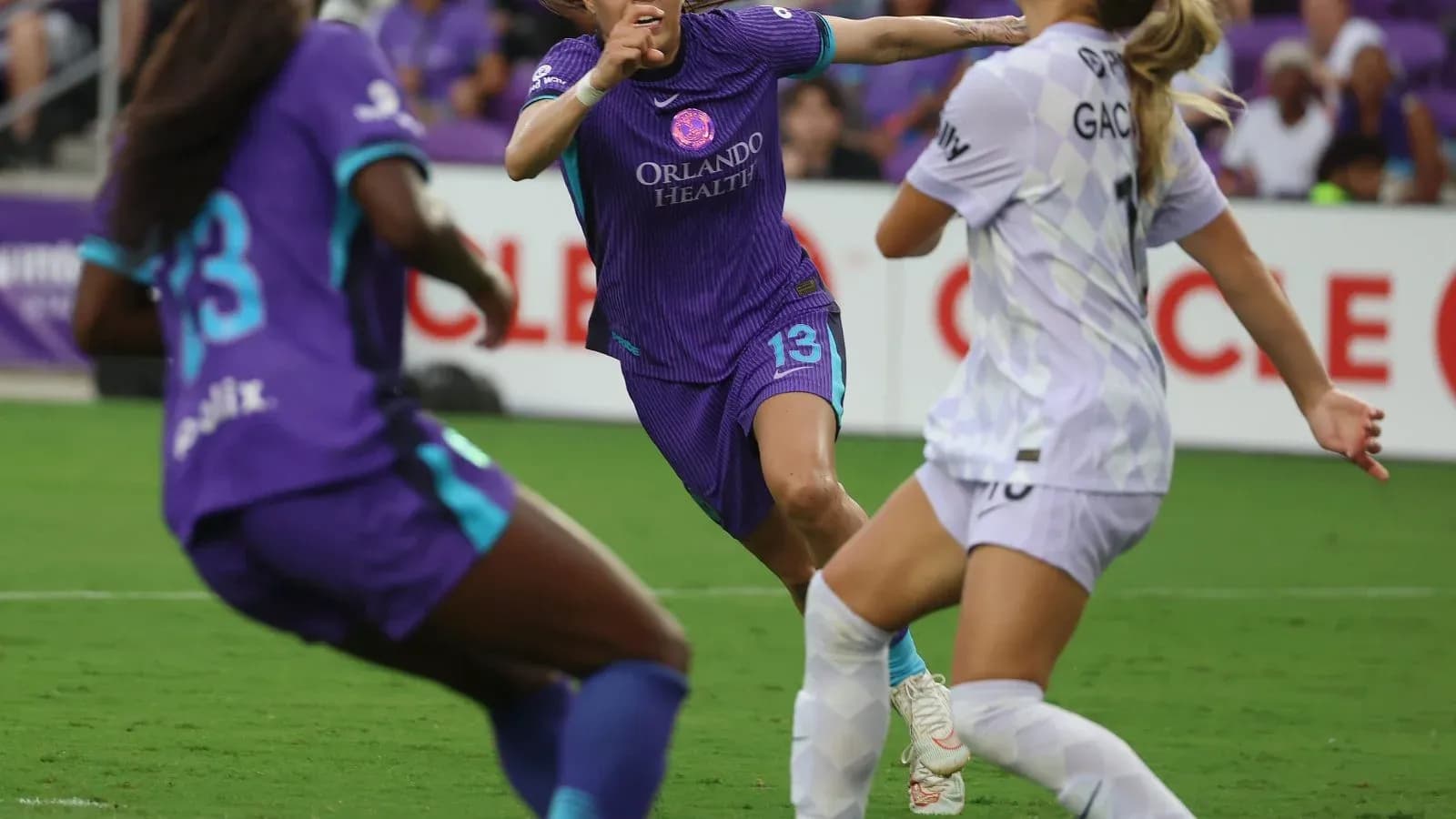
Orlando Pride W vs Portland Thorns W Prediction: Key Stats and Betting Tips

San Diego Wave W vs Kansas City W: Key NWSL Clash Preview

San Diego Wave W vs Kansas City W Prediction: Key Stats and Betting Tips

Portland Thorns and Chicago Red Stars Draw in NWSL Showdown

Chicago Red Stars W vs Washington Spirit W Stats and Head-to-Head Record