
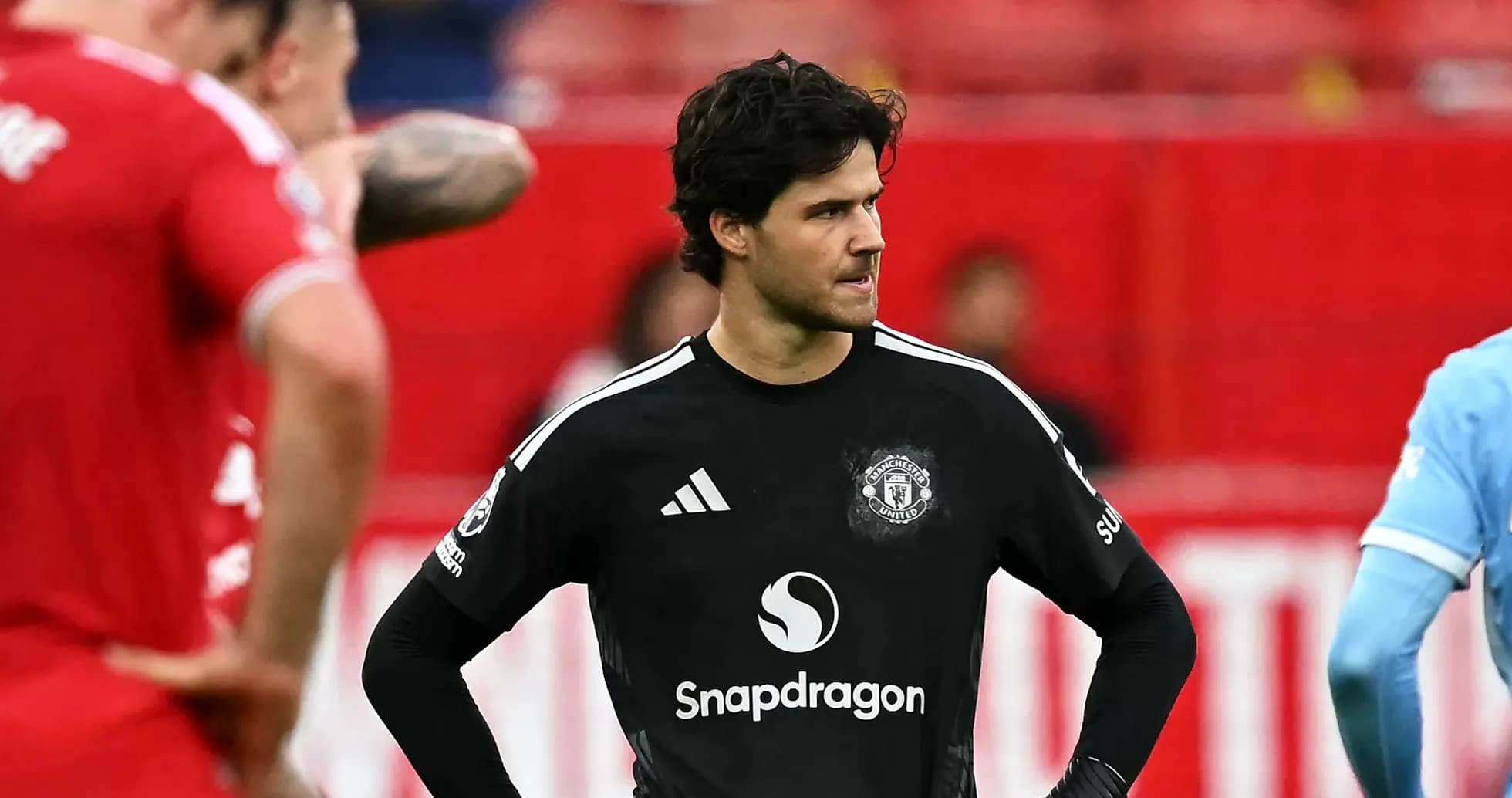
Paul Scholes Questions Lammens' Status as Top Class Goalkeeper
Paul Scholes has never been one to sugarcoat a verdict, and this time his gaze has fallen squarely on Manchester United’s new man between the posts.
Owen Lammens, the 24-year-old Belgian signed from Royal Antwerp for £21.7 million last summer, has already pushed Altay Bayindir aside to claim the No.1 shirt at Old Trafford. He has the gloves, the stage, and the responsibility. What he doesn’t yet have, in Scholes’ eyes, is the status United need.
On The Good, The Bad and The Football podcast, the former United midfielder cut straight to the heart of the issue. “What team have you seen win the Premier League without a top class goalkeeper?” he asked. It wasn’t rhetorical. It was a challenge.
“Lammens might be that, I don't know, I think the jury's probably still out on that and then you build from the back four,” Scholes added, drawing a clear line between ambition and reality. For him, any title-winning project starts with an elite presence in goal. No exceptions.
Building from the back – or starting from scratch?
These comments land at a delicate moment for United. Michael Carrick is trying to drag the club into a new era, one defined by structure rather than chaos, by control rather than constant fire-fighting. Scholes, who knows better than most what a functioning United side looks like, pointed to recent models elsewhere.
He referenced Arsenal’s transformation under Mikel Arteta, a rebuild that began with tightening the back line and securing trust in goal. “It's the way Arsenal started three or four years ago, defensively they have been absolutely brilliant. You need a top class goalkeeper,” Scholes said, holding up Aaron Raya as the latest example of that principle.
Then came the roll call of standards: Alisson at Liverpool. Raya at Arsenal. Peter Schmeichel and Edwin van der Sar at Manchester United. “They've all got brilliant, brilliant goalkeepers. You start from the back, of course you do. Whether Michael's just got to be patient and wait for that, I don't know.”
In that single line, Scholes left the door open to two futures: Lammens grows into that role, or Carrick is eventually forced to look elsewhere.
Lammens’ ambition vs United’s expectations
Lammens himself has never shied away from the size of the task. He wants permanence, not a passing role. He wants to be more than a name on a teamsheet; he wants to be part of the club’s history.
Last year, reflecting on the intensity of English football and the scrutiny that comes with the United shirt, he laid out his mindset.
“That's England for you. If things go badly, they can bury you deep, but if things go well, they praise you to the skies,” he said, fully aware of the swings in narrative that can define a career.
“I take that with a grain of salt, because to be mentioned in the same sentence as Schmeichel, I'm going to have to prove myself many more times. But I did find it a very nice compliment. I hope to play here for 10 years and be important, so that, like Schmeichel and Van der Sar, I can leave a legacy.”
The ambition is there. The self-awareness too. What’s missing, and what Scholes is pressing on, is the body of work that turns intention into inevitability.
Derby defeat, spotlight on the gloves
The timing of Scholes’ intervention is no accident. It comes in the wake of a bruising Manchester derby, a match in which Lammens could not keep out Erling Haaland and United again came up short on the biggest domestic stage.
The loss was not on the goalkeeper alone. United’s problems ran through the team: structure, decision-making, duels lost all over the pitch. Yet Scholes’ decision to home in on the goalkeeping position tells its own story. In those tight, high-pressure games, he believes a truly elite keeper can tilt the balance.
That’s the level Lammens is being measured against now. Not just “good”. Not just “promising”. Schmeichel. Van der Sar. Alisson. Raya. The names Scholes listed are not merely benchmarks; they are the foundations on which titles were built.
The verdict that won’t go away
As the season wears on, Scholes’ phrase – “the jury's probably still out” – will hang over every Lammens performance. Every fingertip save will be framed as proof of progress. Every misjudged cross or spilled shot will be evidence for the prosecution.
This is the reality of goalkeeping at Manchester United. There is no hiding place, no gentle bedding-in period. At 24, Lammens is trying to establish himself in the most unforgiving league in the world, at a club where the ghosts of Schmeichel and Van der Sar still loom large over the Stretford End.
He wants a decade at Old Trafford. He wants a legacy. The question now is brutal and simple: can he convince people like Paul Scholes that United already have the “top class goalkeeper” they need, or will he become just another name on a long list of keepers who tried to follow giants and fell short?
Related News

Manchester United Faces Drama in Carabao Cup Tie Against Brighton
Trabzonspor in Talks with Thomas Reis to Replace Fatih Tekke
Pablo Felipe Scores First Goal for West Ham in Cup Tie

Max Dowman Shines in EFL Cup, JJ Gabriel Seeks Exit from Manchester United
Hibernian Sack Coach David Gray Amidst Poor Performance
David Gray's Hibernian Tenure Ends After Six Games