
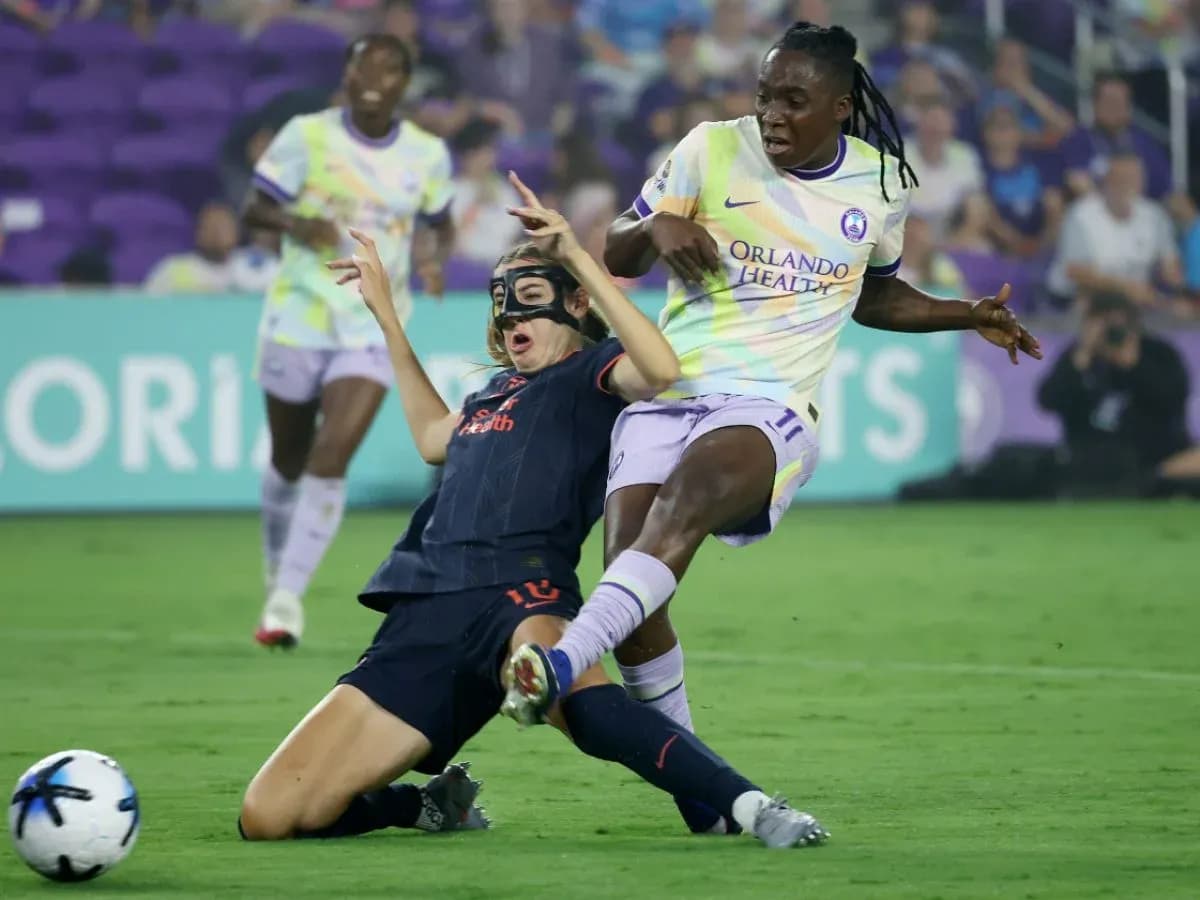
Orlando Pride W Dominates Bay FC W: A Tactical Breakdown
Under the Orlando lights at Inter&Co Stadium, this felt less like a routine group-stage date and more like a statement of intent. Orlando Pride W, already shaping a playoff push in the NWSL Women, bent the evening to their will, turning a 1-1 half-time balance into a commanding 3-1 full-time verdict over Bay FC W. Following this result, the numbers behind both squads’ seasons suddenly look different in tone, if not yet on paper.
I. The Big Picture – Identity crystallising in purple
Orlando arrived as a quietly dangerous mid-table side: 7th in the standings with 17 points from 12 matches, a slim overall goal difference of +1 (18 scored, 17 conceded), and a profile built on efficiency rather than chaos. At home they had been solid rather than spectacular, with 10 goals for and 9 against across 6 league fixtures, averaging 1.7 goals for and 1.5 against at Inter&Co Stadium. The 4-2-3-1 is not just their preferred shape; it is their structural backbone, used in all 12 league outings.
Bay FC came in as something more fragile: 13th in the table on 11 points from 11 matches, their overall goal difference a stark -8 (9 scored, 17 conceded). On their travels, though, there had been hints of steel – 2 away wins from 5, with 5 goals for and 9 against, an away scoring average of 1.0 and conceding 1.8. The same 4-2-3-1 that Orlando have mastered has been Bay’s default (10 of 11 games), but for them it has often felt like a sketch rather than a finished blueprint.
In Orlando, those contrasting identities sharpened. Pride’s season-long scoring rate of 1.5 goals per game overall was exceeded; their defensive average of 1.4 conceded was bettered. Bay, whose overall attack has been stuck at 0.8 goals per match, once again found themselves short of firepower.
II. Tactical Voids and Discipline – Edges and fault lines
Neither side carried officially listed absentees into this game, but the lineups hinted at internal recalibration. Orlando’s back four of Oihane Hernández, Coriana Dyke, Hailie Mace and Rafaelle Souza gave Seb Hines a blend of aggression and composure. Mace, already one of the league’s more card-prone defenders (2 yellows this season), is emblematic of Pride’s edge: they are not reckless, but they are willing to live on the disciplinary line, especially in the 61-75 minute window where 28.57% of their yellow cards arrive.
Bay’s defensive story is more precarious. The season data shows a team that unravels under sustained pressure: 17 goals conceded overall at an average of 1.5 per game, with yellow cards piling up late – 23.81% of their bookings arrive in the 76-90 minute period, and another 19.05% between 91-105. The red-card record is stark: dismissals spread across early (0-15), mid (61-75) and stoppage-time (91-105) phases. It speaks of a side that, when stretched, can snap.
In Orlando, that fragility met a Pride team whose own disciplinary spikes are more controlled and whose season-long red-card profile is concentrated in a single 61-75 minute flashpoint. The match did not descend into chaos, but the underlying risk lines were clear: Bay are always one mistimed challenge away from tilting a game beyond repair.
III. Key Matchups – Hunter vs Shield, and the engine room war
The headline duel was never in doubt: Barbra Banda versus a Bay defence that has struggled to protect its goal all season.
Banda, the league’s top scorer with 8 goals in 12 appearances, is the purest expression of Orlando’s attacking DNA. She arrived in this fixture averaging 0.67 goals per game, backed by 41 shots (23 on target) and 12 key passes. She draws fouls (25 this season), commits her share (16), and lives in the spaces where games are decided. Crucially, she has already won a penalty this campaign, even if she has yet to convert one herself.
Set against her was a Bay unit that, on their travels, concedes 1.8 goals per match and has allowed 3-goal away defeats to define their ceiling. Without Aldana Cometti in this particular lineup, the back line leaned heavily on Sydney Collins and Brooklyn Jean Courtnall for physical resistance. But structurally, Bay’s issue has been more systemic than individual: their block often sits too deep, inviting pressure onto a back four that has not consistently shown it can absorb it.
The engine-room battle added another layer. For Bay, Claire Hutton is the heartbeat and the shield. She leads their card charts with 4 yellows, but that aggression underpins impressive numbers: 418 passes at 77% accuracy, 11 key passes, 29 tackles, 2 blocked shots and 23 interceptions. She is both metronome and firefighter, asked to connect play and extinguish danger.
Across from her, Orlando’s double pivot of Ally Lemos and Haley Hanson, with Luana Bertolucci stepping higher, gave Pride a three-woman carousel of passing lanes and pressing triggers. Their job was to keep Hutton turning, to deny her the time to dictate, and to ensure that when Bay broke lines through Taylor Huff or Racheal Kundananji, the central lanes were already crowded.
In the final third, the story was binary: Orlando had Banda as a ruthless focal point, with Kerry Abello and Nicole Payne offering secondary threats between the lines. Bay’s structure placed Cristiana Girelli at the tip and Kundananji as a nominal midfielder driving from deep, but the season data – just 9 goals overall, with 5 on their travels – suggested they lacked the volume of high-quality chances to keep pace if this became a shootout.
IV. Statistical Prognosis – xG tilt and defensive gravity
Even without explicit xG numbers, the season trends point in one direction. Orlando’s overall scoring average of 1.5 per game, combined with Bay’s 1.5 conceded overall and 1.8 conceded away, sketches a likely expectation of Orlando generating the higher xG and the clearer chances. Pride’s defensive record – 1.4 conceded overall, with 1.5 at home – is not elite, but it is stable enough against an attack averaging just 0.8 goals per match.
Clean-sheet patterns reinforce the narrative. Orlando have 4 clean sheets overall (1 at home, 3 away), while Bay have managed only 2 in total. More telling is Bay’s attacking inconsistency: they have failed to score in 5 of their 11 league games, including 2 away. When their defensive line is already stretched and their disciplinary record trends towards late-game bookings and reds, the margin for error shrinks.
Following this result, the tactical verdict is clear. Orlando’s 4-2-3-1 is a finished article built around Banda’s ruthless movement and a back four anchored by Mace and Rafaelle. Bay’s mirror shape remains a work in progress, dependent on Hutton’s engine and Huff’s creativity, but undermined by a leaky defensive core and a blunt attack.
In a knockout context, this 3-1 scoreline would read like an xG story fulfilled: the side with the sharper spear and the sturdier shield imposed its structure, and the team still searching for its identity found that, against a top-end striker like Banda, searching is not enough.
Related News
Orlando Pride W vs Portland Thorns W: Playoff Showdown
San Diego Wave W vs Kansas City W Predicted Lineups: Team News for NWSL Women
Orlando Pride W vs Portland Thorns W Prediction: Key Stats and Betting Tips
San Diego Wave W vs Kansas City W: Key NWSL Clash Preview
San Diego Wave W vs Kansas City W Prediction: Key Stats and Betting Tips
Portland Thorns and Chicago Red Stars Draw in NWSL Showdown