
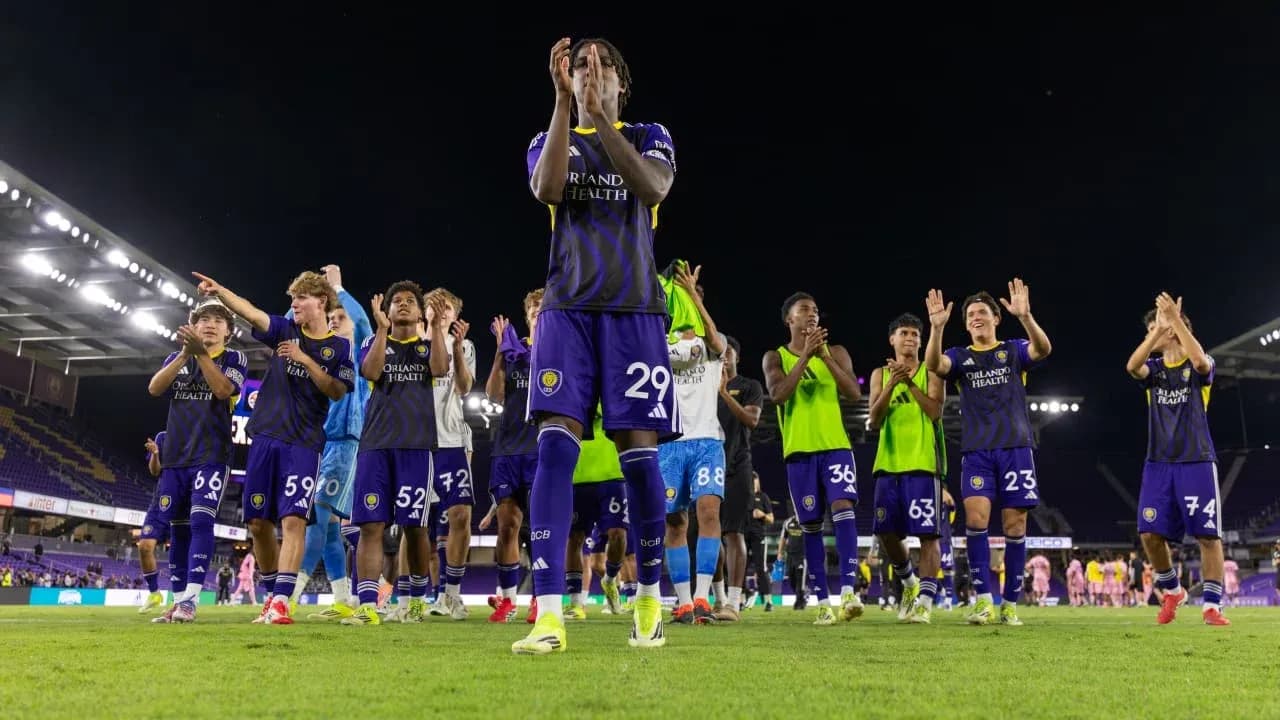
Orlando City II Dominates Inter Miami II 4–1 in MLS Next Pro
Under the Osceola County Stadium lights, Orlando City II’s 4–1 dismantling of Inter Miami II felt less like a routine group-stage win and more like a live demonstration of where these two projects currently stand in MLS Next Pro’s hierarchy.
Following this result, the standings snapshot is stark. Orlando City II sit 4th in the Central Division and 7th in the Eastern Conference with 19 points from 11 matches, built on 7 wins and 4 losses. Their overall goal difference of 2 is the product of 23 goals scored and 21 conceded in league play, but their broader seasonal statistics tell an even more assertive story: in total this campaign they have struck 26 times and allowed 22, leaning into a high-event, front-foot identity. At home, Orlando average 2.8 goals for and 2.3 against; on their travels those numbers sit at 1.8 for and 1.6 against, underlining a side that embraces chaos but increasingly bends it to their will.
Inter Miami II, by contrast, are mired at the bottom. They are 8th in the Central Division and 16th in the Eastern Conference, with just 4 points from 11 matches. Overall they have scored 12 and conceded 32 in league play for a goal difference of -20, a figure that aligns closely with their season-long statistical profile: 13 goals for and 34 against in total, with defensive leaks everywhere you look. At home they concede 3.0 goals on average, away that climbs to 3.2, while their attack musters only 1.0 at home and 1.3 away. The 4–1 scoreline in Orlando fits neatly into that pattern of defensive fragility.
Tactical Overview
Tactically, Orlando’s dominance starts from the spine of their XI. The back line of Z. Taifi, N. Miller, C. Archange and T. Reid-Brown is not built around clean sheets – the data confirms Orlando have only 1 shutout in total this season and none at home – but around winning the ball early and feeding an aggressive midfield. The absence of explicit positional data in the lineup only sharpens the sense that this is a fluid, pressing unit rather than a rigid block.
In midfield, C. Guske and I. Gomez act as the metronomes and enforcers, setting the platform for the creative and vertical thrust of I. Haruna, Pedro Leao, B. Rhein and H. Sarajian. Orlando’s season-long form line of LWWWLWWLWLW reveals a side that rarely settles for stalemates; with 7 wins and 0 draws in 11 fixtures, they either overwhelm opponents or get caught in their own ambition. The 3–0 half-time advantage in this match was a logical extension of that mentality: Orlando went straight for the throat, trusting their attacking patterns to outpace any defensive exposure.
Inter Miami II arrived with a very different energy. Their form – LLLLWLLLLLL – shows just 1 win and 10 defeats across 11 matches, with no clean sheets at all. M. Marin, T. Vorenkamp, D. Sumalla and N. Almeida form a back line that has been under siege all season, shielded by the likes of T. Hall and A. Shaw. Yet the numbers show that the protection is often insufficient: on their travels they have already conceded 19 goals, and their biggest away loss of 4–1 is mirrored precisely by this result.
Match Dynamics
The “Hunter vs Shield” matchup tilted heavily toward Orlando from the opening whistle. Orlando’s attack, averaging 2.4 goals in total this campaign, ran at a defensive unit that allows 3.1 per match overall. At home, Orlando’s 2.8 goals for collided with Inter Miami’s away average of 3.2 conceded, and the 4–1 final felt like a statistical midpoint between their best and worst tendencies. Inter Miami’s lone attacking bright spots – the movements of J. Convers, M. Saja and I. Zeltzer-Zubida – were too sporadic to tilt the balance.
In the “Engine Room” battle, Orlando’s central figures simply had more control. Guske and Gomez knitted play between lines, while Haruna and Pedro Leao pushed the tempo into the half-spaces. Inter Miami’s midfield, with T. Hall and A. Shaw asked to cover huge distances, were constantly forced to chase. With Inter Miami having failed to score in 3 league matches in total this season, their plan here was clearly to survive long enough to grow into the contest. Orlando’s three first-half goals shattered that blueprint.
Discipline and late-game patterns added another layer to the tactical picture. Orlando’s yellow-card distribution this season peaks in the 31–45 minute window at 27.27%, reflecting a side that ramps up intensity as the half closes. Inter Miami, meanwhile, show a clear late-game disciplinary problem: 26.67% of their yellows arrive between 46–60 minutes, 20.00% between 61–75, and 23.33% from 76–90, with all of their red cards (2 in total) coming in that 76–90 surge. Even without specific card data from this fixture, the season trends suggest a team that tires, chases, and fouls as matches slip away. Orlando’s ability to add a fourth after the break was consistent with that pattern of Miami unraveling under sustained pressure.
From an Expected Goals perspective, the statistical backdrop strongly favors Orlando in any such meeting. A home side averaging 2.8 goals for and 2.3 against will typically generate and concede high xG totals, but Inter Miami’s defensive record – 34 goals conceded in 11, with heavy defeats like 1–5 at home and 4–1 away – implies that opponents regularly outperform their own xG against them, turning half-chances into real goals through sheer volume. Orlando, who have not failed to score at home this season, were always likely to create enough opportunities to push well beyond a single-goal margin.
Following this result, the trajectories diverge further. Orlando City II consolidate their status as a dangerous, playoff-calibre side in the Eastern Conference, one that leans into attacking chaos but increasingly finds ways to manage it. Inter Miami II, stuck on 4 points with a -20 goal difference, remain a team searching for defensive structure and psychological resilience. On this night in Osceola County, the numbers and the narrative aligned perfectly: a ruthless home side, a vulnerable visitor, and a 4–1 scoreline that felt less like an upset and more like the league table brought to life.
Related News

MLS Winners and Losers: Rising USMNT Star Cavan Sullivan, St. Louis City's Smart Moves, and Chicago Fire's Struggles Without Hugo Cuypers

MLS Highlights: Portland Timbers End Drought, Josh Sargent Shines, Cavan Sullivan Impresses
Tacoma Defiance vs Colorado Rapids II Stats: Head-to-Head Record

St. Louis City II vs Vancouver Whitecaps II: Head-to-Head Stats and Match Preview
Atlanta United II vs New York City II Stats: Head-to-Head Record
Houston Dynamo FC II vs Austin II Stats: Head-to-head Record