
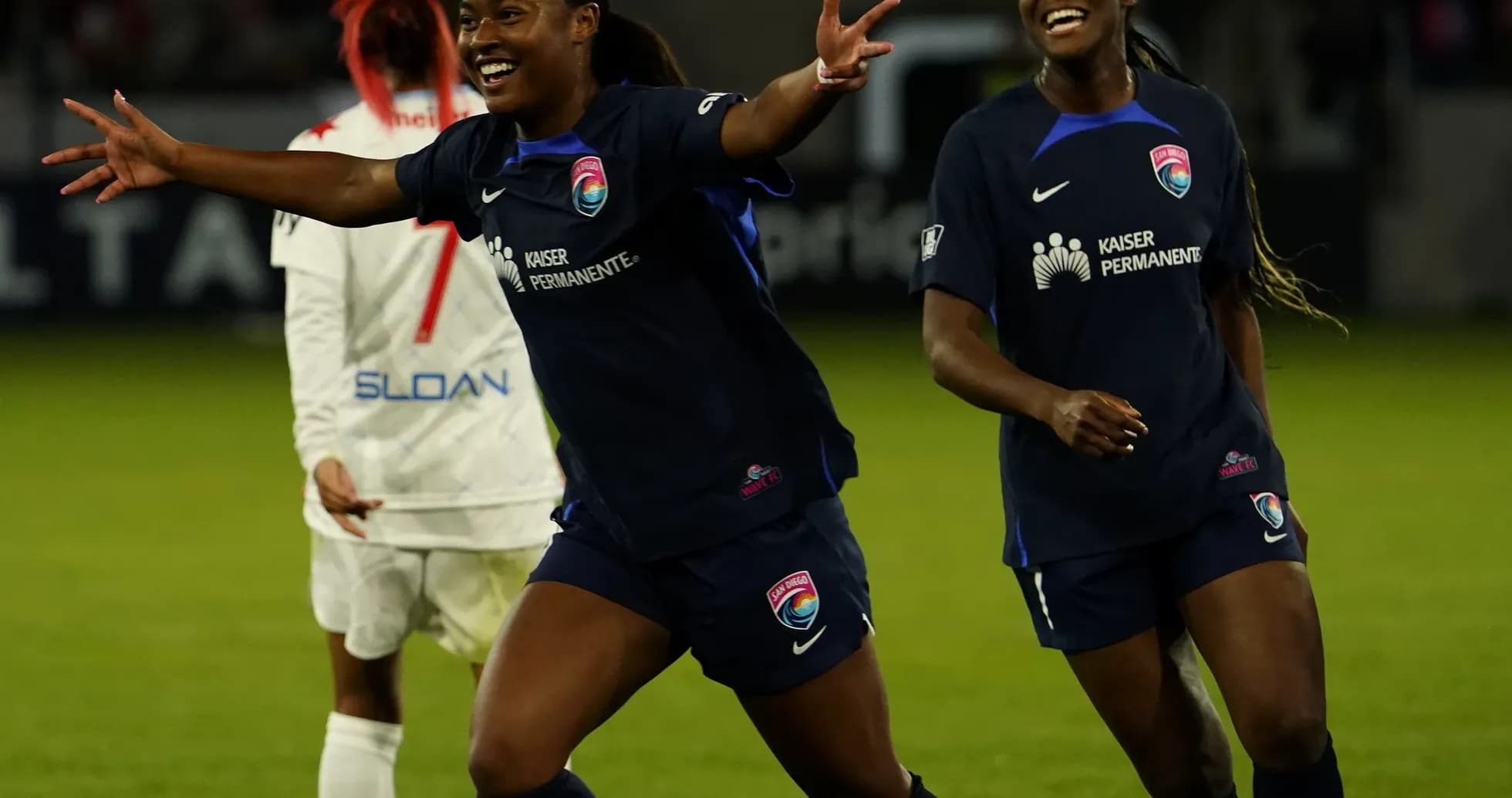
NWSL Women: Chicago Red Stars vs San Diego Wave Match Analysis
Under the late‑spring light at Northwestern Medicine Field at Martin Stadium, this Group Stage meeting in the NWSL Women felt like two clubs moving in opposite directions. Chicago Red Stars W, rooted in 15th place with 9 points from 12 matches and a goal difference of -19 (5 scored, 24 conceded overall), welcomed league leaders San Diego Wave W, who sit 1st with 25 points from 13 games and a goal difference of 6 (19 scored, 13 conceded overall). Following this result, a 0–2 defeat at home, Chicago’s seasonal DNA as a fragile, low‑scoring side was reinforced, while San Diego’s identity as a ruthless, structured away machine grew even sharper.
Chicago set up in a 4‑1‑4‑1 under Martin Sjogren, an explicit attempt to add ballast in front of a back line that has conceded an average of 1.7 goals at home and 2.0 overall. K. Atkinson anchored the side in goal, with a back four of J. Bike, K. Hendrich, S. Staab and N. Gomes. Ahead of them, M. Lopez Millan sat as the single pivot, trying to stitch together a midfield band of four – M. Swanson, B. A. Pinto, J. Grosso and R. Gareis – supporting lone forward J. Huitema.
The shape read as conservative, almost damage‑limitation from the start. Heading into this game, Chicago had scored just 4 goals at home at an average of 0.7 per match, and only 5 overall at 0.4 per match. Nine of their 12 league outings had ended with them failing to score. That history hung over Huitema, who often found herself isolated against San Diego’s centre‑backs, with Pinto and Grosso forced deeper to help a defence that has already leaked 10 goals at home and 24 overall.
Across from them, San Diego Wave W arrived with the confidence of a side that travels well. On their travels they had collected 5 wins from 7, scoring 12 and conceding 8, an away average of 1.7 goals for and 1.1 against. Jonas Eidevall stayed loyal to a 4‑2‑3‑1 that has become the spine of their season (used 8 times overall), trusting its balance to control both space and tempo.
D. Haracic started in goal behind a back four of A. D. Van Zanten, K. Wesley, K. McNabb and P. Morroni. The double pivot of K. Dali and K. Ascanio gave San Diego a stable central platform, while a fluid trio of M. Barcenas, L. E. Godfrey and Dudinha operated behind the spearhead, Ludmila.
The tactical voids in this match were less about absences – there were no listed injuries or suspensions – and more about structural deficiencies. Chicago’s season‑long card profile shows a tendency to lose control in the middle of halves: 33.33% of their yellows arrive between 31–45', and another 25.00% between 46–60'. Even without explicit match bookings listed here, that pattern hints at mental and physical dips just before and after the interval – precisely the windows where a well‑drilled side like San Diego tends to squeeze.
San Diego’s own disciplinary record is more concentrated but controlled. Their yellows peak between 16–30' at 23.08%, then flatten into a steady 15.38% through 31–90'+. It is the profile of a team that plays on the edge early, then manages risk once they’ve established territory and rhythm. Morroni in particular walks that line: 5 yellow cards this season, yet no reds, while still engaging in 100 duels (55 won) and blocking 2 shots. Her aggression is a weapon, not a liability.
The key “Hunter vs Shield” battle in this fixture revolved around San Diego’s creative‑scoring axis and Chicago’s beleaguered defensive block. Heading into this game, Dudinha had 5 goals and 4 assists in 13 appearances, with 44 dribbles attempted and 26 successful. Operating nominally from the left or central attacking midfield slot, she constantly looks to receive between lines, turn, and drive at centre‑backs. Against a Chicago side conceding an average of 2.3 goals on their travels and 2.0 overall, but already 10 at home, her capacity to unbalance a defensive line was always likely to tell.
Alongside her, Godfrey offered a different threat. With 4 goals and 3 assists, 18 key passes and an 80% passing accuracy, she is the metronome in the half‑spaces. In this match, stationed as the central or right‑sided playmaker in the 4‑2‑3‑1 band, she could pull Lopez Millan and Pinto out of position, opening channels for late runs from Barcenas and underlaps from Van Zanten.
On the other side of the duel, Chicago’s “Shield” was built around Staab and Hendrich, protected by Lopez Millan. With the team’s overall clean‑sheet count stuck at 2 and their heaviest home defeat a 0–3, the plan was clearly to compress the central corridor and force San Diego wide. Yet San Diego’s full‑backs are not passive crossers. Morroni, in particular, is comfortable progressing play – 526 passes with 84% accuracy and 32 tackles this season – and her willingness to step high pinned back Swanson and limited Chicago’s outlet on that flank.
In the “Engine Room,” the clash between Dali and Chicago’s interior midfielders framed the tempo. Dali, who has already created 33 key passes and attempted 11 dribbles with 7 successful, acts as the Wave’s deep‑lying conductor. Her 85% passing accuracy allows San Diego to recycle possession and patiently probe. Against a Chicago unit that has been outscored 24–5 overall, every controlled circulation felt like another turn of the screw.
From a statistical prognosis standpoint, the 0–2 full‑time scoreline mirrors the broader seasonal trends more than any upset narrative. San Diego’s overall scoring rate of 1.5 goals per match, climbing to 1.7 away, was always likely to overwhelm a Chicago defence conceding 2.0 per game overall. Conversely, Chicago’s anaemic attack – 0.4 goals per match overall, 0.7 at home – was unlikely to crack a San Diego back line that allows just 1.0 goal per match overall and has already recorded 3 clean sheets, 2 of them on their travels.
Even without explicit xG numbers, the underlying indicators are clear. A league‑leading side with a positive goal difference of 6, a five‑match winning streak already in the bank this season, and a fully functioning creative core in Dudinha and Godfrey, against the division’s lowest scorers with a negative goal difference of -19 and a longest losing streak of 4: the probabilities were heavily tilted.
Following this result, Chicago remain a side searching for an identity beyond survival, their 4‑1‑4‑1 offering structure but little threat. San Diego, by contrast, look every inch a title contender: tactically coherent, disciplined in their risk management, and armed with a front four that can decide games even when they never quite need to hit top gear.
Related News
Orlando Pride W vs Portland Thorns W: Playoff Showdown
San Diego Wave W vs Kansas City W Predicted Lineups: Team News for NWSL Women
Orlando Pride W vs Portland Thorns W Prediction: Key Stats and Betting Tips
San Diego Wave W vs Kansas City W: Key NWSL Clash Preview
San Diego Wave W vs Kansas City W Prediction: Key Stats and Betting Tips

Portland Thorns and Chicago Red Stars Draw in NWSL Showdown