
Nice faces relegation playoff as Ineos project collapses
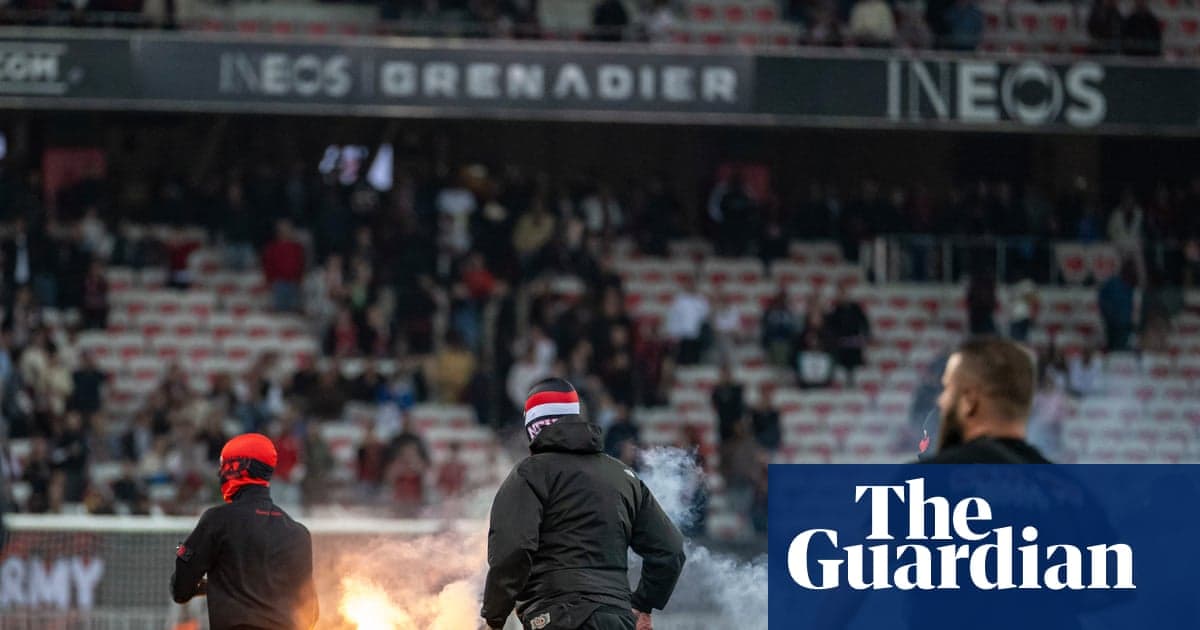
The final whistle had barely gone when the anger spilled over. Nice’s ultras poured out of the stands and on to the Allianz Riviera pitch, forcing players and staff to sprint for the tunnel after a goalless draw against already-relegated Metz. No trophy, no lap of honour. Just panic and fury.
For Ineos, it was the perfect – and damning – snapshot of a project in ruins.
A season that began with Champions League qualifiers will now be decided in a relegation playoff against Saint-Étienne. Nice’s failure to beat a Metz side already condemned to Ligue 2 means they face a two-legged tie later this month to save their place in the top flight. For owners who bought the club in 2019 with the stated ambition of turning them into challengers to PSG, the timing could hardly be worse. They are trying to sell. The house is on fire.
From Europe’s door to the trapdoor
The task on Sunday should have been routine. Nice had not won a league game at home since 29 October. Metz arrived with nothing to play for and almost nothing to show for their season.
Three league wins. None under Benoît Tavenot, who took over in January. The coach, winless in 11 matches with Bastia before that, finished this campaign with a brutal line in the record books: no wins, nine draws, 18 defeats, two relegations. If ever there was an opponent to face when you absolutely had to win, this was it.
Nice still made it look like climbing a mountain in flip-flops.
“Get your arses into gear,” roared the home end before kick-off. The mood in the stands veered wildly: anger at the owners, a strange sense of celebration around the Coupe de France final to come, and a heavy dose of nostalgia as a huge tifo honoured captain Dante, who had hoped this would be his farewell at the age of 42.
Any hint of celebration evaporated quickly. The boos grew louder, the tension sharper. Just as the club’s season is about to be swallowed by the relegation playoff, the Coupe de France final against Lens in Paris on Friday has been pushed to the background.
“It is no longer a priority at all,” admitted co-president Jean-Pierre Rivère. The Stade de France will host a team whose minds are already somewhere else – just as Reims discovered last season when they lost the cup final to PSG and then fell to Metz in the playoff. Yehvann Diouf, involved in all three of those games for Reims before joining Nice in the summer, knows that script too well and will be desperate to tear it up.
Ineos turns off the tap
The warning signs have been there for months, but few at Nice imagined the slide would go this far.
The club’s objectives were deliberately vague last summer. A return to European competition was “expected”, but no one dared spell out which tournament. As Ineos turned their attention and resources towards Manchester United, the money slowed to a trickle on the Côte d’Azur.
Key players left. Evann Guessand and Marcin Bulka were sold. Their replacements simply did not match the level. Kevin Carlos, brought in to fill Guessand’s boots, has yet to score a league goal. Targets looked elsewhere: Mahdi Camara chose Rennes over Nice.
Franck Haise saw it coming. In the autumn, he complained he did not have the squad to challenge for Europe. Then he went further, saying he could not “create a group” from what he had. The fanbase bristled, and the anger spread. It landed on the players first, but sporting director Florian Maurice and president Fabrice Bocquet – who briefly replaced Rivère – also came under fire.
The relationship between team and supporters broke completely in November. Terem Moffi and Jérémie Boga were attacked by fans as they stepped off the team bus at the training ground after a defeat at Lorient. Both players left. Bocquet followed them out. Haise did not last much longer, gone before the year was out.
Puel’s return, Nice’s freefall
Rivère’s response was to look back, not forward. He brought in Claude Puel, a familiar face and a safe pair of hands in theory. In practice, it has been a disaster.
Puel has managed just two league wins in 18 games. His team selections and tactical choices have been picked apart week after week. The results have given his critics plenty of ammunition.
The truth, though, is that the rot runs through the entire club. As the boos echoed around the Allianz Riviera on Sunday – long, sustained, almost constant – it was impossible to tell exactly who they were aimed at. The players? The coach? The directors? The owners?
It felt like everyone.
The tension inside the stadium grew with every misplaced pass. At half-time, the ultras moved from the second tier down towards the first. Nobody in the ground believed they were going in search of a better view.
When the final whistle confirmed the 0-0 and the playoff, the inevitable happened. The ultras charged the pitch. Security failed to contain them. Trouble flared around the stadium and spilled into the night. Staff, guests and journalists were kept inside the ground until after midnight.
Puel accepted that the fans’ “disappointment is legitimate”. Rivère spoke of a need for “unity”. The words sounded thin against the images of chaos and confrontation. The fracture at Nice is deep, structural, and no one currently in place looks capable of healing it.
With talks ongoing over a possible sale, Ineos may soon walk away. If they do, they will leave behind a club that looks far more broken than the one they bought for €100m five years ago.
Nantes in meltdown, “Coach Vahid” bows out
Nice were not alone in descending into turmoil on the final day.
Nantes, already relegated, hosted Toulouse in a match that lasted just 22 minutes. The club’s owners stayed away, citing safety concerns. They were right to be afraid.
Ultras hurled ominous black flares and then stormed the pitch in large numbers. Players, officials and staff sprinted for the dressing rooms. One man stayed put.
Vahid Halilhodzic stood his ground on the touchline, facing supporters – many in balaclavas – and tried to reason with them. Eventually, he too turned towards the tunnel, his face twisted with anger and sadness.
“In the 40 years of my career as a player and then a manager, I have never experienced that. It will be deeply engraved in my memory,” he said afterwards. He also confirmed it will be his last memory in football. That is how “Coach Vahid” leaves the game: amid smoke, fury and an abandoned match.
A strange title party in Paris
Across the capital, the images were less violent but no less surreal.
PSG had already sealed the Ligue 1 title with their midweek win over Lens, but there was no trophy presentation that night. The plan was to celebrate after Sunday’s Paris derby against Paris FC.
Paris FC had other ideas. They had secured their own safety and had post-match festivities planned. They refused to hand over their stage. So PSG improvised.
A small stand was hastily erected in front of the away end before kick-off. The champions’ ceremony, usually a grand production, became a compact, almost apologetic affair – a muted celebration for a club that now judges itself on what happens in Europe, not at home.
On the pitch, the focus – or lack of it – showed. Luis Enrique has been clear: his eyes are on the Champions League final against Arsenal. His team played like it. PSG slipped to a 2-1 defeat to Paris FC that changed nothing in the table and barely registered in the grand scheme of their season.
In Nice, though, nothing feels inconsequential. Not now. Not with Saint-Étienne looming, a two-legged fight for survival on the horizon, and an ownership ready to walk away. The question is no longer whether Ineos can build a contender to PSG.
It is whether they leave behind a club still capable of standing.
Related News
Raphinha’s Hat-Trick Powers Barcelona to 7-2 Victory Over Racing Santander
Carabao Cup Fourth Round Draw: Liverpool Set to Clash with Chelsea, Arsenal to Face Fleetwood Town
Key Football Matches to Watch in Azerbaijan This Autumn
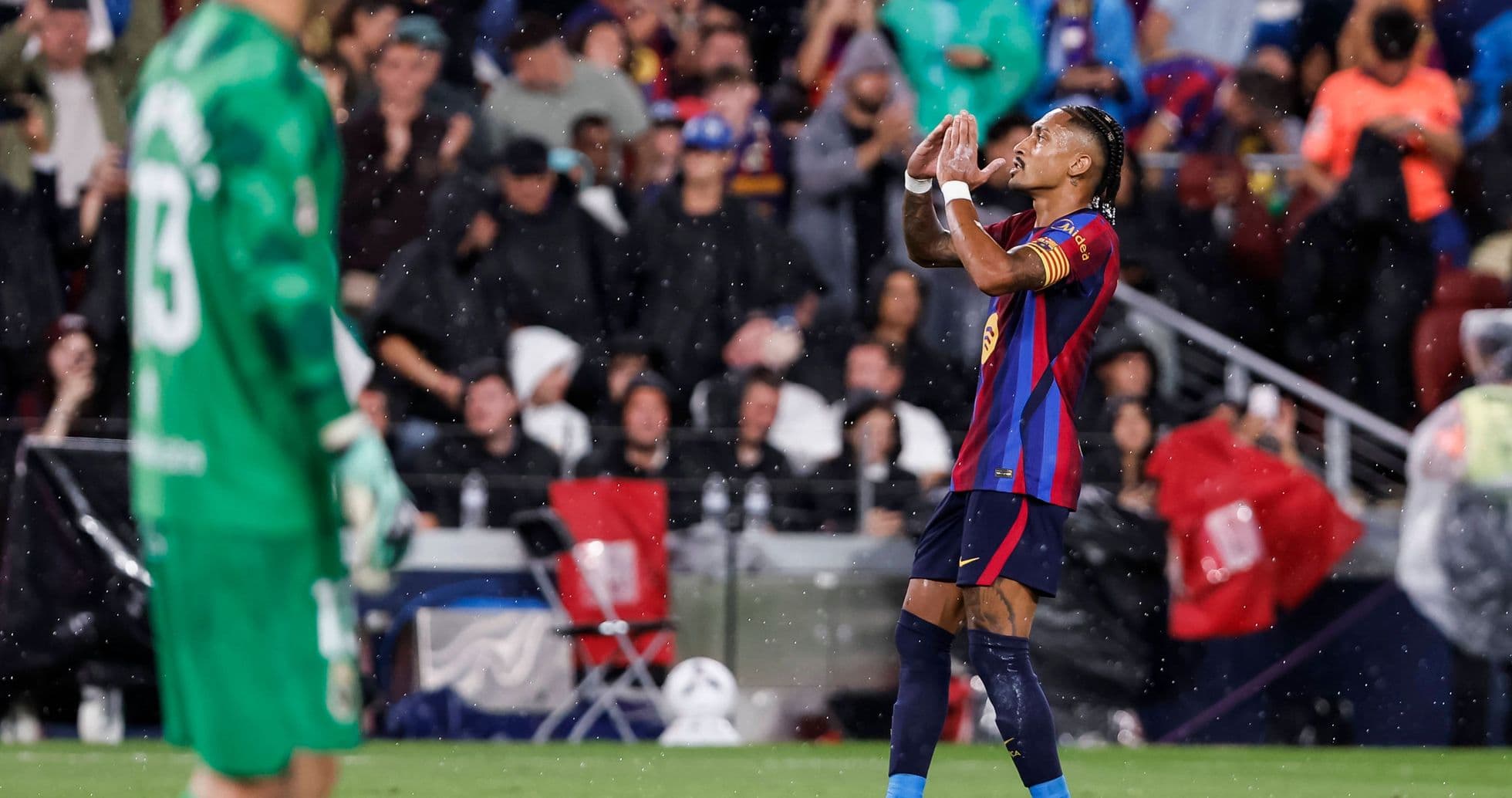
Raphinha's Hat-Trick Drives Barcelona to 7-2 Triumph Over Racing Santander
Hansi Flick Leads Barcelona to Record-Breaking Seven Wins in a Row
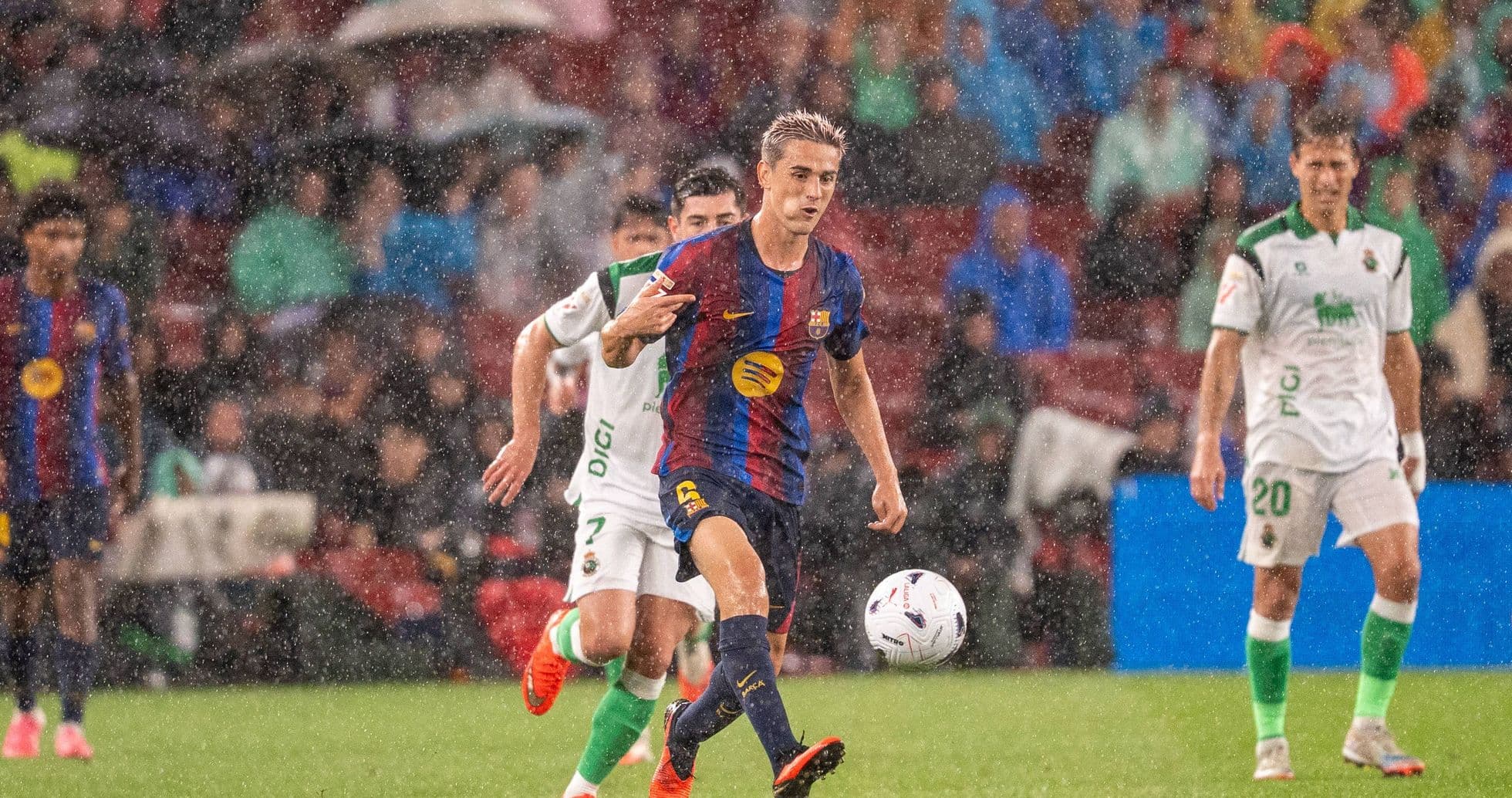
Gavi Reflects on Injury Return as Barcelona Dominate Racing Santander 7-2