
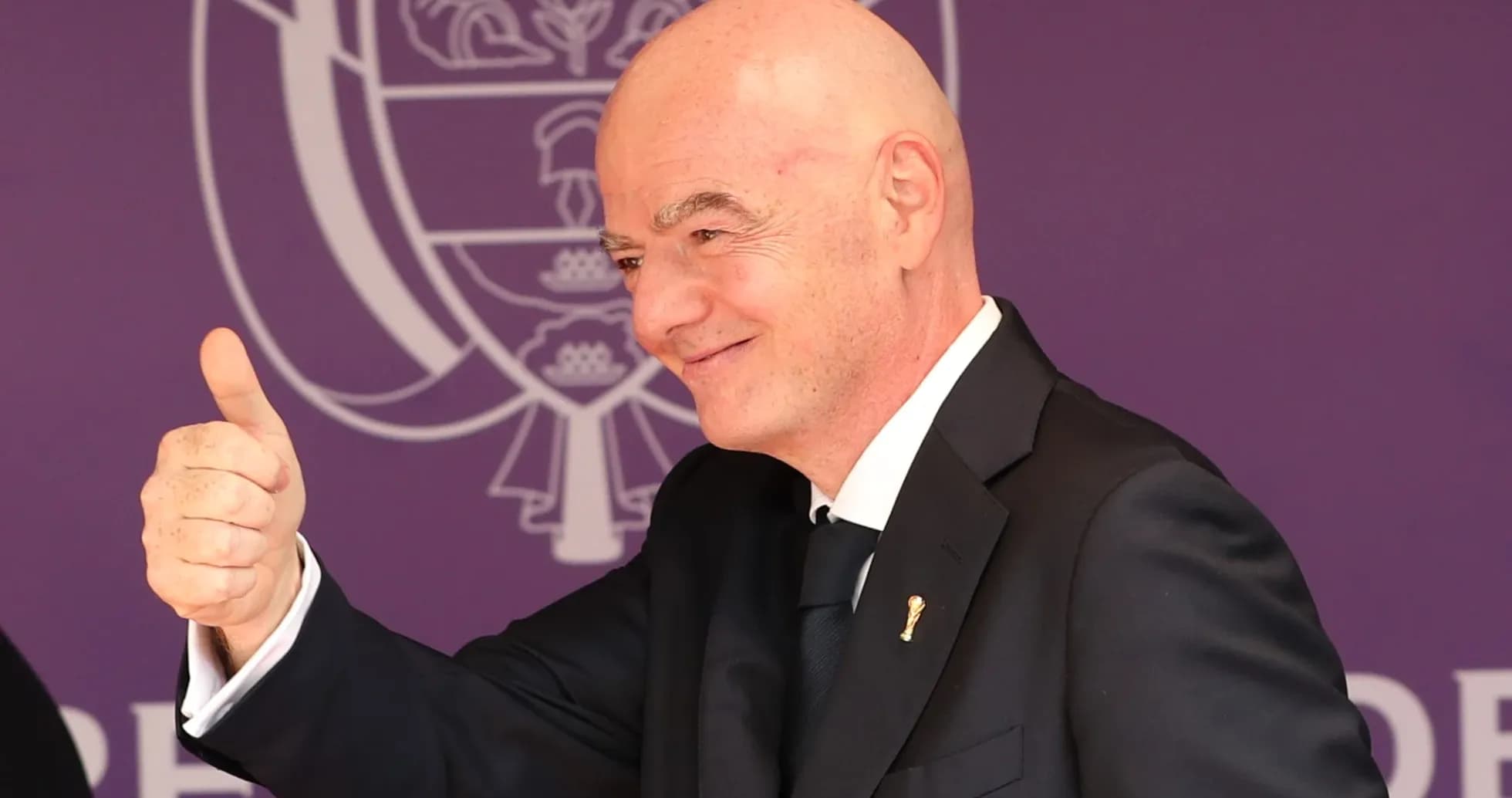
New Zealand Withdraws Support for Infantino's Re-election
New Zealand has broken ranks with FIFA President Gianni Infantino, withdrawing its backing for his re-election bid and demanding an independent investigation into his abandoned commercial rights plan – even as Oceania’s regional body continues to stand behind world football’s leadership.
Infantino is under mounting pressure after three powerful confederations – UEFA, the Asian Football Confederation (AFC) and CONCACAF – publicly questioned his conduct over the shelved proposal to bring private investors into FIFA competitions and called for a review of his leadership.
He will still stand for a fourth term at next year’s FIFA Congress, buoyed by firm support from African and South American football powerbrokers. But the ground beneath him is shifting.
New Zealand breaks away
New Zealand, the only Oceania Football Confederation (OFC) nation to qualify for this year’s World Cup, drew a clear line on Friday.
The federation announced it had withdrawn its support for Infantino’s re-election and insisted any review of the failed stake sale must be fully independent, citing a loss of confidence and trust in FIFA’s leadership.
“We’ve called for an independent review specifically because what we don’t want to see is a sort of in-house quick washover of this,” New Zealand Football Chief Executive Andrew Pragnell told Reuters.
“An independent review is something else that has been called for by other confederations that will help restore some of the trust.”
Oceania’s governing body, though, struck a different tone.
In a statement, the OFC welcomed FIFA’s decision to pull the proposal and praised the growth of the game in the region under the current regime.
“OFC recognises the progress achieved over the last decade in advancing football development in Oceania under FIFA’s leadership and encourages FIFA to use the review as an opportunity to identify and implement any changes that may be necessary,” it said.
So while New Zealand peels away, the confederation it belongs to is still offering cover.
The abandoned $4.2bn play
At the heart of the storm lies Infantino’s now-scrapped plan to carve out the commercial rights to the World Cup and sell a 20 percent stake to private investors, a deal aimed at raising about $4.2bn.
The offer was sweetened by a promised $20m grant for each member association for the next funding cycle – with the prospect of doubling that figure if they signed up.
The backlash was swift. After a crisis meeting in Morocco last week, FIFA apologised to its 211 member associations for mishandling the proposal and confirmed that its leadership still had full backing for Infantino.
Yet the political arithmetic is complicated. UEFA, the AFC and CONCACAF together represent 136 of the 211 associations that will vote in March’s presidential election. Their opposition matters.
Even so, Infantino is far from isolated.
Six heads of Arab national associations, including Qatar and 2030 World Cup cohost Morocco, publicly reaffirmed their support on Thursday, praising his “sustained efforts to advance football globally”.
The Confederation of African Football’s executive committee also unanimously endorsed him, though that does not automatically guarantee all 54 African members will vote as a bloc.
Calls for answers
For Pragnell, the review into the collapsed FIFA Forward Enterprise proposal must do more than tidy up loose ends.
He wants it to expose how decisions were made inside FIFA, who exercised oversight, and who drove the plan for Thrive Capital – a firm with close family links to former US President Donald Trump – to take a leading role in the venture.
“I think the scope needs to be considered really carefully, but what’s most important is that all confederations should agree on the scope, and it needs to get under way with urgency,” he told Reuters.
Australia, another AFC member, has also demanded an independent review, aligning itself with the Asian bloc’s stance, though it has not publicly nailed down a position on Infantino’s leadership.
“Based on what we’ve seen, including [Australia’s] commitment to the AFC statement, we’re strongly aligned,” Pragnell said.
The battle lines are now clear: a president with powerful allies, a growing coalition demanding scrutiny, and an election looming where trust in FIFA’s leadership may prove as decisive as any manifesto.
Related News
Transfer Rumors: Haaland’s Two Options; Real Madrid Targets $100 Million Premier League Star
Manchester United Targets Premier League Forward to Strengthen Attack
Liverpool Eyes 17-Year-Old Mexican Midfielder Gilberto Mora for Summer Transfer
Summer 2026 Transfer Window: Manchester United and Tottenham Struggle with New Signings
Liverpool Maintain Interest in Real Madrid Midfielder Amid Transfer Challenges
Transfer Insider Warns Tottenham About Costly Sale of Will Lankshear