
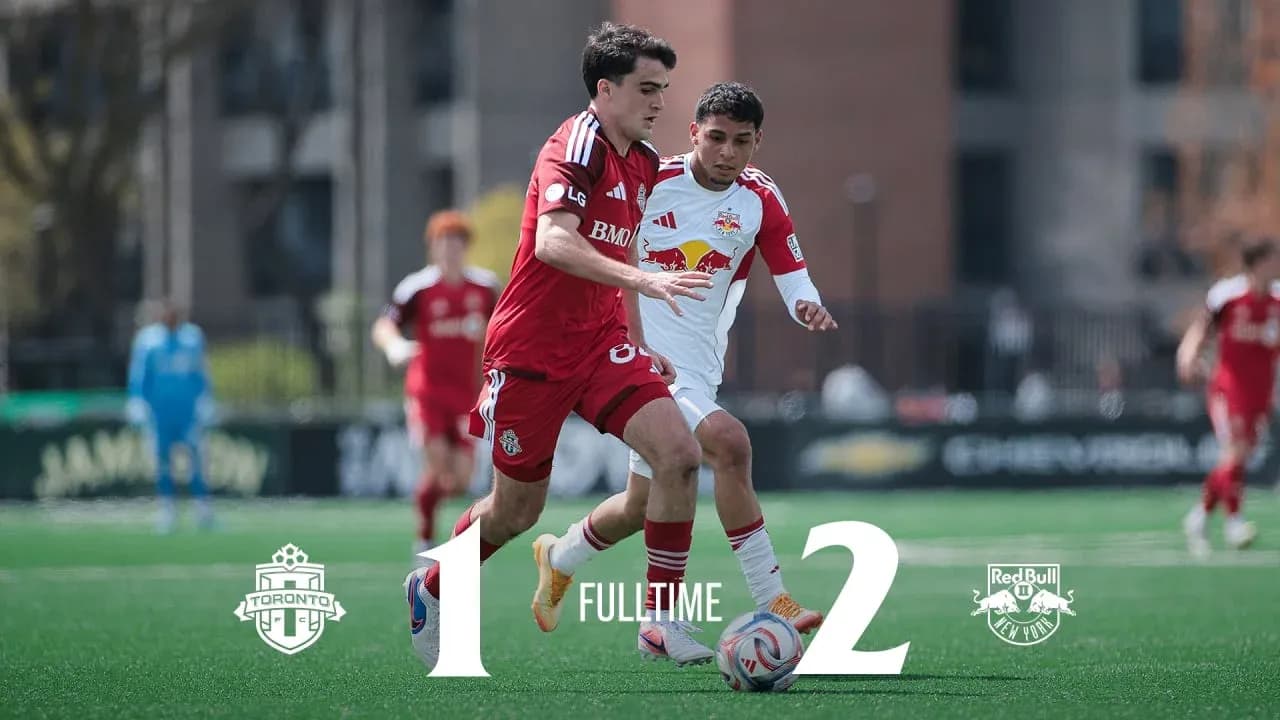
New York RB II Dominates Toronto II in MLS Next Pro Clash
York Lions Stadium felt like a crossroads for two very different projects in MLS Next Pro. On one side, Toronto II, sitting 4th in the Northeast Division and 10th in the Eastern Conference with 11 points from 9 matches, trying to prove they belong in the playoff conversation despite a negative goal difference. On the other, New York RB II, the standard-setters: 1st in both the division and the conference, already flagged for promotion play-off contention after a blistering start that had brought them 23 points from 9 games.
Following this result, the 2-1 away win for New York RB II did not just underline the gap in the table; it crystallised the seasonal DNA of both teams. Toronto II are a team that lives on the edge. Overall this campaign they have scored 14 and conceded 17, a goal difference of -3 that tells of matches decided by fine margins and defensive lapses. At home, they have been volatile but dangerous: 7 goals scored and 7 conceded in 4 games, with an attacking average of 1.8 and the same 1.8 conceded per match.
New York RB II arrived with the swagger of a side that knows exactly what it is. Overall they have 22 goals for and 11 against, a goal difference of +11 built on relentless attacking rhythm and a defence that bends more than it breaks. At home they have been explosive, averaging 3.0 goals per match, but crucially on their travels they are efficient rather than reckless: 7 away goals scored, 4 conceded, for an away scoring average of 1.8 and 1.3 conceded. That balance is the hallmark of a side built for a long season and, eventually, knockout football.
I. The Big Picture: How the Game Fit the Season
The full-time scoreline of 1-2 mirrored the broader trend lines. Toronto II, with a total goals-for average of 1.6 and goals-against average of 1.9, again found themselves in a contest where they could threaten but not control. Their biggest home win of 2-1 and their heaviest home defeat of 3-4 were both echoed in the narrow margin here: they are almost always in the game, almost never in command.
New York RB II, by contrast, leaned into their identity. Overall this campaign they have averaged 2.4 goals per match and conceded 1.2. Even on a day when they did not hit their home attacking heights, they still found enough incision to turn an away fixture into another three points, extending a form line of “WWWWW” in the standings and “WWLLWWWWW” across the season statistics into something even more ominous.
II. Tactical Voids and Discipline
The squads, as listed, were close to full strength with no official absences flagged. That allowed both coaches to lean into their developmental priorities.
For Toronto II, Gianni Cimini trusted a youthful core. A. De Rosario, R. Campbell-Dennis and D. Dixon all carried attacking responsibility, with B. Boneau and T. Fortier asked to stitch together transitions. The problem was never pure talent; it was structure. Toronto II’s season-long defensive record – 17 conceded overall, including 10 on their travels and 7 at home – suggests a unit still learning to manage space and tempo.
Disciplinary trends further complicated their tactical picture. Toronto II’s yellow cards this season are heavily concentrated between 31-45 minutes (30.77%) and 76-90 minutes (23.08%), with another 15.38% in each of the 46-60 and 61-75 windows. This pattern speaks of a team that struggles to control emotion in the key phases either side of half-time and as games stretch late. Even without a red card on their record, those bookings shape how aggressively they can defend the box in closing stages.
New York RB II, for all their dominance, walk a finer disciplinary line. Their yellow cards spike brutally late: 40.00% of their cautions come between 76-90 minutes, with another 20.00% in the 61-75 window and 10.00% in added time (91-105). They also have a red card in the 61-75 range. This is a side that accelerates as the game opens up, but that intensity risks undermining their control. In a knockout 1/8-final scenario, those late-game numbers would be a tactical fault line; here, they were a calculated risk that again paid off.
III. Key Matchups: Hunter vs Shield, Engine Room vs Enforcer
Without explicit individual scoring data in the JSON, the “Hunter vs Shield” battle becomes a clash of collective profiles. Toronto II’s home attack, at 1.8 goals per match, is no lightweight. Players like De Rosario and Dixon embody a direct, front-foot approach that thrives when the game becomes transitional. But they were running into a New York RB II defensive unit that, overall, has conceded just 11 in 9 matches and only 4 on their travels.
That away record framed the contest: New York RB II are happy to compress space, absorb, then break with pace through D. Gjengaar, A. Rojas and M. Jimenez. The “Shield” is not about sitting deep; it is about winning the ball in advanced zones and suffocating build-up. Toronto II, who have failed to score 3 times overall this season (all away), do find routes to goal at York Lions Stadium, but they rarely enjoy clean patterns through the middle third.
In the “Engine Room” matchup, Toronto II’s midfield axis of Boneau, Fortier and S. Pinnock had to solve a puzzle they have struggled with all campaign: how to protect a back line that concedes 1.9 goals per match overall while still feeding their forwards early. New York RB II’s central structure, with N. Worth and D. Cadigan offering legs and bite, tilted that battle. The away side’s season-long ability to avoid failing to score – 0 matches without a goal overall – meant that any midfield stalemate would eventually break in their favour.
Even the bench told a story. Toronto II could turn to J. Nugent, K. Kerr or E. Omoregbe to chase the game, but their season numbers suggest that when they open up, they concede. New York RB II, meanwhile, had Shunya Sakai among the substitutes, a defender who appears in the league’s top lists across goals, assists, yellow cards and red cards data sets. Even without counting stats, his presence hints at a versatile, aggressive profile: a late-game option to either lock down a lead or attack set-pieces.
IV. Statistical Prognosis and xG-Lens Verdict
We do not have explicit xG values in the data, but the season metrics allow a strong inferential read. Heading into this game, an “expected” scoreline based on averages might have sat roughly around Toronto II’s 1.8 home goals-for versus New York RB II’s 1.3 away goals-against, and New York RB II’s 1.8 away goals-for versus Toronto II’s 1.8 home goals-against. That points to a tight, high-probability scoreline in the 1-2 or 2-2 band rather than a blowout.
The actual 1-2 result therefore felt statistically coherent: New York RB II hit something close to their away attacking baseline, while Toronto II landed slightly below their home scoring average, a reflection of the visitors’ superior defensive structure and game management.
From a tactical and xG-informed standpoint, New York RB II’s blueprint looks sustainable deep into a 1/8-final playoff run. Their overall attacking volume (22 goals, 2.4 per match) married to controlled concession rates and a willingness to win ugly away from home is the profile of a contender. Toronto II, by contrast, remain a fascinating but fragile project: capable of hurting anyone on their day, but with a defensive record and disciplinary pattern that will continue to drag their underlying xG differential toward the negative unless their midfield shield and late-game composure evolve.
In narrative terms, this match did not rewrite either team’s story; it underlined it in bolder ink. New York RB II left York Lions Stadium looking every inch a top seed. Toronto II, once again, were left with the feeling that they are close – but not yet close enough.
Related News

MLS Winners and Losers: Rising USMNT Star Cavan Sullivan, St. Louis City's Smart Moves, and Chicago Fire's Struggles Without Hugo Cuypers

MLS Highlights: Portland Timbers End Drought, Josh Sargent Shines, Cavan Sullivan Impresses
Tacoma Defiance vs Colorado Rapids II Stats: Head-to-Head Record

St. Louis City II vs Vancouver Whitecaps II: Head-to-Head Stats and Match Preview
Atlanta United II vs New York City II Stats: Head-to-Head Record
Houston Dynamo FC II vs Austin II Stats: Head-to-head Record