
New York City II vs Columbus Crew II: Momentum Swings in MLS Next Pro
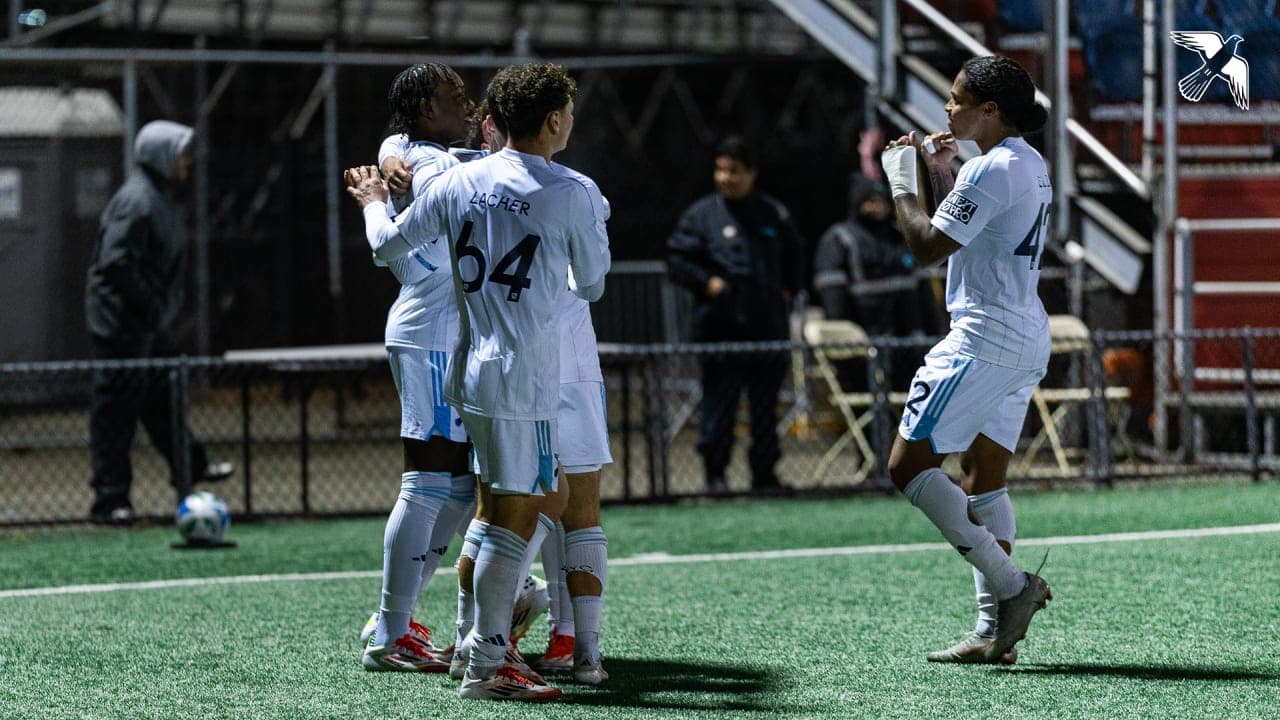
Under the New York lights at Belson Stadium, this Group Stage clash in MLS Next Pro became a study in momentum swings and mentality. New York City II, strong at home this season, raced into a 2–0 half-time lead, only to see Columbus Crew II flip the script after the break and leave with a 3–2 victory in regular time.
Following this result, the table context frames the story. New York City II sit 6th in the Northeast Division and 12th in the Eastern Conference, with 15 points from 11 matches. Their overall record of 5 wins and 6 losses, with 16 goals scored and 20 conceded, underlines a side that lives on fine margins. At home, they have been more imposing: 4 wins and 2 defeats across 6 matches, scoring 10 and conceding 11. Their home attacking average stands at 1.7 goals per game, but they also allow 1.8 at Belson – a high‑risk, high‑reward profile that this 2–3 defeat encapsulates.
Columbus Crew II arrive from the other end of the spectrum: a promotion contender. They are 2nd in the Northeast Division and 3rd in the Eastern Conference, on 23 points from 13 matches. Overall, they have 8 wins and 5 losses, with 25 goals for and 23 against. That gives them a narrow positive goal difference of +2, the product of a vibrant attack (1.9 goals per game overall) and a defence that can be stretched (1.8 conceded per match). Away from home, they are more volatile still: 3 wins and 4 defeats in 7 games, scoring 12 and conceding 16, for an away average of 1.7 scored and 2.3 conceded. This match, a comeback 3–2 on their travels, is almost a perfect snapshot of that chaotic away identity.
Tactical voids and disciplinary undercurrents
With no official absentees listed, both coaches – Matt Pilkington for New York City II and Federico Higuain for Columbus Crew II – had their full squads at their disposal. That made this less about who was missing and more about how the available pieces were arranged and how they coped with pressure phases.
New York City II’s season-long disciplinary profile hints at a side that plays on the edge. Heading into this game, 33.33% of their yellow cards came between 76–90 minutes, with another 14.29% in the 91–105 range. That late‑game spike in cautions speaks of a team that often ends matches under stress, chasing or protecting results with aggressive interventions. They also had a single red card this season, shown in the 76–90 window, reinforcing the sense that emotional control can fray as legs tire.
Columbus Crew II, by contrast, distribute their bookings more evenly but with a notable mid‑second‑half flare: 29.63% of their yellows arrive between 61–75 minutes, and 22.22% between 76–90. They also had one red card, dramatically early, in the 0–15 minute band. This points to a team that can start on the front foot – and sometimes overstep – before settling into a combative but largely controlled rhythm.
In this fixture, the narrative of a 2–0 half-time lead turning into a 2–3 defeat suggests that New York’s recurring late‑game strain reappeared. Without concrete card events from the match log, we cannot assign specific bookings, but the season trends fit: New York City II are statistically more fragile as the clock winds down, while Columbus are comfortable turning the second half into a running battle.
Key matchups
Without individual scoring charts, the “Hunter” in this tie must be understood collectively. Columbus Crew II’s attack is the hunter: 25 goals overall, with 12 of those on their travels. They have already produced away wins as expansive as 1–3, and their biggest away defeat, 4–1, shows they rarely die wondering. Higuain’s starting front line of T. Brown, K. Gbamble, C. Adams and Z. Zengue, supported by N. Rincon and T. Karumanchi, formed a mobile, interchangeable attacking unit at Belson.
The shield was New York City II’s home defence – but it is a shield with cracks. They have conceded 11 goals at home across 6 matches, averaging 1.8 per game. Their heaviest home defeat, 0–5, underlines how quickly their structure can collapse when the press is broken. In this match, the starting block of B. Klein, A. Campos, J. Loiola, K. Acito and K. Smith in the back line and midfield were asked to manage waves of Columbus pressure after the break. The fact that a 2–0 interval cushion dissolved into a 2–3 full-time score is a direct clash of profiles: Columbus’s relentless away attack against a New York back unit that has struggled to maintain concentration and compactness over 90 minutes.
The central duel lay in the engine room: New York’s ball‑playing core of P. Molinari and C. Flax, with E. Samb and J. Suchecki providing vertical lanes, against the Columbus triangle of T. Karumanchi, N. Rincon and C. Rogers stepping in from deeper zones. Columbus’s season statistics show a side that can dominate phases – they have only failed to score once all season – and that often comes from controlling transitions rather than sterile possession.
New York City II’s overall attacking average of 1.5 goals per game, with 16 scored across 11 matches, tells us they can create, especially at home. But they have failed to score 3 times overall, and with just 1 clean sheet, they are rarely in low‑event games. The engine room, then, is not about shutting things down; it is about who can tilt the chaos in their favour. In the second half, Columbus’s midfield clearly won that argument, pushing New York deeper, forcing longer clearances from S. Musu and disconnecting the front pair, D. Kerr and J. Suchecki, from the build‑up.
Statistical prognosis and tactical verdict
If we map the seasonal numbers onto an xG‑style lens, the outcome feels consistent with the underlying profiles. Columbus Crew II, with 25 goals for and 23 against in 13 games, are built for high‑xG, end‑to‑end contests. New York City II, with 16 scored and 20 conceded in 11, inhabit the same world, but from a slightly weaker platform.
On their travels, Columbus’s 12 goals scored and 16 conceded in 7 matches suggest that away fixtures often become open, chance‑heavy battles. New York at home, with 10 scored and 11 conceded in 6, also invite that openness. A 2–3 scoreline fits the expectation of a match where both sides generate significant chances, but the more ruthless, more experienced attacking unit eventually prevails.
Tactically, the verdict is stark for New York City II. Their attacking structure – with overlapping energy from C. Flax and the direct running of E. Samb – can hurt almost anyone at Belson Stadium, as the 2–0 half-time lead showed. But their inability to compress space between lines in the final half hour, combined with a season‑long pattern of late‑game disciplinary strain, leaves them vulnerable to precisely the kind of surge Columbus produced.
For Columbus Crew II, this comeback confirms their identity as a promotion‑chasing side that embraces volatility. The starting spine of L. Pruter, C. Ruvalcaba, O. Presthus, T. Karumanchi and N. Rincon absorbed the early blows, then gradually raised the tempo. Even without clean sheets away from home this season, their offensive ceiling remains high enough to overturn deficits, as long as the game stays stretched.
Following this result, the statistical prognosis for both squads is clear. New York City II must find a way to lower the defensive xG they concede at home – through better game management, fresher legs from the bench like A. Suarez or D. Duque, and calmer late‑game decision‑making. Columbus Crew II, meanwhile, can lean into their attacking identity but will know that to sustain a promotion push, the away goals against column – currently 16 on their travels – needs to tighten, even in nights of heroic comebacks like this one.
Related News

MLS Winners and Losers: Rising USMNT Star Cavan Sullivan, St. Louis City's Smart Moves, and Chicago Fire's Struggles Without Hugo Cuypers

MLS Highlights: Portland Timbers End Drought, Josh Sargent Shines, Cavan Sullivan Impresses
Tacoma Defiance vs Colorado Rapids II Stats: Head-to-Head Record

St. Louis City II vs Vancouver Whitecaps II: Head-to-Head Stats and Match Preview
Atlanta United II vs New York City II Stats: Head-to-Head Record
Houston Dynamo FC II vs Austin II Stats: Head-to-head Record