
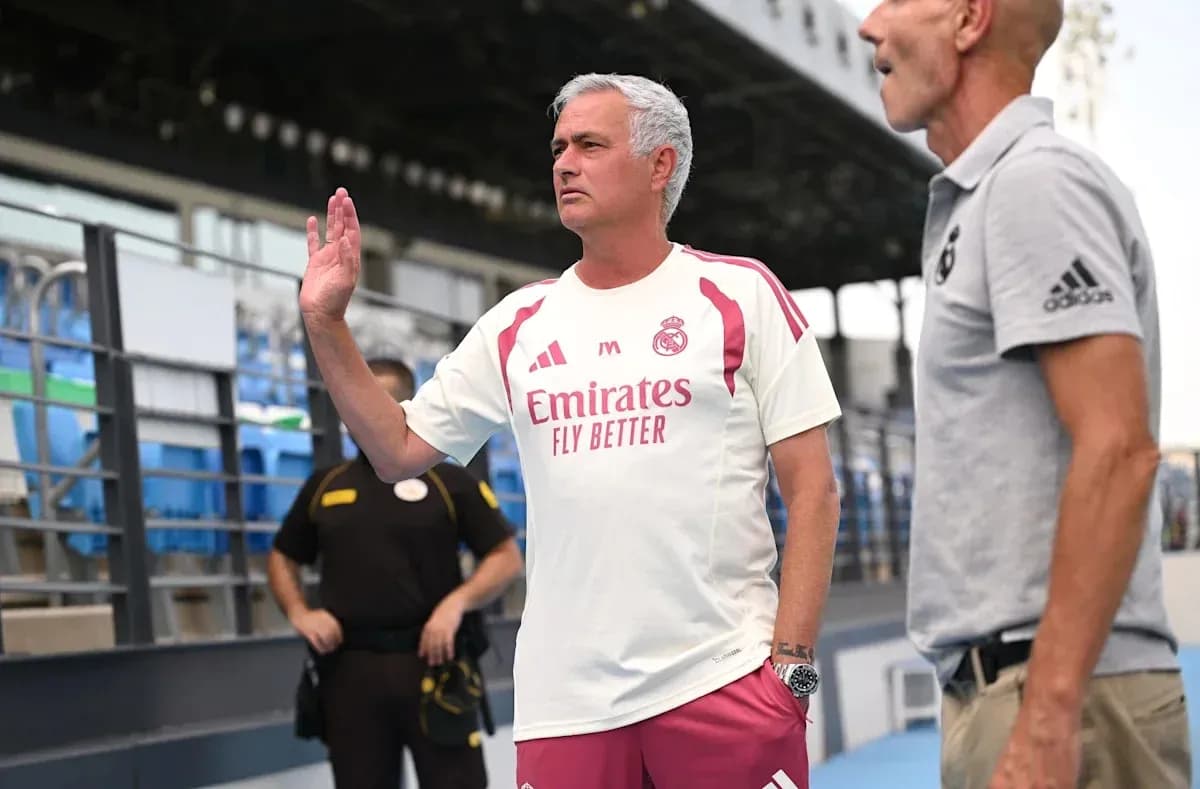
Mourinho's Approach to Valverde and Tchouameni at Real Madrid
Jose Mourinho didn’t walk into Real Madrid with his eyes closed.
Two barren seasons, a dressing room full of bruised egos, and a high-profile clash between Federico Valverde and Aurelien Tchouameni were all waiting for him before he even sat behind his new desk.
That row between Valverde and Tchouameni late last season wasn’t just a minor subplot. It became one of the defining sagas of Madrid’s campaign, a symbol of a squad losing its edge and its unity when it mattered most.
According to Defensa Central, Mourinho has wasted no time turning that flashpoint into a reference point. He has already sat both players down and spelled out exactly how things will work under his watch.
Professionalism, not pretend friendship
The Portuguese coach has not demanded hugs, handshakes, or staged photos of reconciliation.
Valverde and Tchouameni had a serious falling-out at the end of last season, a feud that spilled into the public eye. Mourinho’s stance, as reported, is blunt: they don’t need to like each other. They don’t need to share dinners, inside jokes, or Instagram posts.
They do need to be professionals.
Both midfielders have been told in clear terms that any personal tension is secondary. The club comes first. The badge comes first. Real Madrid’s objectives outrank any individual grievance.
Valverde has been singled out for an extra reminder. Not as punishment, but as responsibility.
He is the first-choice captain now, one of the last links to a dressing room that once housed generational figures and serial winners. Younger teammates are watching how he walks, talks, trains, reacts. His behaviour, on and off the pitch, sets the tone.
Mourinho knows it, and he has made sure Valverde knows it too.
Classic Mourinho: control the room, control the team
This is Mourinho in his element.
He has never been just a whiteboard and magnets coach. His greatest teams have been built on hierarchy, clarity, and a shared understanding of where the line is drawn.
By refusing to force a fake peace and instead demanding discipline, he avoids the trap so many managers fall into: trying to engineer friendship instead of enforcing standards. Harmony, for him, is not everyone getting along. It is everyone doing their job for the same cause.
Real Madrid’s history backs him up. Their greatest eras were not built on a group of best friends. They were built on players who, whatever they felt privately, put the club’s ambitions above their own.
If Mourinho can restore that mentality quickly, if Valverde and Tchouameni can channel their differences into performance rather than conflict, the rest might follow. At Madrid, when the dressing room is aligned with the badge, the football has a habit of taking care of itself.
Related News
Transfer Rumors: Haaland’s Two Options; Real Madrid Targets $100 Million Premier League Star
Manchester United Targets Premier League Forward to Strengthen Attack
Liverpool Eyes 17-Year-Old Mexican Midfielder Gilberto Mora for Summer Transfer
Summer 2026 Transfer Window: Manchester United and Tottenham Struggle with New Signings
Liverpool Maintain Interest in Real Madrid Midfielder Amid Transfer Challenges
Transfer Insider Warns Tottenham About Costly Sale of Will Lankshear