
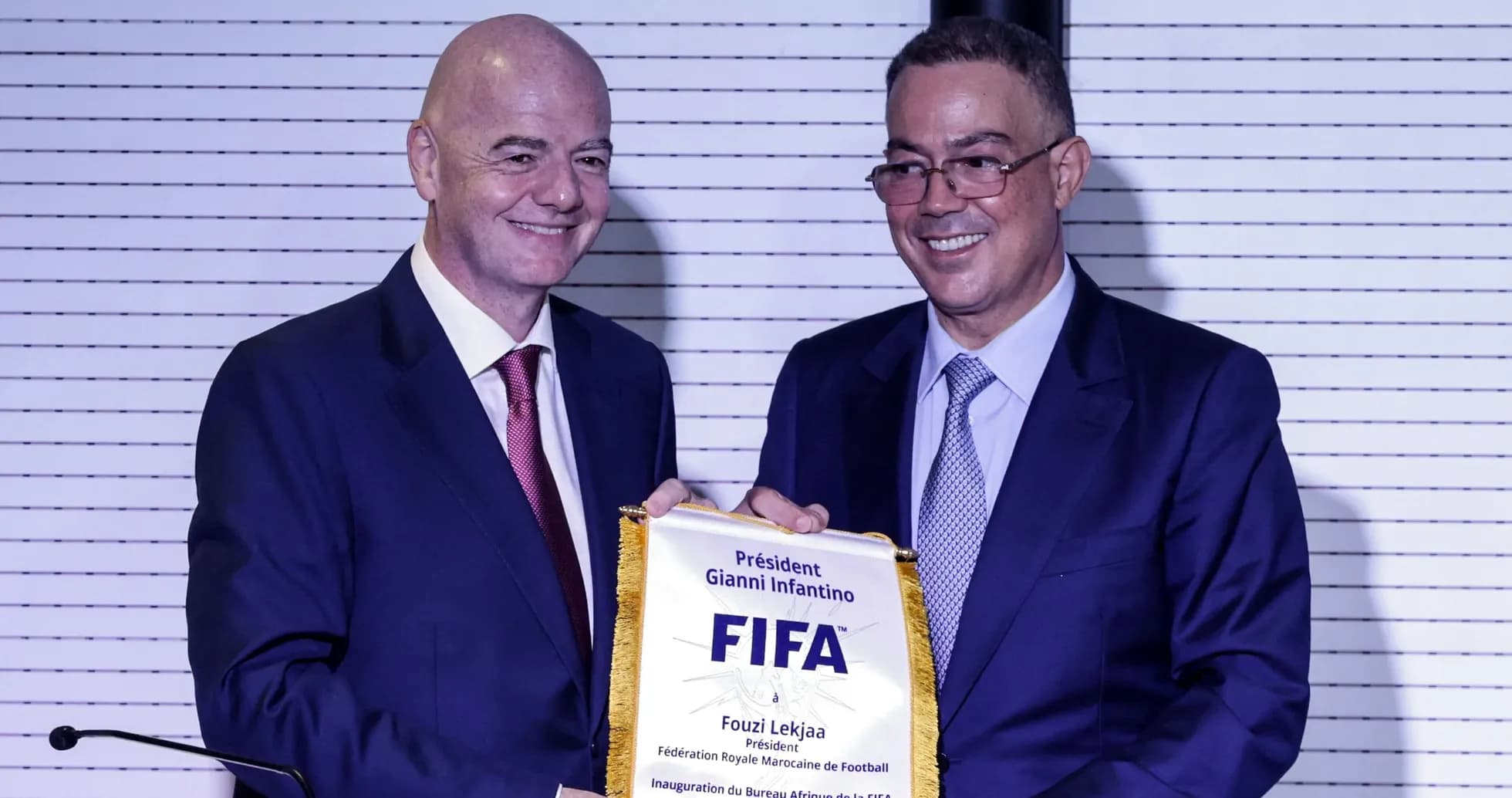
Morocco's Bid for the 2030 World Cup Final: Political Tensions and Stadium Plans
Morocco’s political arena has stepped directly into the battle for the 2030 World Cup final.
Prime Minister Aziz Akhannouch has publicly rebuked Fouzi Lekjaa, the powerful president of the Royal Moroccan Football Federation (RMFF), ordering him to stop making grand promises about Casablanca staging the showpiece match before anything has been agreed with co-hosts Spain and Portugal.
The warning landed after Lekjaa, speaking at a political party event, declared that Morocco’s planned new stadium in Casablanca would have the “honour” of hosting the final. That line, delivered on home soil and in a partisan setting, lit the fuse.
Akhannouch moved quickly.
At a rally, he cut through the optimism with a blunt message for the federation chief: “Do not offer to host the big final game in Morocco while we still have not discussed the matter with our allies, Spain and Portugal. There should be some respect, brothers. Stop using electoral promises to pull the rug out from under us. These are huge matters. Deciding where the final will be held is a major issue.”
The political subtext was obvious. Morocco wants the final. Badly. But it also wants to avoid a diplomatic storm with Madrid and Lisbon before FIFA has even put pen to paper.
The 2030 tournament, marking 100 years of the World Cup, is already a unique construct. Morocco, Spain and Portugal will co-host, while opening fixtures in South America will pay tribute to the competition’s origins. Amid that patchwork, one question dominates: where does the final go?
For now, FIFA is keeping its cards close, saying only that “a decision will be made in due course.” That vacuum has created space for competing narratives — and both Morocco and Spain are rushing to fill it.
Spain’s football establishment has been just as bullish as Lekjaa, only with a different ending in mind.
Rafael Louzan, president of the Spanish federation (RFEF), has repeatedly argued that Spain is the only logical venue for the final. Speaking to Cadena SER radio, he said: “Even though no decision has been taken, I believe Spain is the place because it cannot be any other way. As you know, we are currently world champions. I believe Spain’s organisational capacity for major events is beyond question and that is why reality dictates that the grand final cannot and must not be held anywhere other than in Spain.”
Spain’s case leans on recent success and proven infrastructure. Their men’s national team, fresh from beating Argentina to claim a second World Cup title this past summer, gives the country a powerful sporting narrative. On the ground, the hardware is already there: a revamped Santiago Bernabeu in Madrid and the major redevelopment of Barcelona’s Spotify Camp Nou form the backbone of a heavyweight bid.
Morocco, though, is not playing small. It is thinking bigger than anyone.
The country has launched construction of a colossal 115,000-seat stadium, designed to be the largest football-specific arena on the planet. The project is a statement of intent, a direct challenge to Spain’s legendary grounds and a symbol of Morocco’s desire to bring the World Cup’s biggest night back to African soil for the first time since Johannesburg staged the 2010 final.
That ambition, however, now runs alongside a clear message from the top of government: dream, but don’t overpromise. Not yet.
The political intervention reflects how delicate the co-hosting balance has become. Spain’s confidence, Morocco’s hunger, Portugal’s role, FIFA’s silence — all of it feeds into a slow-burning negotiation that will likely stretch on. The 2026 World Cup offered a clue: New Jersey’s MetLife Stadium was only confirmed as the final venue in early 2024, long after the hosting rights were awarded.
Timelines, then, are elastic. Positions are not.
Morocco’s government wants to cool the rhetoric, keep Spain and Portugal onside and avoid turning a joint bid into a public tug-of-war. The federation wants the ultimate prize for its new mega-stadium and for a football-obsessed nation that has pushed itself to the front of the global stage.
Somewhere between those forces, FIFA will decide where the world’s eyes turn on that July night in 2030. Will the centenary final rise under African lights in Casablanca, or under Spanish skies in Madrid or Barcelona?
Related News

Floyd Samba's Stunning Debut: Two Goals in City’s 5-0 Victory
Troy Parrott Shines in Real Betis Victory Over Getafe
James Rodríguez Retires from Colombia National Team: A Golden Era Ends
Liverpool Target Lamine Camara: A Rising Force in Ligue 1
Al-Taawoun Fined and Punished for Fan Chants Against Neves
Atlético Madrid's Bold Promise to Julián Álvarez