
Morgan Rogers joins Chelsea: A risky move for the record signing
Morgan Rogers walked into Chelsea as the most expensive British footballer of all time, a £117 million statement signing who called his new employers “the biggest club in London” and “the perfect fit” for his game. The subtext was obvious. Arsenal, long linked with the 23-year-old and widely reported as Mikel Arteta’s preferred target, had been snubbed.
Strip away the noise, though, and the move looks anything but perfect for Rogers.
Rogers swaps certainty for chaos
Leaving Aston Villa for Arsenal would have been a straightforward step up: from a rising Champions League side to the reigning Premier League champions. No one would have questioned that decision. Instead, Rogers has walked into a club ripping up the blueprint yet again.
Chelsea are starting over under the BlueCo regime once more, this time with Xabi Alonso on the touchline and no European football on the calendar. Fewer games might help after last season’s 10th-place finish, but Alonso is not a magician. He arrives into a squad losing important pieces.
Marc Cucurella has gone to Real Madrid. Enzo Fernandez could follow him out the door. If that happens, Chelsea’s midfield loses its metronome and a sizeable chunk of its personality. This is not the kind of steady, clearly defined environment that usually allows a record signing to flourish.
Then comes the tactical puzzle. Rogers does his best work as a No.10, operating between the lines, driving at defenders, making late runs. Cole Palmer also loves those same pockets. Alonso has to find a way to accommodate both without clogging the middle of the pitch. If Palmer becomes the axis of the attack, Rogers will likely be shunted wide, where his influence will naturally dip compared to the central freedom he enjoyed at Villa.
The stylistic shift is just as stark. Under Unai Emery, Rogers was a counter-attacking weapon, thriving in broken-field situations with grass to run into. Chelsea, under Alonso, will look to dominate the ball and break down low blocks. That means less space, more structure, more patience. It also means constraints on the kind of improvisation that made Rogers so dangerous at Villa.
And then there’s the number. £117m does not sit lightly on any player’s shoulders. Rogers will be expected to justify that fee immediately. If he does not hit the ground sprinting, not just running, the pressure will ratchet up quickly. For all his talent, he is not the kind of transformative, era-defining signing who alone drags Chelsea back into the title race. The risk, for player and club, is obvious.
United’s budget reality threatens Carrick’s rise
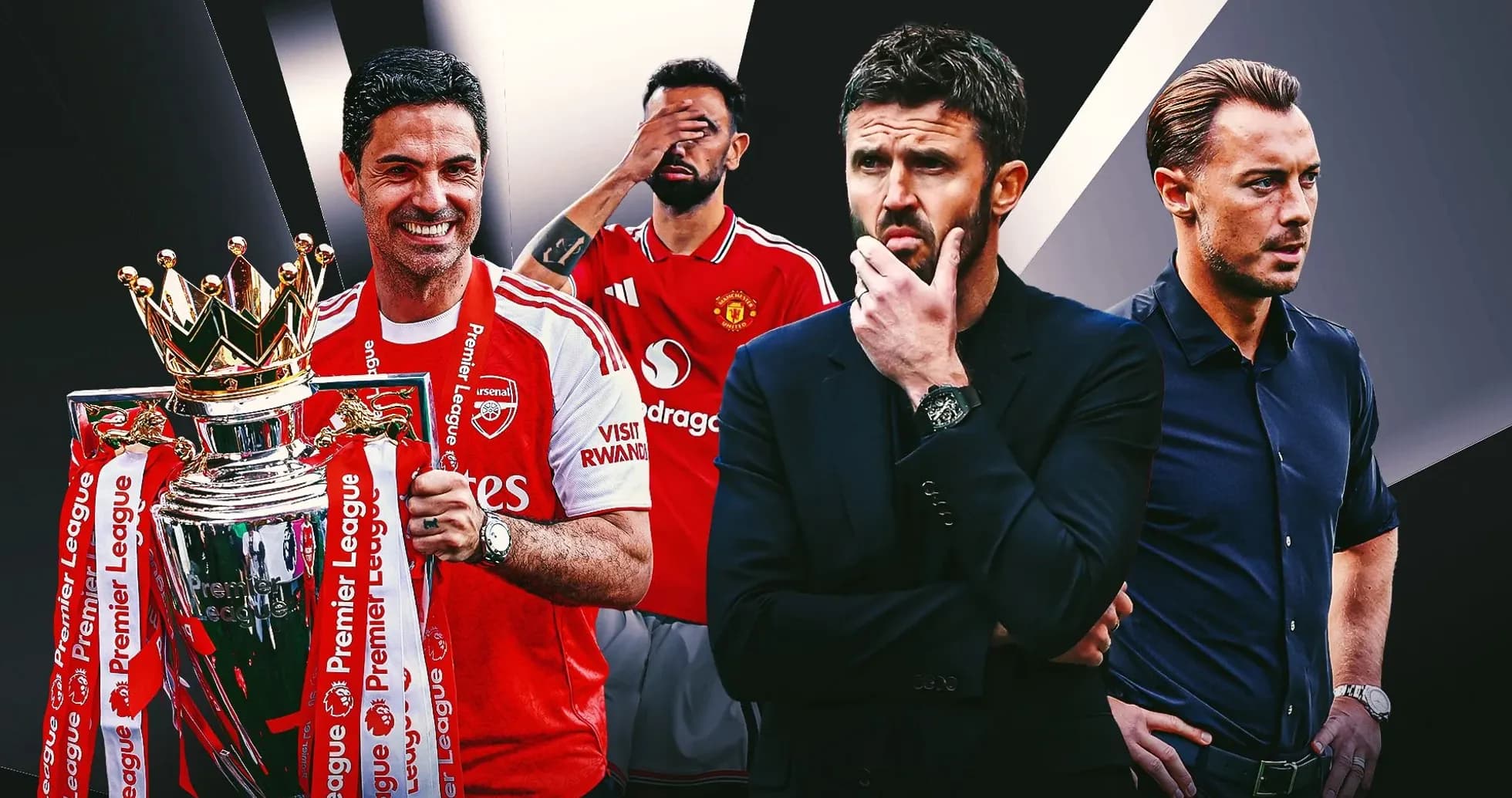
At Old Trafford, the mood should be buoyant. Michael Carrick guided Manchester United to third place in the Premier League and earned the job on a permanent basis. That kind of turnaround usually unlocks a serious transfer budget.
Instead, the brakes have been slammed on.
Under INEOS, United have spent just £75m so far, bringing in Andrey Santos from Chelsea and Youri Tielemans from Aston Villa. Useful players, yes. Enough to push United forward on multiple fronts? Not even close.
Carrick’s squad looks too thin to handle a top-four push and a proper Champions League run. The holes are glaring. Casemiro’s departure has left a huge gap in midfield. Mason Mount still cannot stay consistently fit. Manuel Ugarte is coming back from an ACL injury. Another midfielder is not a luxury; it is a necessity.
Across the back line, depth is equally alarming. One or two injuries and the structure starts to creak. Up front, the situation is just as fragile. With Joshua Zirkzee edging towards a move to Serie A, United may soon be left with Benjamin Sesko as their only natural No.9.
A slow start becomes a real possibility. If results dip, confidence – so brittle in recent years – could drain quickly, and Carrick would find himself fighting to keep his job. His early record, 12 wins from his first 17 games, was impressive, but it leaned heavily on moments of individual brilliance and strong defending. United still looked cautious on the ball and uncomfortable building from the back.
That approach will be tested to breaking point with three games a week. If the season is already listing badly by early December, the outcome feels inevitable: Carrick out, and INEOS searching for a fourth head coach in a miserable two-and-a-half-year spell in charge.
Arsenal stand alone at the summit
While others stumble, Arsenal finally look like a side ready to rule rather than chase.
After three straight years of finishing as runners-up, Arteta’s team surged clear last season, winning the 2025-26 Premier League title by seven points ahead of Manchester City. No late collapse, no familiar stutter. Just a ruthless march to the line that broke a psychological barrier for this squad.
That breakthrough, combined with the state of their rivals, makes Arsenal clear favourites again. And this time, it is not just about defending a crown. It is about dominating.
Liverpool’s backline is thin and vulnerable, undermining any talk of repeating their 2024-25 success. United are underpowered for the schedule they face. Aston Villa have tightened the purse strings at the wrong time. Chelsea and Tottenham are both in transition and miles from a title challenge.
That leaves City.
But the champions of the Guardiola era are gone. Pep has departed, and with him, key pillars of that dynasty. Bernardo Silva and John Stones have both moved on. Rodri, the 2024 Ballon d’Or winner and the heartbeat of City’s midfield, has joined Barcelona in a £65m move. He drove City forward, protected the defence, and set the tone as a leader. Losing him is a body blow.
Elliot Anderson has arrived for £116m, a major investment, but City are unmistakably entering a transitional phase. Frustration will come with it. The early signs were brutal: Arsenal dismantled City 3-0 in the Community Shield, a statement performance that left Enzo Maresca with serious problems to solve.
Arteta, by contrast, has continuity and depth. His squad is the most settled and stacked in the division, now reinforced by the all-action presence of Bruno Guimaraes from Newcastle. Arsenal are not just strong; they are complete.
Unless they collapse in spectacular fashion or are hit by an injury crisis on a scale rarely seen, the Premier League trophy looks set to stay at the Emirates in 2027.
Arbeloa walks into a trap at Fulham
Fulham’s five-year journey under Marco Silva ended in June with a sense of satisfaction and stability. Silva left on his own terms, heading back to Portugal to replace Jose Mourinho at Benfica. Mourinho, in turn, returned to Real Madrid, where Alvaro Arbeloa’s turbulent six-month spell had just been cut short.
Fulham then completed the circle, handing Arbeloa a three-year deal and the keys to Craven Cottage.
On paper, there are reasons for optimism. Arbeloa learned under Mourinho and Carlo Ancelotti during his playing days at Real Madrid. As a coach of both the senior side and Castilla, he showed a strong commitment to youth, which should suit a club like Fulham looking to bring through the next generation.
But the differences with Silva are stark, and they do not favour Fulham.
Silva kept the club competitive by leaning on a pragmatic 4-2-3-1, drilled in defensive discipline and clear structure. Arbeloa prefers a higher defensive line, a braver approach that can easily tip into recklessness with the wrong personnel. Fulham do not have the resources to absorb those risks.
There are deeper concerns. Questions over Arbeloa’s tactical acumen and man-management linger from his time at Real, where dressing-room friction chipped away at his authority. The spotlight at Craven Cottage will be softer, but the dynamics of a struggling squad can be just as unforgiving.
The transfer business does not ease the doubts. Arbeloa has brought Gonzalo Garcia and César Palacios with him from Madrid, while teenage forward Jonah Kusi-Asare has joined permanently from Bayern Munich after a promising loan. Interesting pieces, but not game-changers.
Crucially, Fulham have not replaced Harry Wilson, their top contributor for both goals and assists last season. The creative void is obvious, and there is no one in the squad who looks ready to fill it.
The fixture list offers no kindness. Chelsea, Liverpool and Manchester United all appear in Fulham’s first five games. An early slide towards the relegation zone feels almost baked in, and in that scenario, the pressure on an inexperienced manager will be fierce. Arbeloa is a romantic appointment, but he is also the leading candidate to become the first managerial casualty of the 2026-27 campaign.
Newcastle’s dream turns sour
Not long ago, Newcastle felt like the project everyone else should fear.
Their 2025 League Cup win over Liverpool ended a 70-year wait for major domestic silverware. They followed it by qualifying for the Champions League again under Eddie Howe. Tyneside adored him. The Saudi-backed owners backed him. The club looked aligned and ambitious.
Fifteen months later, the picture is unrecognisable.
Newcastle’s spine has been ripped out. Alexander Isak, Anthony Gordon, Sandro Tonali and Bruno Guimaraes have all left St James’ Park. None have been adequately replaced. Of the five signings made in the current window, only one is over 20. Established stars have repeatedly turned them down.
Howe has gone as well, deciding after five years that it was time to walk away. Instead of targeting a proven elite manager, Newcastle have turned to Matthias Jaissle, the German coach who has spent the last three seasons in the Saudi Pro League with Al-Ahli.
Jaissle shares Howe’s front-footed instincts and has been branded a “rock star” by CEO David Hopkinson. The reality he inherits is far less glamorous. Newcastle are still reeling from a 12th-place finish, the squad is unbalanced, and the mood is fragile.
There is still quality in the dressing room, but confidence is shot. Jaissle has barely had time to stamp his ideas on the team. Around him, the ownership’s recent decisions have alienated a fanbase that once felt fully invested in the project. The atmosphere has turned sour, and that toxicity will not stay in the stands for long.
On paper, relegation should be unthinkable for a club with Newcastle’s backing and resources. In practice, they have already dropped into the Championship twice this century. With chaos off the pitch and uncertainty on it, anyone who rules out a third fall is ignoring the warning signs flashing all over St James’ Park.
Related News
Transfer Rumors: Haaland’s Two Options; Real Madrid Targets $100 Million Premier League Star
Manchester United Targets Premier League Forward to Strengthen Attack
Liverpool Eyes 17-Year-Old Mexican Midfielder Gilberto Mora for Summer Transfer
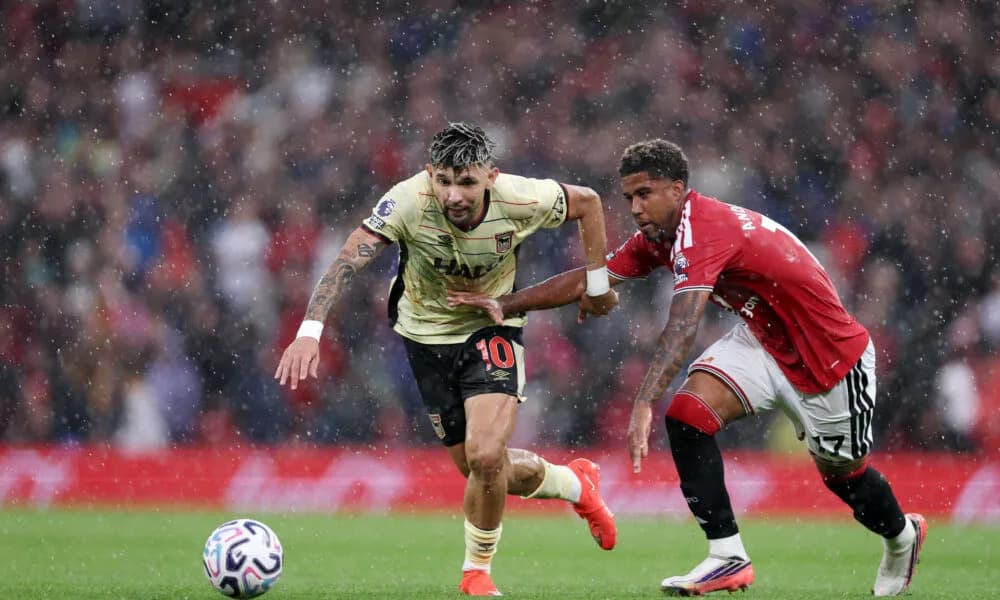
Summer 2026 Transfer Window: Manchester United and Tottenham Struggle with New Signings
Liverpool Maintain Interest in Real Madrid Midfielder Amid Transfer Challenges
Transfer Insider Warns Tottenham About Costly Sale of Will Lankshear