
Mikel Arteta's Chaos Strategy: Embracing Discomfort for Success
Mikel Arteta does not wait for chaos to arrive. He invites it in.
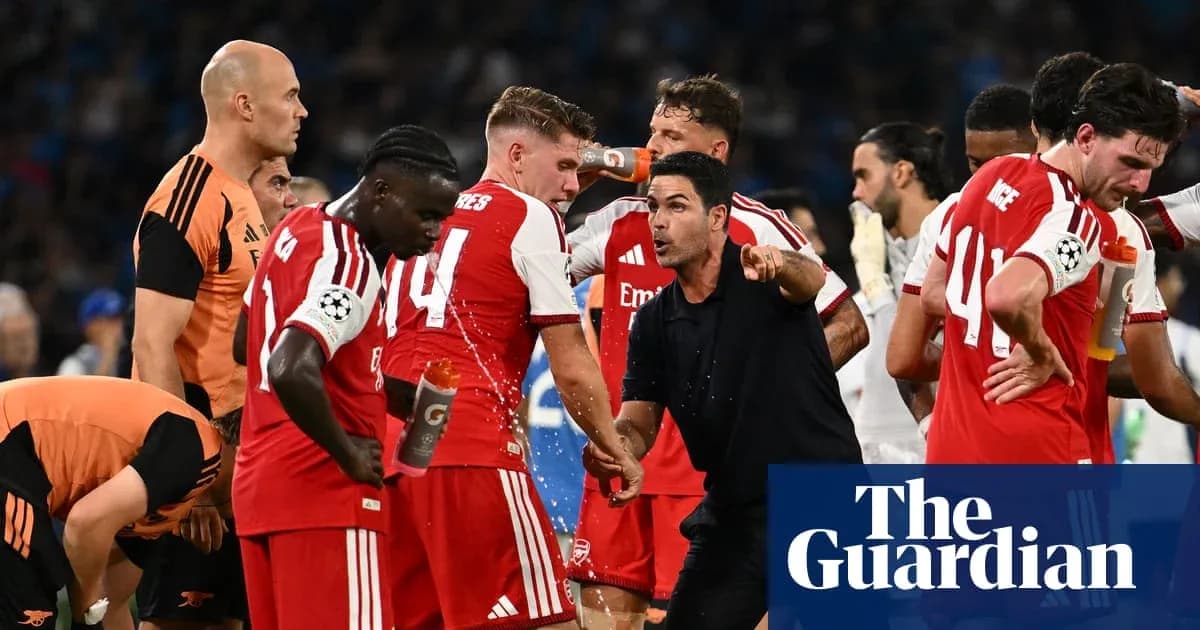
Delayed flights, late arrivals, stifling dressing rooms, meals pushed back until players start glancing at the clock – Arsenal’s manager is turning discomfort into a training tool, a habit he believes is now hardwired into his squad.
This week in Naples, he got the real thing. Arsenal’s flight to Italy for their Champions League opener against Napoli was held up for more than five hours, forcing Arteta to scrap his pre-match press conference as the team finally landed just before 10pm local time. The build-up was wrecked. The rhythm was gone.
The result? A 13th straight league-stage win in Europe, sealed by Martin Ødegaard’s second-half strike.
Arteta insists that is no coincidence.
“I love those challenges. I try to create them in pre-season,” he said, lifting the lid on a regime built on controlled disruption. “So when they happen, we already experience them and we already know. So, get to the stadium very late, change the routine as soon as the players have to do something else.”
He rattled through the scenarios he drills into his squad. Miss the flight. The train gets delayed. Traffic clogs the route to the ground. The message is always the same: no panic.
“I don’t want the players, the staff as well, panicking,” he said. “So, when that happens, adapt to it. ‘OK, we have another two or three hours on the plane, how can we use them?’ Play together, spend some time together, sleep, use it, but certainly don’t complain and then use it as an excuse because that’s not helpful at all.”
Arteta’s methods have long raised eyebrows. He has hired pickpockets at pre-season camps to test players’ awareness. Before a trip to Anfield he blasted crowd noise through speakers at training to mimic the intensity of Liverpool away. Now he is pushing the boundaries of comfort even further.
Asked what other tricks he has used, he barely paused.
“Just delay the meals, delay the transport, take a different route,” he said. “We have done many things: make the dressing room hotter, more difficult, more challenging, less [massage] beds. Those kind of things. Because we are going to have to adapt to different contexts and we will try to anticipate it and create the best possible conditions. But when there is that element of stress or surprise on matchday, it’s important [to be prepared].”
For Arteta, the chaos is not a quirk. It is a weapon.
Sunderland next, with old scars in mind
Arsenal head to Sunderland on Saturday night defending a perfect start to the new league campaign, but with a reminder fresh in their minds of how quickly control can slip away at the Stadium of Light.
Last season they were pegged back in a 2-2 draw there, Leandro Trossard putting Arsenal 2-1 up before Brian Brobbey snatched a late equaliser. That night still lingers – a warning about dropped points, lost leads, and how quickly momentum can turn.
Trossard’s own story has become a reference point for Arteta as he reflects on how players handle difficult conversations and exits. The Belgian left for Besiktas in July, yet was back at the Emirates last week, watching his former team-mates beat Chelsea and chatting in the dressing room.
The contrast with Gabriel Jesus’s departure has been striking. The Brazilian, now at Barcelona, claimed: “No one told me nothing,” after being made to train away from the main group before his move.
Arteta sounded genuinely taken aback.
“Very surprised, to be fair, especially because with Gabriel I had an individual talk in the dressing room,” he said. “And the words that we used for each other, it was all about gratitude. So, I don’t know. It’s OK.”
He did not shy away from the harder side of the job.
“Sometimes I understand when you have to deliver bad news or news that people don’t expect. Those things are reactive. Somebody has to be the bad cop; if I have to be, I have to be.”
Arteta prefers to judge relationships with distance, not noise in the immediate aftermath.
“What is important is normally what happens three months later, six months later,” he said. “When Trossard comes in, he’s in the dressing room with all of us, the atmosphere and the relation you have with all the players that they left, at some point their relationship has been really good. I hope that’s the same case.”
From heated dressing rooms to heated emotions, Arteta is betting that Arsenal’s capacity to live with discomfort – on and off the pitch – will decide how far this season can really go.
Related News
Real Madrid's Pursuit of Jarrad Branthwaite: A Defensive Solution

Julian Alvarez Transfer Saga: Agent Change on the Horizon

Floyd Samba's Stunning Debut: Two Goals in City’s 5-0 Victory

Troy Parrott Shines in Real Betis Victory Over Getafe

James Rodríguez Retires from Colombia National Team: A Golden Era Ends

Liverpool Target Lamine Camara: A Rising Force in Ligue 1