
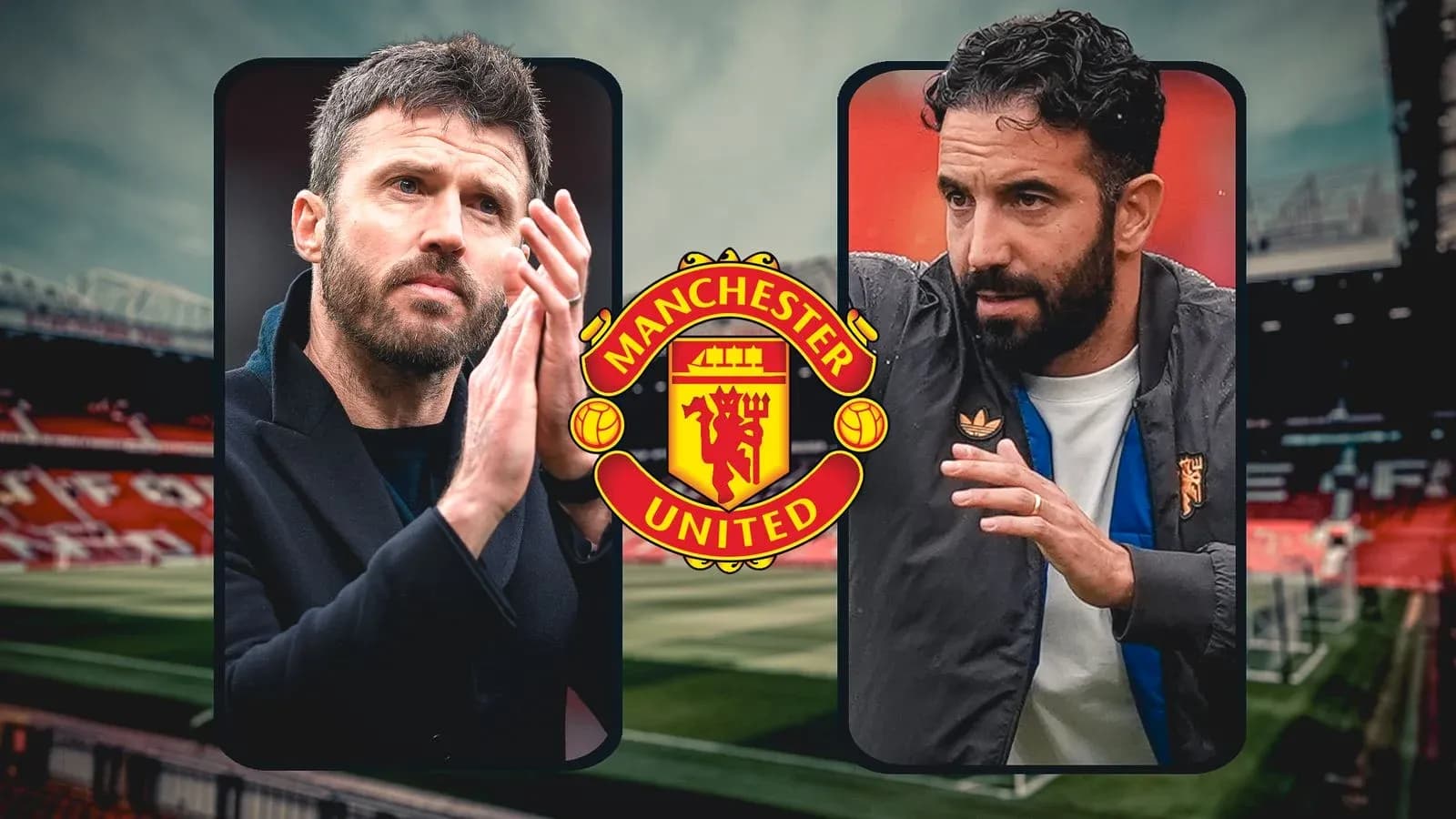
Manchester United's Transformation Under Michael Carrick
Ruben Amorim once told Manchester United fans they would have to suffer if they wanted success. Michael Carrick has arrived with a different message: there is still a United way to win – and it does not have to feel like an ordeal.
Twelve months ago, Marcus Rashford was lighting up the Camp Nou, Carrick was out of work after his sacking by Middlesbrough, and Amorim was gearing up for his first full season at Old Trafford. Now all three collide again, in a different country, under entirely different pressures.
Rashford, the prodigal forward, walks back into a club that looks familiar but feels transformed. Waiting for him is Carrick – once his team-mate and captain, now his head coach – arms metaphorically open, ready to offer a second act in a story that began on United’s training pitches a decade ago.
On the opposite bench stands Amorim, the man who decided Rashford’s time was up. The Portuguese coach, dismissed five months into last season, has resurfaced at AC Milan and is desperate to end a winless pre-season by beating his former employers. Carrick’s quiet, steely rebuild at United only sharpens the contrast with the drama and volatility that defined Amorim’s stay.
Rashford’s return adds a raw edge to this meeting. Amorim publicly questioned the England international’s attitude more than once before moving him on. So when United face Milan on Saturday, it will not feel like a gentle pre-season run-out. It will feel like the next episode in a saga that never quite switches off.
This final friendly of the summer offers a neat pause point. A chance to look back at the year that turned United upside down, and to see how Carrick has reshaped the club since Amorim’s exit.
From rigid dogma to United’s front foot
Amorim arrived with a clear idea and refused to let it go. His 3-4-3 was non-negotiable. Under pressure, he famously told reporters that not even the Pope could persuade him to change it. The line stuck, and so did the formation – right up to the moment it helped cost him his job.
When the Africa Cup of Nations stripped numbers from his squad, Amorim could not bend his system to fit the reality. There were late, tentative signs of compromise, but he always snapped back to the shape he trusted. That stubborn streak became a fault line between him and the hierarchy, and between him and a fanbase raised on a different kind of United.
The goals came in bursts, but the three-at-the-back set-up jarred with the club’s identity. It felt alien. Effective in flashes, yes, but hard to love. Harder still to imagine as the long-term face of Old Trafford.
Those same questions are already surfacing in Milan. Early whispers from Italy talk of players squeezed into unfamiliar roles, shoehorned into a system rather than the other way around.
Carrick’s first game in charge could not have been more different. A Manchester derby, a stage heavy with expectation, and he let the team off the leash. United hunted Manchester City, attacked with purpose, and won 2-0 in a scoreline that flattered the champions. City escaped a heavier beating.
That intent has carried into pre-season. United now look to move the ball forward quickly, not just recycle it. Summer signing Andrey Santos has been busy threading passes through the lines. Bryan Mbeumo, used centrally, keeps darting in behind, stretching defences, asking questions.
Bruno Fernandes has been one of the great beneficiaries. Restored to his natural No 10 role, he went on a creative surge that ended with a new Premier League assist record. Under Carrick, the tactical debate has quietened. The identity argument has disappeared. United look like United again.
Belief restored at Old Trafford
The mood around the club has shifted just as clearly as the shape on the pitch.
Amorim’s press conferences were box office, but they cast a long shadow. He spoke of storms, of suffering, of a team he once labelled the worst in United’s history. It made for gripping headlines, but it drained belief. Even when the league table showed United hovering near the top four, you would not have guessed it from his tone.
By the time he was sacked, Champions League qualification was still within reach. Carrick walked in, steadied the dressing room, and guided United over the line to a place Amorim had publicly claimed they were not ready for.
Now the language has changed. So has the outlook. New signing Leny Yoro has talked about wanting to win the league. Mbeumo has echoed that ambition. Carrick has not batted those claims away. He has welcomed them.
He sees a group capable of something significant, just a year on from a side that flirted with the wrong end of the table and looked mentally brittle. The fatalism has gone. In its place: a squad talking openly about titles, and a manager who does not flinch when they do.
A club of second chances again
Under Amorim, the line between in and out felt brutally clear. Cross it, and your United story was over. In a squad whose mentality had been questioned for years, that hard edge had its admirers.
Alejandro Garnacho felt it most. Kobbie Mainoo looked likely to follow. Rashford was sent on two loans, his relationship with the club stretched to breaking point.
Amorim will point to Garnacho as vindication. After a flat spell at Chelsea, the winger is now trying to relaunch his career on loan at Aston Villa. That call looks, at least for now, understandable.
Mainoo is a different tale. Frozen out early, he flourished under Carrick. The midfielder became a fixture in the side and, despite not starting a league match until January, finished the season on the PFA Young Player of the Year shortlist. A player Amorim could not find a place for became central to United’s revival.
Rashford sits somewhere in between. His talent has never been in doubt. Amorim’s issue was everything around it – application, standards, the day-to-day details that define a dressing room. Rashford’s loan spell at Villa showed flashes. His title-winning season at Barcelona proved he can still tilt a league. The question now is whether he is willing to fit into the culture Carrick has built, if he stays beyond the September deadline.
What is clear is that Carrick has reopened a door that seemed bolted shut. He has made room for redemption in a squad that had grown used to ultimatums. Whether Rashford grabs that chance will shape the next chapter, not just of his career, but of this new United era.
On Saturday, in a game that is supposed to be a friendly, Amorim and Carrick will stand on opposite touchlines again. One trying to prove he was right all along. The other quietly building a version of Manchester United that believes it can win the biggest prizes again.
Related News
Transfer Rumors: Haaland’s Two Options; Real Madrid Targets $100 Million Premier League Star
Manchester United Targets Premier League Forward to Strengthen Attack
Liverpool Eyes 17-Year-Old Mexican Midfielder Gilberto Mora for Summer Transfer
Summer 2026 Transfer Window: Manchester United and Tottenham Struggle with New Signings
Liverpool Maintain Interest in Real Madrid Midfielder Amid Transfer Challenges
Transfer Insider Warns Tottenham About Costly Sale of Will Lankshear