
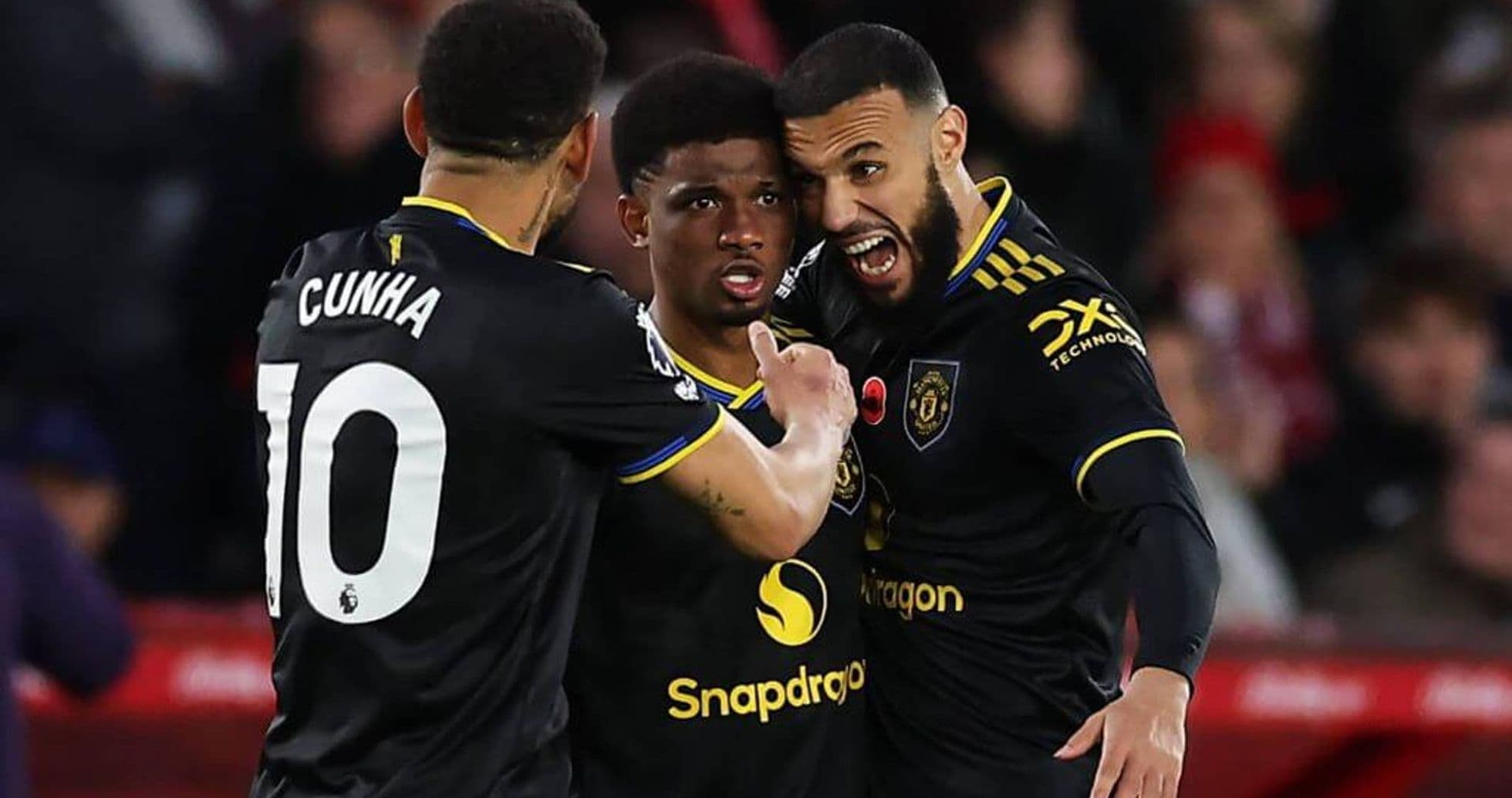
Manchester United vs Nottingham Forest: Premier League Clash Preview
Old Trafford hosts a high‑stakes clash on 17 May 2026 as Manchester United welcome Nottingham Forest in the Premier League’s penultimate round. United sit 3rd with 65 points and a Champions League league‑phase place within reach; Forest arrive in 16th on 43 points, still needing to rubber‑stamp safety and with the psychological boost of a strong recent record in this fixture.
Context and Stakes
In the league, Manchester United’s position is strong: 18 wins, 11 draws and 7 defeats from 36 games, with a +15 goal difference (63 scored, 48 conceded). A top‑four finish looks likely, but with the table still live, dropping points at home could open the door to rivals behind them.
Forest’s situation is more precarious. Sixteenth with 43 points and a goal difference of -2 (45 scored, 47 conceded), they have built just enough cushion to sit outside the relegation battle, yet a poor final week could still drag them into danger depending on other results. Their recent form (DWWWD) suggests a side grinding out results at the right time.
Form and Tactical Identities
Manchester United: Front‑foot at Old Trafford, but defensively fragile
Across all phases this season, United have been a classic high‑ceiling, high‑risk side. At Old Trafford they have taken 39 points from 18 games (12 wins, 3 draws, 3 defeats), scoring 36 and conceding 22. An average of 2.0 goals for and 1.2 against per home match underlines why they are so hard to stop here, but also why clean sheets (just 4 at home) are not routine.
Tactically, the data points to flexibility between a 3‑4‑2‑1 and a 4‑2‑3‑1, each used in 18 league matches. That duality allows them either to build with three centre‑backs and wing‑backs or to press higher with a back four and a more traditional double pivot.
Key to their attacking threat is verticality and shot volume from the front line and midfield:
- Benjamin Šeško has 11 league goals in 30 appearances, despite starting only 17. His 51 shots with 34 on target show a direct, penalty‑box‑focused striker who does not need many touches to influence games.
- Bryan Mbeumo has 9 goals and 3 assists, with 54 shots (30 on target) and 46 key passes. He profiles as the hybrid wide forward/second striker, both creator and finisher.
- Casemiro, remarkably, has chipped in with 9 league goals from midfield, plus 2 assists. With 35 shots (18 on target) and 34 key passes, he is not just a shield but a major offensive weapon on set plays and late runs.
In possession, United’s numbers suggest a side comfortable playing through midfield: Casemiro has completed 1,547 passes at 81% accuracy, providing the base, while Mbeumo’s 765 passes and 46 key passes hint at a strong right‑sided creative lane.
Defensively, though, the 48 goals conceded across 36 matches (1.3 per game) and only 7 clean sheets overall expose vulnerability. They concede slightly more away than at home, but even at Old Trafford the openness of their approach leaves space for counter‑attacks.
Discipline could also shape the tactical picture. United see a heavy cluster of yellow cards between minutes 46–60 and 76–90, and they have had 3 red cards across the season, two of them in the 46–60 range. That suggests aggressive pressing after half‑time, with the risk of going down to 10 men if tackles are mistimed.
Nottingham Forest: Better travellers, compact and opportunistic
Forest’s overall record (11 wins, 10 draws, 15 defeats) is modest, but their away profile is surprisingly robust. On the road they have 7 wins, 3 draws and 8 defeats from 18 games, scoring 26 and conceding 25. That is a positive away goal difference and a points return that compares favourably with their home form.
They tend to operate from a base of 4‑2‑3‑1 (29 matches), but have also used back fives and other shapes situationally. The statistical picture is of a side comfortable ceding territory, defending compactly, and looking to transition quickly:
- They average 1.4 goals scored and 1.4 conceded away, almost mirroring United’s home numbers but with a more conservative tilt.
- Forest have kept 9 clean sheets across all phases (5 away), which is impressive for a team in the bottom half.
- However, they have failed to score in 14 matches (5 away), underlining the risk that if their main creators are contained or missing, the attack can stall.
The standout figure is Morgan Gibbs‑White. With 13 goals and 4 assists from midfield, 54 shots (28 on target), and 46 key passes, he is the creative and goalscoring hub. His 1,139 completed passes at 81% accuracy and 305 duels (122 won) show a player heavily involved in every phase: linking play, pressing, and carrying the ball (52 dribble attempts, 25 successful).
In defensive transition, Forest are disciplined. Their yellow cards spike between 46–60 and 61–75, suggesting a structured aggression in the middle third as they try to break up opposition rhythm after the interval.
Injuries and Selection Decisions
United’s back line is weakened by the confirmed absence of M. de Ligt (back injury). His unavailability is significant for a team already conceding at 1.3 goals per game; it may push them towards a back four rather than a back three, or force a reshuffle in their preferred 3‑4‑2‑1.
Further up the pitch, B. Šeško is listed as questionable with a leg injury, and M. Ugarte is also doubtful with a back issue. If Šeško is not fit to start, United lose their most efficient finisher; that would likely place more goalscoring responsibility on Mbeumo and late‑arriving midfielders like Casemiro.
Forest’s list is longer and potentially more damaging:
- Confirmed absentees: W. Boly (knee), C. Hudson‑Odoi (injury), John Victor (knee), N. Savona (knee). That strips depth from central defence and wide attacking options.
- Questionable: Z. Abbott (concussion), O. Aina (injury), M. Gibbs‑White (head injury), Murillo (muscle injury), I. Sangare (injury).
The Gibbs‑White question mark is the biggest single variable in this fixture. If he is unavailable, Forest lose their leading scorer, main chance‑creator, and a key set‑piece taker. Murillo and Sangare’s status will also influence how bold Forest can be: without them, they may be forced into a more reactive, low‑block approach.
Head‑to‑Head Snapshot (Last 5 Competitive Meetings)
The recent history between these sides is surprisingly tilted towards Forest:
- 1 November 2025, City Ground (Premier League): Nottingham Forest 2-2 Manchester United – draw.
- 1 April 2025, The City Ground (Premier League): Nottingham Forest 1-0 Manchester United – Forest win.
- 7 December 2024, Old Trafford (Premier League): Manchester United 2-3 Nottingham Forest – Forest win.
- 28 February 2024, The City Ground (FA Cup 5th Round): Nottingham Forest 0-1 Manchester United – United win.
- 30 December 2023, The City Ground (Premier League): Nottingham Forest 2-1 Manchester United – Forest win.
Across these five competitive fixtures, Forest have 3 wins, United have 1, and there has been 1 draw. Importantly, Forest have already won at Old Trafford in this period (2-3 in December 2024), which will give them belief that they can repeat the trick.
Key Tactical Battlegrounds
1. United’s attacking lanes vs Forest’s compact block
United’s 2.0 goals per home game, combined with Mbeumo’s dual threat and Casemiro’s box presence, suggest they will dominate territory. The question is whether Forest’s away structure – 25 goals conceded in 18 away matches and 5 away clean sheets – can withstand sustained pressure.
If Šeško starts, United will look to combine his penalty‑box movement with Mbeumo’s deliveries and through balls from Casemiro and the No.10 zone. If he does not, United may lean more on wide overloads and late runs from midfield.
2. Gibbs‑White (if fit) vs United’s midfield balance
With de Ligt missing, United’s defensive line may be less dominant in the air and less secure stepping into midfield. Gibbs‑White, operating between the lines, could exploit any hesitation, especially in transitions. His 46 key passes and 13 goals highlight his capacity to punish mistakes.
If he is ruled out, Forest’s threat between the lines diminishes considerably, and they may be forced into a more direct, counter‑attacking plan built around pace rather than intricate combination play.
3. Set pieces and discipline
Casemiro’s aerial ability and shooting from range, combined with Mbeumo’s delivery, make United dangerous from dead balls. Forest, missing Boly and potentially Murillo, could be vulnerable in those situations.
On the other side, Forest’s compactness and Gibbs‑White’s technique give them their own set‑piece edge. United’s red‑card profile – three dismissals, with two just after half‑time – suggests that if the game becomes fractious, they are at some risk of finishing with 10 men.
The Verdict
On paper, Manchester United’s home record, attacking depth, and league position make them clear favourites. Their 12 wins from 18 at Old Trafford, 63 goals across the season, and the presence of multiple goalscoring threats (Šeško, Mbeumo, Casemiro) all point towards a match they should control.
However, Forest’s away record (7 wins and a positive away goal difference), plus a recent head‑to‑head edge of 3 wins from the last 5 competitive meetings, means this is unlikely to be straightforward. Forest have already shown they can win both at home and at Old Trafford against this opponent.
If Gibbs‑White is passed fit, Forest have enough creativity and cutting edge to trouble a United defence missing de Ligt and conceding at 1.3 goals per game. In that scenario, a high‑scoring contest is plausible, with United’s firepower eventually telling.
If Forest’s key doubts – especially Gibbs‑White and Murillo – do not make it, their attacking ceiling drops sharply. Against a United side that scores two per game at home, that would tilt the balance heavily towards the hosts, who should then have the quality to secure a result that consolidates their top‑three place and keeps Champions League ambitions firmly on track.
Related News
Bournemouth vs Liverpool Prediction: Key Stats and Betting Tips
Tottenham vs Aston Villa Predicted Lineups: Team News for Premier League Clash
Brighton vs Arsenal: Premier League Clash Preview
Manchester City vs Sunderland: Premier League Clash Preview
Tottenham vs Aston Villa: Early Relegation Battle
Brentford vs Chelsea Predicted Lineups: Team News and Match Insights