
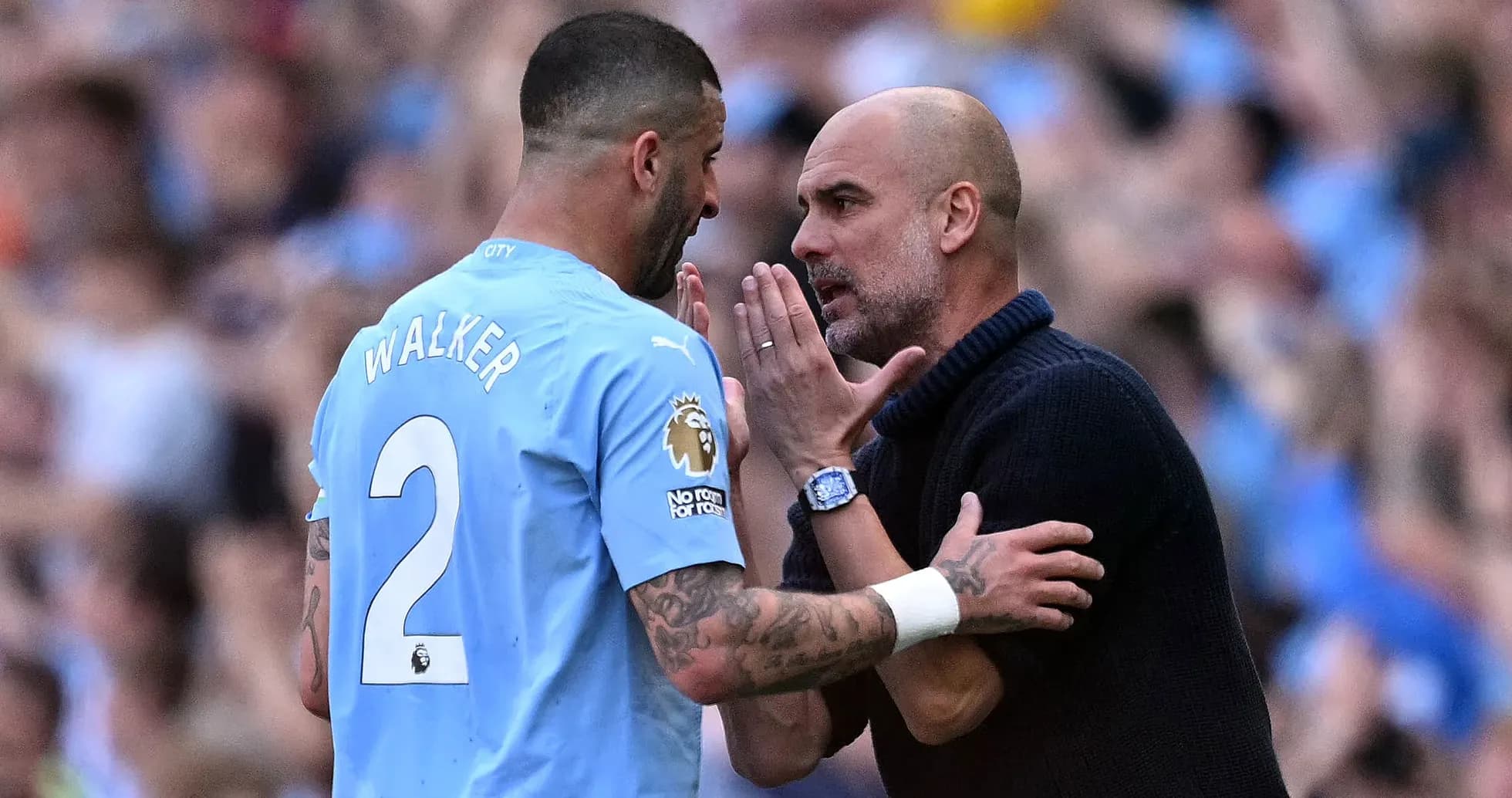
Manchester City's Dressing Room Turmoil: Guardiola and Walker's Confrontation
The walls of the Anfield away dressing room had barely stopped shaking from the noise outside when Manchester City’s own foundations were rocked inside.
A 2-0 defeat to Liverpool in December 2024 had already cut deep. What followed, revealed in new footage from Amazon Prime Video’s documentary A Beautiful Obsession, went deeper still. Kyle Walker, one of Pep Guardiola’s captains and most senior figures, erupted.
“You keep saying my name, every meeting,” he snapped, fury spilling out in front of stunned teammates. “Every f***ing meeting it’s my name.”
This wasn’t a one-off complaint. It was the release of weeks of frustration inside a dressing room that had forgotten how to win. The loss at Anfield didn’t just dent City’s title defence; it sealed a miserable sequence of seven games without victory, six of them defeats. Just months earlier, this same group had made history with four straight Premier League titles. Now they looked broken.
The timing made it all the more combustible. Guardiola had only recently signed a new contract, a clear declaration that he wanted to lead the next cycle. Instead, he found himself at the centre of a storm.
Walker felt singled out. A captain, yes, but in his eyes, a convenient target.
As voices rose, Guardiola tried to calm the room and explain why Walker’s name kept coming up. It was, he said, simply because of his role as one of the leaders. That logic did nothing to cool the temperature.
“You didn’t want me to be a captain,” Walker shot back, cutting through the air. The right-back insisted he was being dragged into criticism for issues that went far beyond him. “I’ve reacted to someone else, I’ve lost the ball, you somehow bring my name into it.”
What started as a tactical debrief had become something else entirely: a confrontation about trust, responsibility and blame inside one of football’s most finely tuned machines.
Then the mood shifted.
Guardiola, usually the sharp, relentless voice at the front of the room, suddenly looked exposed. The documentary cameras captured a side rarely seen in public. Fighting back tears, he addressed the squad not as a serial winner, but as a man wondering if he had become part of the problem.
“If I am a problem, you have to tell me,” he said, visibly emotional. “I won’t stay here for the money or just for the fact of staying. I extended the contract because I want to be with you, I want to fight in that position.”
The room fell quiet. This was no tactical lecture. It was a plea.
“I don’t want you to feel like I’m leaving and running away from you. I don’t want to have the feeling that the pieces fall down. And I feel ‘No, I want to help you.’”
He turned to his captains, then to the rest of the squad, inviting a verdict few managers would dare to ask for.
“But if you feel, captains first and then the other ones, that there is a problem? Tell me. It’s not going to change the love I have for all of you. Not one second. But I want to fight. That’s all. I’m sorry.”
In a season defined by City’s sudden vulnerability, this was the rawest image of all: a captain accusing his manager of scapegoating, and a manager asking his players whether they still wanted him to lead the fight.
Related News
Transfer Rumors: Haaland’s Two Options; Real Madrid Targets $100 Million Premier League Star
Manchester United Targets Premier League Forward to Strengthen Attack

Liverpool Eyes 17-Year-Old Mexican Midfielder Gilberto Mora for Summer Transfer
Summer 2026 Transfer Window: Manchester United and Tottenham Struggle with New Signings
Liverpool Maintain Interest in Real Madrid Midfielder Amid Transfer Challenges
Transfer Insider Warns Tottenham About Costly Sale of Will Lankshear