
Manchester City's Symbolic Defeat: The End of an Era
The Etihad has seen quieter nights than this, but rarely one that felt so symbolic.
A 3-0 defeat to Arsenal in the Community Shield will not appear in any list of decisive results. It was not a final, not a title decider, not a season-defining collapse. Yet as the goals went in and Manchester City folded, the stadium felt as though it was watching the slow closing of its own golden chapter.
This was not just a bad day. It looked like the first hard evidence that a project built over more than a decade has started to creak at its foundations.
The pillars start to fall
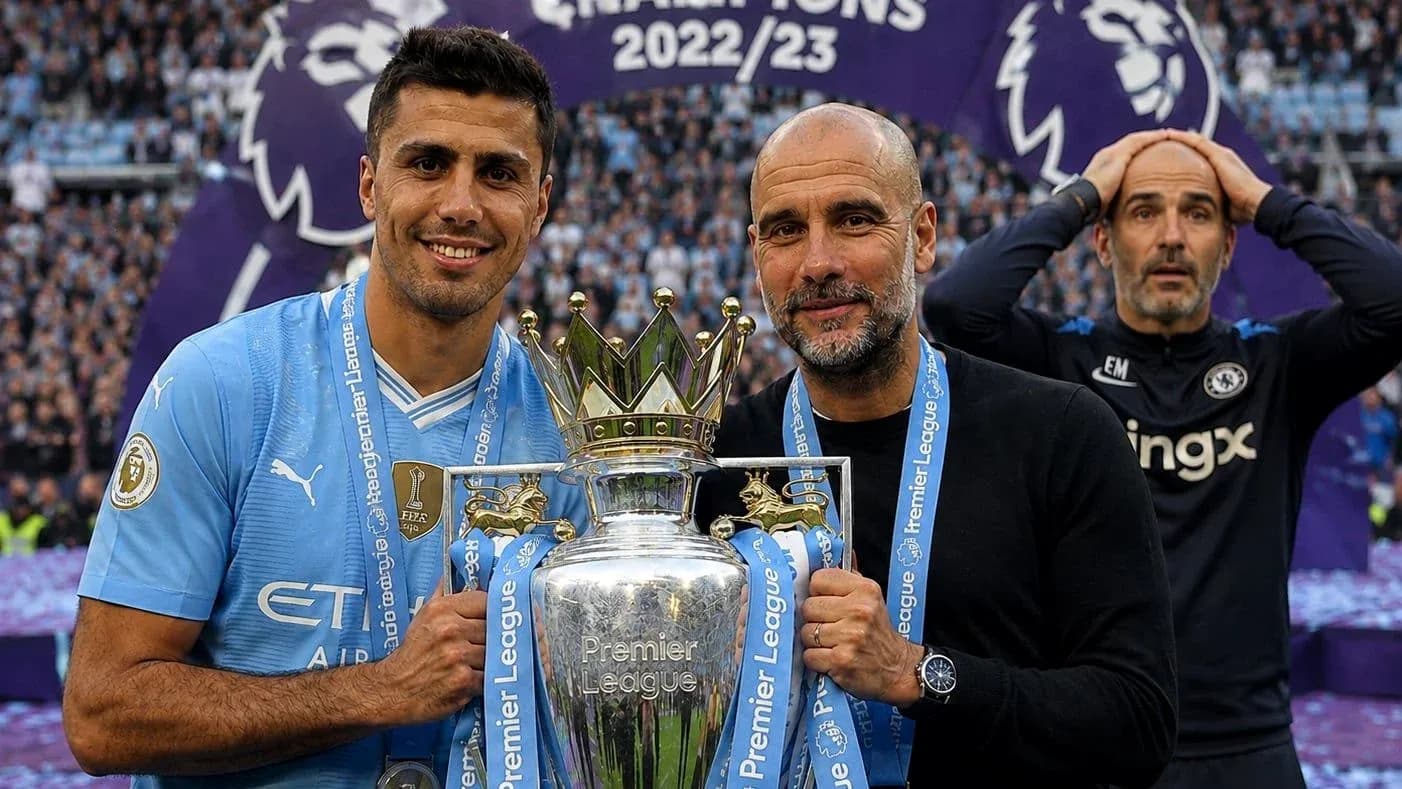
The first crack came upstairs. Txiki Begiristain, the architect behind City’s rise from ambitious pretender to serial champion, has gone. Quietly, without drama, but decisively. He chose to step away more than a year ago, stayed long enough to guide the handover, then slipped out of the spotlight.
On the touchline, Pep Guardiola will follow. Not today, not tomorrow, but the end is no longer a distant theory. His departure is now part of the club’s short-term planning, not its long-term imagination. And looming over everything is the prospect of Rodri’s farewell, the third and most fragile pillar.
One by one, the figures who defined the most dominant era in City’s history are moving towards the exit. The club that once felt untouchable suddenly looks like a giant trying to remember how it learned to walk.
The question that now hangs over English football is brutal in its simplicity: can City avoid becoming the new Manchester United?
When Sir Alex Ferguson left Old Trafford, United’s decline was not instant, but it was relentless. Manager followed manager, money poured out, identity drifted. City now stand at the edge of a similar risk, losing three core pillars in quick succession under the full glare of expectation.
The answer is no longer hypothetical. It is already playing out on the pitch.
Maresca’s harsh first lesson
Into this storm has stepped Enzo Maresca. A coach with ideas, a record of success at Leicester City and Chelsea, and a reputation as a sharp, modern tactician. None of that protected him from his first serious collision with reality.
Arsenal did not just beat City in the Community Shield. They imposed themselves. They exposed a side that looked unsure of itself, stripped of the balance and inevitability that once defined Guardiola’s teams. City walked away not just with a heavy defeat, but with a new and uncomfortable feeling: that the difficult days at the Etihad have truly begun.
Maresca has inherited a club that still looks stable on paper. The ownership remains strong and committed. Ferran Soriano is still in place, the executive brain behind City’s financial and operational power. The training ground is elite, the resources vast.
Yet beneath that surface, the footballing core has shifted. Begiristain, the first great pillar, is no longer the one steering the sporting vision.
His track record was ruthless and efficient. Erling Haaland for around £60 million. Rodri for about £70 million. Big fees, yes, but balanced by smart exits and a coherent long-term plan. He built squads that were both expensive and sustainable.
Hugo Viana, his successor, has already flown past £130 million on just two signings this summer. The numbers alone do not condemn him, but the contrast in approach is stark. The precision that once defined City’s recruitment has given way to something more aggressive, less measured.
This is not a minor administrative shift. It is a sign that the vision that made City so formidable is changing shape. United went through a similar metamorphosis after Ferguson left, and they are still paying for it.
Life after Pep
Guardiola’s impending departure is the second great rupture. City did not just employ a successful coach; they built an entire sporting culture around his mind. His tactical detail, his relentless standards, his ability to refresh a winning side year after year – all of it came with one crucial advantage: absolute authority.
Pep was untouchable. Win or lose, his position was never in question. No one, not Maresca, not anyone else, will inherit that level of security.
That difference matters. A manager who knows he is safe works and thinks differently to one who feels the heat after every setback. The gap shows up in results, in risk-taking, in the courage to reshape a team.
When Guardiola goes, he will take more than his tactics with him. The style, the certainty, the psychological stranglehold City held over their rivals – all of that was tied to his presence. Once he is gone, the aura goes with him.
United learned this the hard way. Ferguson’s exit created a vacuum no one could fill. One experiment led to another, and the club spent years chasing a version of itself that no longer existed.
City now stare at a similar void.
Rodri: the most dangerous loss of all
If Begiristain was the architect and Pep the mastermind on the touchline, Rodri has been the on-pitch metronome. The third pillar, and perhaps the most dangerous to lose.
Few midfielders in world football can raise a team’s level so dramatically just by being on the pitch. With Rodri, City played like champions. Without him, they often looked strangely ordinary.
His previous absences told the story plainly. The midfield lost its shape. The pressing lost its timing. The team lost the balance and discipline that their Spanish captain quietly enforced every week.
Now his departure looms. It is not done, but it is close enough to feel real, close enough to shape how City must plan. Replacing that kind of influence is almost impossible in the short term.
History is full of clubs who let their pivotal man go and never quite recovered. City will back themselves to be different, but there is no guarantee. The fear is real, and justified.
A rebuild, whether they want it or not
On one side of the scale, City still have everything a modern superclub needs: money, facilities, global reach, stable ownership. On the other, they have lost – or are about to lose – the three minds that built their era of supremacy.
That combination pushes them into a genuine rebuilding phase, whether they choose to call it that or not.
Maresca’s task is brutal. He must invent a new identity at a club that has grown used to perfection, and he must do it while the demand for instant success only intensifies. This is not Leicester. It is not Chelsea. The margin for error here is almost non-existent.
The defeat to Arsenal does not decide a season. It does not define Maresca. But it did shine a cold light on a team that no longer looks as complete, as controlled, or as inevitable as the City of recent years.
If early-season results follow the same pattern, the pressure will escalate fast. The club may feel compelled to push through a near-total rebuild – new ideas, new leaders, new core – just as United did in the chaotic years after Ferguson.
The warning is clear. United’s post-2013 journey is a case study in what happens when a club loses its pillars and then loses its way. Managerial churn, erratic spending, constant tactical resets, and a brand that still sells but no longer terrifies.
City have the advantage of continuity at ownership and board level, and a more disciplined financial model. Those strengths give them a chance to avoid the same spiral. But they are no guarantee.
The first visible sign of danger arrived at Wembley against Arsenal. It will not be the last.
What comes next will decide whether this was just a jolt on the road, or the start of a long, dark tunnel that their greatest rivals know all too well.
Related News
Transfer Rumors: Haaland’s Two Options; Real Madrid Targets $100 Million Premier League Star
Manchester United Targets Premier League Forward to Strengthen Attack

Liverpool Eyes 17-Year-Old Mexican Midfielder Gilberto Mora for Summer Transfer
Summer 2026 Transfer Window: Manchester United and Tottenham Struggle with New Signings
Liverpool Maintain Interest in Real Madrid Midfielder Amid Transfer Challenges
Transfer Insider Warns Tottenham About Costly Sale of Will Lankshear