
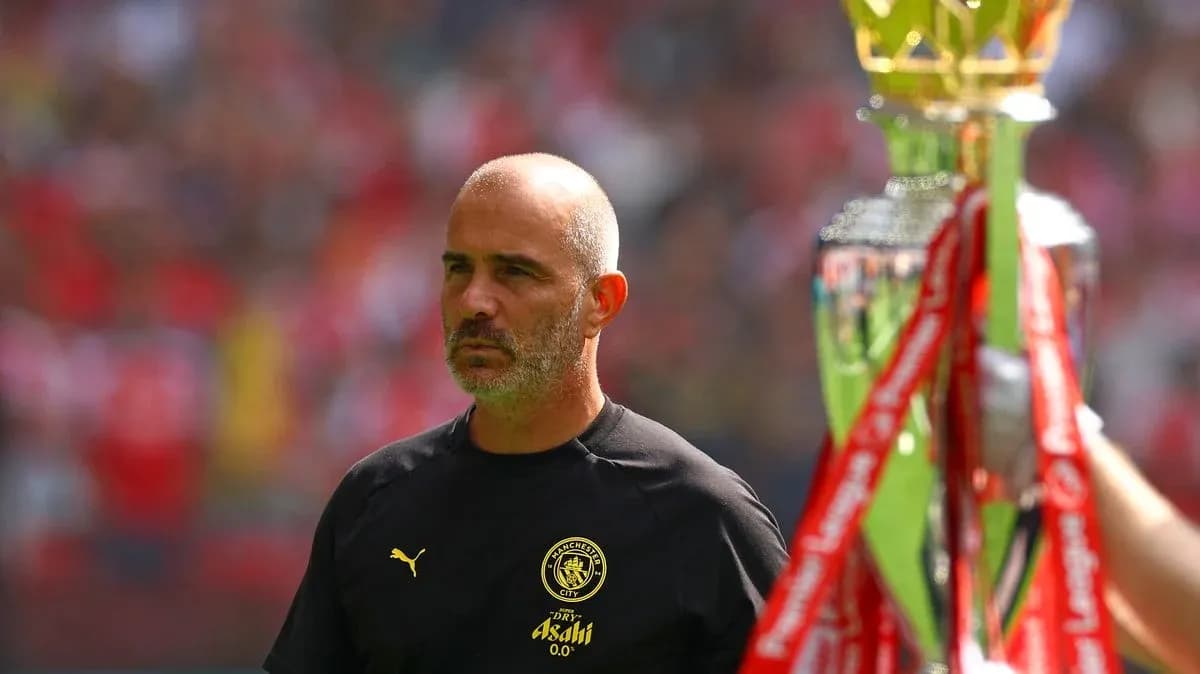
Manchester City's Community Shield Disappointment: A Tactical Examination
Manchester City’s Community Shield display didn’t just disappoint. It jarred.
After a pre-season that had slowly pieced together Enzo Maresca’s ideas, Sunday against Arsenal felt like someone had shaken the puzzle box and thrown half the pieces on the floor. The patterns City fans thought they’d spotted on the Asia tour? Hard to find at Wembley.
Yes, Arsenal are a level above the opposition City faced over the summer. That matters. But this wasn’t simply a case of facing better players. For long spells, City looked less than the sum of their parts, a team out of sync with the principles their new manager has been preaching.
And a lot of that came down to Maresca’s own calls.
Selection shock and a different priority
Four big names, four recent holiday returnees: Erling Haaland, Elliot Anderson, Nico O’Reilly and Jeremy Doku. All straight into the starting XI after only a handful of training sessions.
On the face of it, that looked like a manager desperate to land his first piece of silverware in England. Why else rush them back when other players had banked more minutes and more tactical work over the summer?
Maresca’s explanation after the game told a different story. This wasn’t about the Community Shield. It was about Bournemouth and the opening weeks of the Premier League.
"Sometimes players prefer to start doing the proper warm up and start from the beginning," he said. The plan, he stressed, had been decided before kick-off: start them, get them up to speed, then pull them after 45 to 60 minutes. It was a fitness play, not a final.
In other words, the strongest XI on paper was not actually about Arsenal. It was about accelerating readiness for the real business to come.
The cost? City’s cohesion.
Anderson out of place, Kovacic exposed
Nobody suffered more than Anderson. Only days earlier, Maresca had been crystal clear: the former Forest midfielder is at his best as a No.6 or a No.8. Central. In the thick of it.
Against Arsenal, he was pushed out to the right in a loose, floating role that suited neither him nor the structure behind him. It left Mateo Kovacic badly exposed as the lone holding midfielder, swamped by Arsenal’s runners and unable to control the middle.
There were flashes from Anderson. Two excellent deliveries from that right side – one for Haaland, one for Doku – hinted at his attacking quality. But they were isolated moments in a role that never looked natural for him.
It was the kind of positional experiment that might happen in pre-season behind closed doors. Instead, it played out under the arch at Wembley.
Nunes missing, defence suffers
If Anderson’s deployment raised eyebrows, Matheus Nunes’ absence from the starting XI raised questions.
Maresca has backed Nunes as City’s first-choice right-back to the point that the club have parked plans to bring in competition for him this window. That’s a serious show of faith.
Yet on Sunday, he watched on while Abdukodir Khusanov endured a difficult afternoon in a back line that never fully settled. Arsenal found gaps, City looked uncertain, and the right side in particular never convinced.
Those two decisions – Anderson out of position and Nunes on the bench – dragged City into deeper trouble. They didn’t just blunt City’s strengths; they distorted the shape of the team.
The key, though, is that they also ran against much of what Maresca has been building in pre-season. That’s why there’s a strong argument this was an outlier rather than a blueprint.
With Anderson restored to a central role and Nunes installed at right-back, City should look far closer to the side Maresca has been sketching out since he walked through the door.
Grealish returns, and the market watches
Then came the other surprise: Jack Grealish.
The £100m winger, fresh from a loan spell at Everton, hadn’t been on the Asia tour. City have been open to moving him on in this window. Yet there he was, introduced for the second half in a game that, by Maresca’s own admission, wasn’t the priority.
Those minutes might have gone to someone like Rayan Ait-Nouri, who could yet play a more central role this season. Instead, Grealish got the stage – and used it well enough to remind everyone he’s still a serious footballer.
For City, that cameo serves a purpose. Any club weighing up a move for Grealish will have taken note. Sharp, involved, and clearly not short of motivation, he did his prospects – and City’s negotiating position – no harm at all.
A failed first test – or part of a longer game?
Strip it back and Maresca’s first major examination in English football ended in failure. City lost a showpiece game, looked disjointed, and left Wembley with more questions than answers about how quickly his ideas can take hold – and whether they’ll be strong enough to sustain a Premier League and Champions League challenge.
But context matters.
Some of the most jarring choices – the rushed returns, the positional reshuffle, the omission of Nunes – cut across the patterns of pre-season rather than confirming them. That hints at a manager willing to sacrifice one high-profile afternoon to serve a bigger plan.
The panic that has swirled around those 90 minutes is understandable. Guardiola has gone, the safety net has disappeared, and every wobble now feels magnified. Yet isolating this one performance and treating it as a definitive verdict on Maresca’s City looks premature.
The real judgment won’t be written off a Community Shield defeat to Arsenal. It will come when Bournemouth arrive, the league starts counting, and we see whether Sunday was a warning sign – or just a messy, awkward step on the way to something sharper.
Related News
Transfer Rumors: Haaland’s Two Options; Real Madrid Targets $100 Million Premier League Star
Manchester United Targets Premier League Forward to Strengthen Attack
Liverpool Eyes 17-Year-Old Mexican Midfielder Gilberto Mora for Summer Transfer
Summer 2026 Transfer Window: Manchester United and Tottenham Struggle with New Signings
Liverpool Maintain Interest in Real Madrid Midfielder Amid Transfer Challenges
Transfer Insider Warns Tottenham About Costly Sale of Will Lankshear