
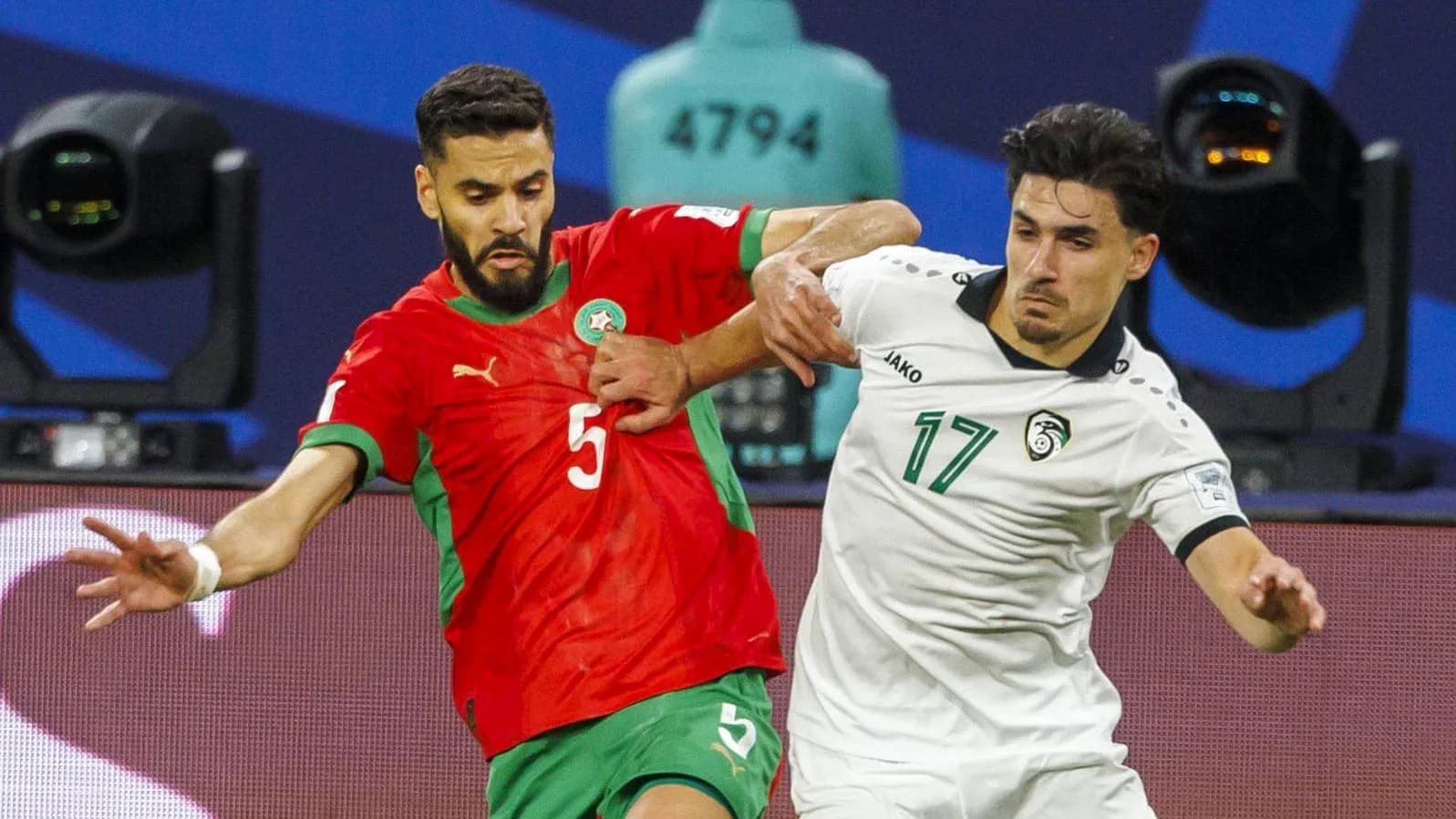
Mahmoud Bentaieb's International Allegiance Dilemma: Morocco to Egypt?
Mahmoud Bentaieb, the Zamalek defender who recently broke into the Morocco national team, is weighing up a dramatic switch of international allegiance to Egypt – but the law may shut the door in his face.
His agent, Youssef Massaad, has confirmed that the 26-year-old is actively studying the possibility of representing the Pharaohs, after feeling blindsided by his omission from the latest Morocco squad named by coach Mohamed Ouahbi.
For days, the story bounced back and forth between Cairo and Rabat. Egyptian reports claimed Bentaieb wanted to wear Egypt’s colours. Moroccan outlets pushed back, insisting there was nothing in it. Then Massaad went public to cut through the noise.
Speaking to Moroccan newspaper “Al-Omk”, he revealed that Ouahbi’s decision to overlook the Zamalek defender came as a surprise and opened the door to a rethink. According to Massaad, Egyptian officials have already floated the idea of Bentaieb switching to Egypt, a proposal the player is now seriously considering after initially prioritising his homeland, Morocco.
The interest is not just theoretical. Press reports say Bentaieb has already approached FIFA to ask about the legal framework for changing his sporting nationality and is waiting on an official answer.
The legal maze
On paper, the path looks narrow.
Lebanese legal expert Ralph Charbel, speaking to Kooora, laid out the conditions FIFA uses when assessing a player’s request to change national teams. For any player who has never represented a country at youth level and wants to play for a different national side, he must first obtain that country’s nationality and then satisfy at least one of these criteria:
- He was born in that country.
- His father or mother was born there.
- His grandfather or grandmother was born there.
- He has lived in the country for a minimum of three years if he moved there before turning ten, or at least five years if he moved there after the age of ten.
Bentaieb’s reality complicates things. He was born in Casablanca to Moroccan parents. No Egyptian parents, no Egyptian grandparents. His link to Egypt is different: he is married to an Egyptian woman, the daughter of Zamalek board member Ahmed Suleiman, and he has been based in Cairo since joining the club from Saint-Étienne in the summer of 2024. That gives him around two years of residence in Egypt so far – short of the five-year threshold for a player who arrived as an adult.
Even if he eventually ticks the residency box and secures Egyptian nationality, another, bigger obstacle looms.
Arab Cup caps change everything
Charbel explained that any potential switch also hinges on a second layer of FIFA rules. A player who has already played for a senior national team can only change allegiance if:
- He has not played more than three matches for that team.
- At least three years have passed since his last appearance.
Bentaieb never featured for Morocco at youth or junior level. His international debut came straight with the senior side at the 2025 Arab Cup in Qatar. That, on the surface, might have left some room to manoeuvre.
But the numbers are brutal. He played four times for Morocco during that tournament, all as a substitute, against Saudi Arabia, Syria, the UAE and Jordan – four caps, four wins. He also sat on the bench in the opening two matches against Comoros and Oman, which both ended in draws, without getting on the pitch.
Those four substitute appearances still count. They helped Morocco lift the Arab Cup under coach Tarik Sektioui, now in charge of the Oman national team, and they now weigh heavily on the defender’s international future.
The key detail: FIFA has officially recognised the Arab Cup as a competition under its umbrella since 2021. That status turns what might once have been dismissed as a secondary tournament into a fully official stage. Every minute Bentaieb played in Qatar is locked into his Morocco record.
Put simply, he has already exceeded the three-match limit for a player hoping to change national teams.
A door almost shut – but not locked
On the face of it, the combination of residency rules and Arab Cup caps leaves Bentaieb boxed in. He has not yet lived long enough in Egypt to qualify on residence grounds, and even if he does, his four senior appearances for Morocco at an official FIFA-recognised tournament appear to slam the door on a switch.
Charbel, looking at the facts as they stand, described the chances of a change of sporting nationality “at the present time” as difficult. The legal framework, as it is written, does Bentaieb no favours.
Yet the story is not completely over.
The international lawyer also stressed that he cannot state with absolute certainty that FIFA will reject the request. The final decision will depend on the exact legal arguments and documentation Bentaieb’s camp presents to world football’s governing body.
For now, the Zamalek defender finds himself in an unusual limbo: wanted in Egypt, overlooked in Morocco, and waiting on a ruling from Zurich that could define the rest of his international career.
Related News
Melvine Malard Shines on League Debut for Chelsea

Banks Chooses Germany Over USMNT: A Setback for Pochettino
Mourinho's Message to Vinicius Jr. Before Madrid Derby

Chelsea's Defensive Struggles Exposed in Brentford Defeat
Jon Aramburu: Premier League Clubs Eye LaLiga Defender
JJ Gabriel Sparks Transfer Battle Among Europe's Giants