
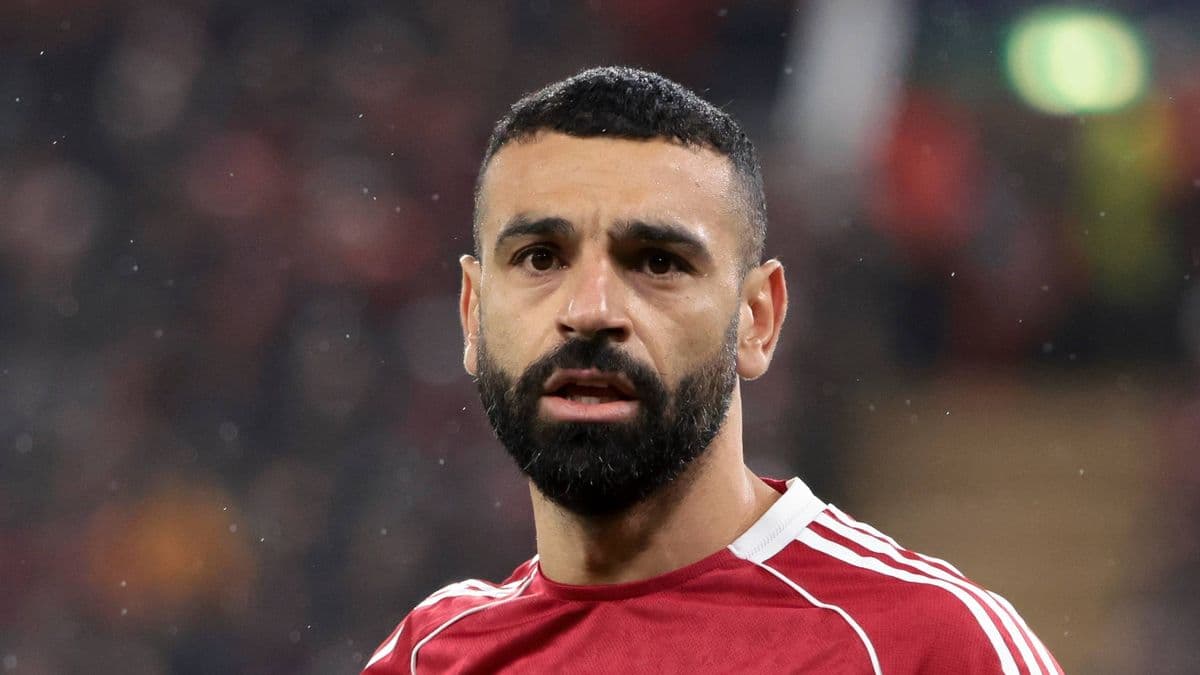
Liverpool's £300m Summer Transfer Strategy: Rebuilding After Salah
Liverpool have spent heavily. They may only just be getting started.
Jeremy Jacquet is already in the bag, a £60million centre-back plucked from Rennes and tasked with shoring up a defence that has conceded more than 50 Premier League goals this season. He will walk into Anfield as part of a back line that has creaked too often, in a squad that has already devoured a record £446m in transfer fees last summer alone.
Yet the real work lies ahead. The spine of this Liverpool side is shifting, and some of its defining figures are edging towards the exit.
Defence rebuilt on the fly
At centre-back, Jacquet arrives as both solution and insurance policy. His move pushes Liverpool’s recent outlay past the half‑billion mark, but it also offers a potential answer to a looming problem: Ibrahima Konaté’s contract stand-off.
Konaté has yet to commit to fresh terms. Inside the club, there is still a strong belief he will eventually sign rather than walk away for nothing, and if he does stay, the urgency to sign yet another central defender eases. Virgil van Dijk is set to remain, Giovanni Leoni is expected back from injury in the summer, and Jacquet adds fresh legs and competition.
If Konaté wavers, though, that back line suddenly looks fragile again.
The full-back picture is just as delicate. Conor Bradley is not expected to feature until next year. On the right, Jeremie Frimpong and Joe Gomez are the options, but both come with caveats: fitness concerns, form swings, and the constant temptation to drag midfielders into defensive roles they were never meant to fill.
Liverpool do not want to see Curtis Jones or Dominik Szoboszlai moonlighting at right-back next season. A specialist signing there would stop that particular fire-fighting exercise before it starts.
On the left, the situation is more nuanced. Andy Robertson needs a successor, at least on paper. In reality, Liverpool may already have him. Kostas Tsimikas is set to return and Milos Kerkez arrived in last summer’s spree, giving the club a plausible internal solution rather than forcing another dip into an already stretched budget.
Midfield stable, questions remain
The centre of the pitch, for once, is not the most urgent headache. Provided there are no surprise departures and provided Jones and Szoboszlai are not dragged back into defence, Liverpool have numbers and variety in midfield.
Quality, though, is under scrutiny. This campaign has raised questions over several central players, including Alexis Mac Allister. The Argentine has not always hit the heights expected of him, but with bigger fires burning elsewhere in the squad, Liverpool are unlikely to make midfield their main battleground in this window.
Life after Salah
The real storm gathers out wide.
Mohamed Salah is leaving, and there is no such thing as a like-for-like replacement for one of the greatest forwards in Liverpool’s history. You do not simply “replace” that level of output, aura, and reliability. You manage the loss, spread the load, and hope your recruitment is brave enough and smart enough to evolve the attack rather than mimic it.
Rio Ngumoha has flashed potential, but he is still a teenager. Expecting him to step into Salah’s boots would be fantasy. The club know it. Any incoming winger will feel the weight of that No. 11 shirt, so the plan has to be collective rather than individual.
That is where the familiar path to RB Leipzig comes back into view.
Leipzig again – and a £150m double swoop
Liverpool have shopped in Leipzig before. They may return with serious intent.
Antonio Nusa and Yan Diomande stand out as prime targets. Between them, they could cost around £150m, with the bulk of that fee required to land the Ivory Coast international. Both fit the profile: young, explosive, versatile, and with ceilings still to be reached.
Yet the risk is obvious. Nusa is 21. Diomande is 19. Asking them to close a Salah-sized chasm on their own would be unfair and, in all likelihood, unsuccessful. They can be part of the solution, not the whole thing.
That is where a different kind of signing enters the frame.
Barcola, the finishing touch?
Bradley Barcola offers something else: experience at the very top. The Paris Saint-Germain forward already has a Champions League title to his name and could add another before this season is out. He plays primarily out wide but, like Nusa, can operate centrally, giving Liverpool a flexible piece in the final third.
That versatility would be invaluable next season, especially with Hugo Ekitike sidelined until at least autumn and Alexander Isak carrying a heavy attacking burden. Barcola can drift inside, link play, and ease the strain on a central striker, while still offering the width and directness Liverpool crave.
He would not come cheap. A deal for Barcola is expected to cost around £70m. Add that to Jacquet’s £60m and the projected £150m for Nusa and Diomande, and Liverpool are staring at a summer outlay in the region of £300m.
It is an enormous figure. It might also be the price of staying at the top.
Jacquet to fortify the back line, a new right-back to protect the midfield, internal solutions at left-back, and a trio of ambitious attacking signings to piece together life after Salah. That is the scale of the rebuild in front of Liverpool.
They have made their first move. The question now is not whether they will spend again, but whether this next wave of investment can carry them into a new era without the man who defined the last one.
Related News

Raphinha’s Hat-Trick Powers Barcelona to 7-2 Victory Over Racing Santander
Carabao Cup Fourth Round Draw: Liverpool Set to Clash with Chelsea, Arsenal to Face Fleetwood Town
Key Football Matches to Watch in Azerbaijan This Autumn
Raphinha's Hat-Trick Drives Barcelona to 7-2 Triumph Over Racing Santander
Hansi Flick Leads Barcelona to Record-Breaking Seven Wins in a Row

Gavi Reflects on Injury Return as Barcelona Dominate Racing Santander 7-2