
Liverpool's New Investment: FSG Sells Minority Stake to Consortium
Liverpool have a new power bloc at the table – but Fenway Sports Group are still calling the shots.
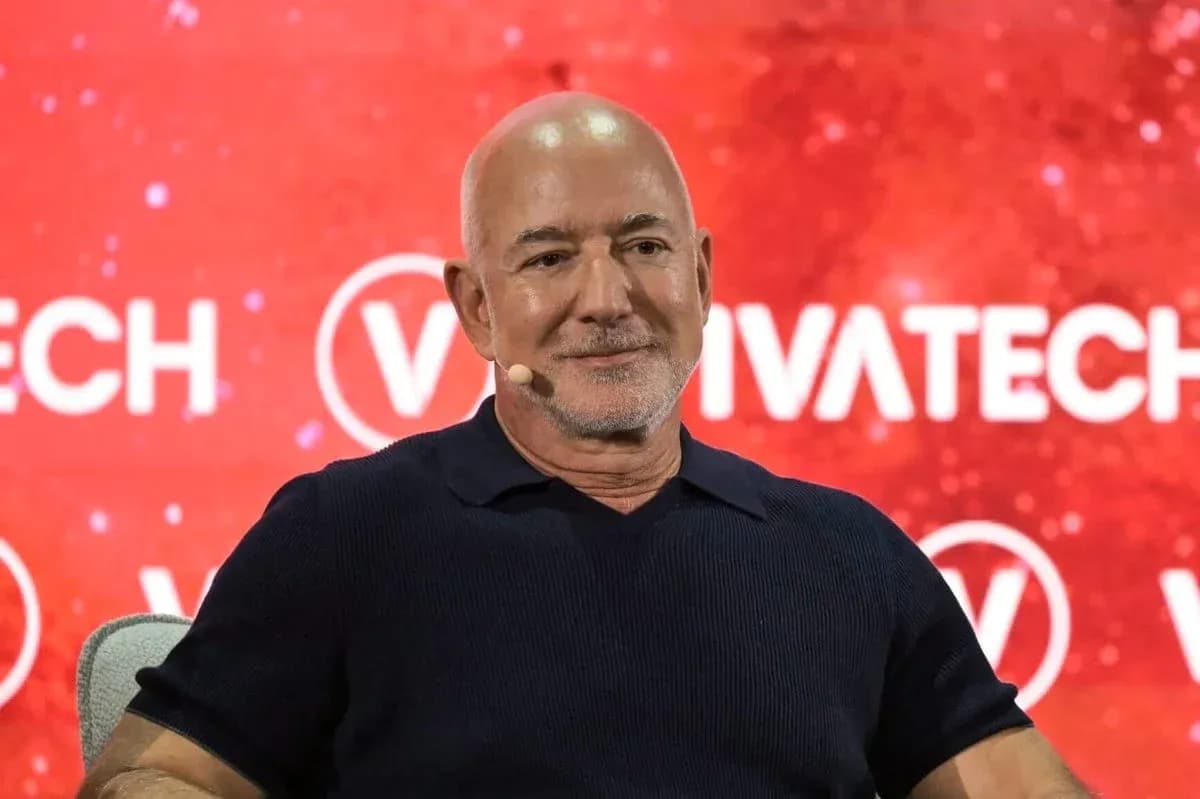
On Friday, FSG confirmed the sale of a sizeable minority stake in the club to a heavyweight consortium fronted by former Queens Park Rangers co-owner Amit Bhatia and backed by K5 Sports, the family office of Facebook co-founder Eduardo Saverin and his wife Elaine – and, most eye-catchingly of all, Jeff Bezos.
The Amazon founder’s first step into sport comes via K5 Sports, not as a hands-on football figure. Sources familiar with the structure of the deal say Bezos will not sit on Liverpool’s board. This is a financial and strategic play, not a vanity project in the directors’ box.
The exact size of the stake has not been disclosed, but people with knowledge of the agreement, who are not authorised to speak publicly, believe it sits somewhere around 30 per cent to one-third of the club. It is Liverpool’s first external minority investment since Dynasty Equity bought roughly three per cent for close to $200million in September 2023.
A new vice-chairman, the same control
The consortium operates under the banner of 1892 Holdings, with Bhatia as the driving force. He will become vice-chairman of Liverpool and take a seat on the board. He will be joined there by Elaine Saverin and Bryan Baum of K5 Sports.
FSG, though, retain majority ownership and operational control. That point was underlined in the club’s announcement and by those close to the deal: the leadership structure and day-to-day running of Liverpool will not change.
Mike Gordon, FSG president, framed the move as a continuation of a long-term strategy rather than a pivot.
“Liverpool has always been built by thinking beyond one season and making decisions with the club’s long-term interests in mind,” he said. “As we considered this opportunity, it became clear that Amit and the consortium shared our long-term philosophy and appreciation for what makes Liverpool special.”
Bhatia, speaking for 1892 Holdings, struck a similar note of alignment.
“We are incredibly proud to be investing in Liverpool Football Club and to be doing so alongside FSG,” he said. “We are making this investment because we believe deeply in Liverpool and its leadership, and we look forward to supporting the club’s continued success for years to come.”
The message is clear: new money, same model.
No transfer war chest – yet
For supporters, the obvious question lands on the pitch. Does this mean more money for players?
Not in this window. Not immediately at all.
Those close to the process stress that there will be no sudden injection into the current transfer budget. The recruitment plan drawn up before the summer remains intact. Liverpool’s self-sustaining approach – reinvesting what the club generates – is not being ripped up because a group of ultra-wealthy investors have come on board.
The impact is expected to be slower, broader and more strategic. This is about strengthening Liverpool’s financial base for the long haul, not about a one-off splurge.
Global doors, tech muscle – and a huge valuation
FSG insist they did not go looking for a bailout. They were open to the right kind of partner, one that could enhance Liverpool’s global reach and dovetail with their wider business interests.
Bhatia’s network in Asia is seen as a major asset. The technology and venture capital backgrounds within the consortium – from K5 Sports to the Saverin family office – are expected to help drive commercial growth and deepen Liverpool’s already substantial brand worldwide.
FSG’s grip remains firm. They will continue to “do the heavy lifting”, as one source put it. Exactly how visible Bhatia will be is still to be seen. His influence may be felt more in back-channel introductions and boardroom strategy than in public pronouncements.
What is beyond dispute is the business story. Selling roughly a third of Liverpool while keeping control delivers a staggering paper profit on an asset FSG bought in 2010 and have since driven to the top of European football and into the financial elite. In Premier League terms, it is one of the standout investment plays of the era.
Who’s at the table?
The names involved need little introduction in business circles.
- Jeff Bezos, 62, built Amazon from a garage start-up in 1994 into the world’s largest e-commerce company. He stepped down as CEO in 2021 but remains one of the richest people on the planet. Forbes’ ‘Real Time Net Worth’ lists him as the third-richest person in the world with a fortune of $272.1bn. He also owns The Washington Post and founded space company Blue Origin. Until now, his sports interest had been limited to exploring possible bids for NFL teams such as the Washington Commanders and Seattle Seahawks.
- Eduardo Saverin, 44, co-founded Facebook with Mark Zuckerberg after the pair met at Harvard. Born in Brazil, he moved to the United States in 1993 before later relocating to Singapore in 2009 and renouncing his U.S. citizenship ahead of Facebook’s IPO. He launched venture fund B Capital in 2015 with Raj Ganguly; it now manages more than $12bn in assets.
- Amit Bhatia, 46, is a British-Indian millionaire and former investment banker who worked at Morgan Stanley. He chairs British construction firm Breedon Group, runs AyBe Capital Advisors and is a founding partner of property investment firm Summix Capital. He is also the son-in-law of steel magnate Lakshmi Mittal, having married Vanisha Mittal Bhatia in 2004. Lakshmi Mittal once ranked as high as third on Forbes’ global rich list and is currently estimated at $33.9bn. Saverin, with $33.2bn, sits just below him.
Sporting backgrounds and near-misses
Bhatia is the only member of the trio with a long-running role inside an English club. He spent nearly 19 years at QPR, serving as vice-chairman until 2018 and then chairman until 2023, before stepping down and transferring his shares to majority owner Ruben Gnanalingam earlier this summer.
Saverin has already been close to Premier League ownership. He was part of the consortium that backed former Boston Celtics co-owner Steve Pagliuca’s attempt to buy Chelsea from Roman Abramovich in 2022. That bid ultimately lost out in a crowded race.
Bezos, for all his wealth, has yet to close a deal in sport. His interest in the NFL never turned into ownership. Liverpool, via K5 Sports, is his first real stake in the game.
Why FSG chose this moment
FSG’s stance has been consistent for some time. Principal owner John Henry has said they would consider new shareholders if the right opportunity emerged, and an FSG statement in November 2022 reiterated that position: under the right terms and conditions, they would welcome investment if it benefited Liverpool.
They have already shown a willingness to bring in outside capital. In March 2021, RedBird Capital Partners invested around $735m for an 11.5 per cent stake in FSG, helping to stabilise finances in the wake of the Covid-19 pandemic. Over two years later, Dynasty Equity took a roughly three per cent stake in Liverpool itself for just under $150m, money that went directly into the club.
That Dynasty funding helped pay for the Anfield Road Stand redevelopment, the repurchase of Melwood – now the home of Liverpool’s women’s team – and the repayment of bank debt.
This new deal is bigger, both in percentage and in implied valuation. Yet even with a stake in the region of 30 per cent, FSG stay in charge. What changes is the weight of capital behind them and the number of partners sharing the risk and reward of growing the business.
There is also the simple reality of investment cycles. As Arjun Nagarkatti of Deutsche Bank notes in general terms, every investor must eventually decide when it is “a good time to monetise their asset”. Football, with its surging valuations, is no exception. After 15 years at Anfield, with trophies won and the club’s value transformed, FSG have chosen to cash in on a significant slice while keeping the keys.
What it means for Liverpool’s future
Since 2010, FSG have run Liverpool on a self-sustaining basis. Revenue in, revenue reinvested. That approach has not always satisfied fans desperate for bolder moves in the market, especially when the club has been on the crest of a wave, but it has delivered a Champions League, a Premier League title and a modernised infrastructure.
The arrival of a consortium stacked with capital should, on paper, strengthen Liverpool’s financial position even further. It can open up new sponsorships, deepen commercial partnerships and push revenues higher season on season.
That matters in the new regulatory landscape. With squad cost ratio rules replacing traditional profit and sustainability measures, clubs that can legitimately grow income gain extra room to manoeuvre in the transfer market.
The Dynasty deal already marked a shift: for the first time in almost a decade, Liverpool received direct shareholder funding, with £146.5m of cash flowing in across the 2023-24 and 2024-25 seasons. Most of that went into bricks and mortar rather than boots and goals.
This latest investment is unlikely to be poured straight into transfer fees either. Football’s financial rules blunt the impact of simply throwing in owner cash. Yet a well-backed minority partner can still reshape how FSG think about funding the club in the medium term. The model may stay self-sustaining in principle, but the levers behind it now look more powerful.
Is this a stepping stone to a full sale?
Not automatically.
Liverpool sources stress that the transaction documents allow flexibility if the relationship evolves, but they are adamant this deal is not a coded prelude to a full takeover. There is no built-in pathway obliging FSG to sell a further stake to the consortium.
For now, this is what it looks like: FSG at the helm, a new vice-chairman in Bhatia, Bezos and Saverin in the background, and Liverpool positioned as one of the most valuable – and most globally connected – clubs in world football.
The question now is simple: how far can that combination push a team that already knows how to live at the top?
Related News
Transfer Rumors: Haaland’s Two Options; Real Madrid Targets $100 Million Premier League Star
Manchester United Targets Premier League Forward to Strengthen Attack
Liverpool Eyes 17-Year-Old Mexican Midfielder Gilberto Mora for Summer Transfer
Summer 2026 Transfer Window: Manchester United and Tottenham Struggle with New Signings
Liverpool Maintain Interest in Real Madrid Midfielder Amid Transfer Challenges
Transfer Insider Warns Tottenham About Costly Sale of Will Lankshear