
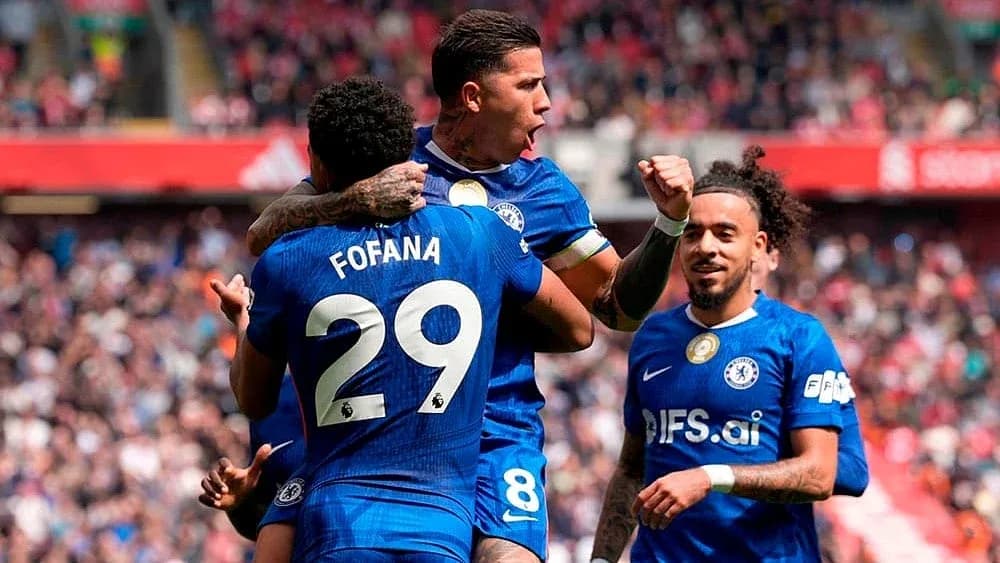
Liverpool vs Chelsea: Draw Impacts Champions League Race
Liverpool 1–1 Chelsea at Anfield, a result that keeps Liverpool inside the Champions League places but stalls their late push for a higher finish, while Chelsea’s point marginally steadies a side sliding down the table without truly reigniting their European hopes.
The Lead: Result & Significance
Liverpool were unable to turn an early lead into a decisive home win, dropping points that could prove costly in the race to secure a top-four finish. Chelsea, coming off a poor run, will view the draw as a stabilising result away at a direct rival, but the lack of cutting edge means they fail to close the gap meaningfully on the European spots.
Key Match Moments (Chronological)
Liverpool struck first on six minutes. Ryan Gravenberch arrived from midfield to finish after Rio Ngumoha created the opening with the key pass, giving the hosts an early 1–0 advantage.
Chelsea responded on 35 minutes. Enzo Fernández levelled with an unassisted strike, a solo effort that brought the visitors back to 1–1 and shifted the momentum before the interval.
Early in the second half, in the 49th minute, Chelsea thought they had turned the game around when Cole Palmer found the net, but after a VAR review the goal was disallowed for offside, keeping the score at 1–1 and denying the visitors a crucial lead.
The first change came on 63 minutes for Chelsea, as Reece James replaced Andrey Santos to add fresh energy and attacking thrust from right-back.
Liverpool made their first substitution in the 67th minute, with Alexander Isak replacing Rio Ngumoha, a like-for-like attacking switch aimed at adding more penalty-box presence.
Also on 67 minutes, Jorrel Hato received a yellow card for holding, reflecting Chelsea’s increasing need to break up Liverpool’s transitions.
On 71 minutes, Chelsea head coach Calum McFarlane was booked on the touchline, his yellow card underlining the tension on the away bench as marginal decisions went against his side.
Enzo Fernández was then cautioned in the 73rd minute for tripping, another sign of Chelsea’s aggressive midfield pressing spilling over into fouls.
Liverpool reshaped their back line on 77 minutes when Joe Gomez replaced Ibrahima Konaté, adding fresh legs in central defence. In the same minute, Federico Chiesa came on for Cody Gakpo, giving Liverpool more direct running from the left in search of a late winner.
Marc Cucurella went into the book in the 83rd minute for holding, as Chelsea increasingly relied on tactical fouls to disrupt Liverpool’s attacks down the flanks.
On 88 minutes, Joe Gomez received a yellow card for delay of game, reflecting Liverpool’s willingness to manage the tempo and secure at least a point once the match became stretched.
Moisés Caicedo was booked in the 89th minute for handling, another midfield infringement as Chelsea tried to stifle Liverpool’s build-up.
Deep into added time, at 90+4 minutes, Alexis Mac Allister picked up a yellow card for tripping, the final notable incident of a contest that ended with both sides frustrated but level.
Fixture Statistics & Tactical Audit
- xG (Expected Goals): Liverpool 0.51 vs Chelsea 0.47
- Possession: Liverpool 49% vs Chelsea 51%
- Shots on Target: Liverpool 3 vs Chelsea 3
- Goalkeeper Saves: Liverpool 2 vs Chelsea 3
- Blocked Shots: Liverpool 1 vs Chelsea 1
The numbers point to a finely balanced contest, and the 1–1 scoreline broadly reflects that equilibrium. Liverpool carried a marginally higher attacking volume in total shots (8 vs 6) but generated only a slight edge in xG (0.51 vs 0.47), underlining that neither side consistently carved out clear chances. Chelsea’s narrow advantage in possession (51% vs 49%) translated into controlled spells of circulation rather than sustained pressure, while the parity in shots on target (3 vs 3) and blocked efforts (1 vs 1) reinforces the sense of two well-organised defences limiting space in the box. With both goalkeepers called into a modest number of saves and neither side significantly outperforming their xG, a draw appears a fair outcome on the balance of territory and chance quality.
Standings Update & Seasonal Impact
For Liverpool, the draw adds one point to their tally, moving them from 59 to 60 points. Their goals for rise from 60 to 61, and goals against from 48 to 49, shifting their goal difference from +12 to +12 again after the 1–1 result. They remain in 4th place, still in a strong position for Champions League qualification but missing an opportunity to tighten their grip on that spot and close the gap to the teams above in the late-season race.
Chelsea also gain a single point, moving from 49 to 50. Their goals for increase from 55 to 56, while goals against move from 49 to 50, keeping their goal difference at +6. They stay 9th in the table, and while the point at Anfield halts a run of defeats, it does little to reduce the gap to the European places, leaving them still looking up at a cluster of sides ahead of them in the chase for continental football.
Lineups & Personnel
Liverpool Actual XI
- GK: Giorgi Mamardashvili
- DF: Curtis Jones, Ibrahima Konaté, Virgil van Dijk, Miloš Kerkez
- MF: Ryan Gravenberch, Alexis Mac Allister, Jeremie Frimpong, Dominik Szoboszlai, Rio Ngumoha
- FW: Cody Gakpo
Chelsea Actual XI
- GK: Filip Jørgensen
- DF: Malo Gusto, Wesley Fofana, Levi Colwill, Jorrel Hato
- MF: Andrey Santos, Moisés Caicedo, Cole Palmer, Enzo Fernández, Marc Cucurella
- FW: João Pedro
Expert's Post-Match Verdict
This was a tactically cagey encounter in which both managers prioritised structure over risk, and the underlying numbers support that reading. Liverpool’s attack was functional rather than explosive, with limited chance creation (xG 0.51, 3 shots on target from 8 total) suggesting a lack of incision in the final third despite their early goal. The introduction of Alexander Isak and Federico Chiesa was an attempt to add verticality and penalty-box threat, but Chelsea’s compact mid-block and disciplined back four largely contained those adjustments.
Chelsea’s game plan was built on controlled possession and quick surges through Cole Palmer and Enzo Fernández, yet their own attacking output remained modest (xG 0.47, 3 shots on target from 6 total), indicating that while their build-up was tidy, they struggled to consistently penetrate Liverpool’s central defensive pairing. The flurry of yellow cards for Chelsea’s midfield and full-backs (4 yellows, with repeated fouls for holding and tripping) underlined how often they were forced into reactive defending once Liverpool broke the first line of pressure.
Ultimately, neither side did enough in terms of chance volume or quality to claim they deserved more than a point. For Arne Slot, the frustration will be dropping home points in a tight Champions League race, while Calum McFarlane can take some solace in the defensive resilience and improved organisation but will know that Chelsea’s attacking ceiling must rise if they are to seriously re-enter the European conversation next season.
Related News
Tottenham vs Aston Villa Predicted Lineups: Team News for Premier League Clash
Brighton vs Arsenal: Premier League Clash Preview
Manchester City vs Sunderland: Premier League Clash Preview
Tottenham vs Aston Villa: Early Relegation Battle
Brentford vs Chelsea Predicted Lineups: Team News and Match Insights
Brighton vs Arsenal Prediction: Key Stats and Betting Tips