
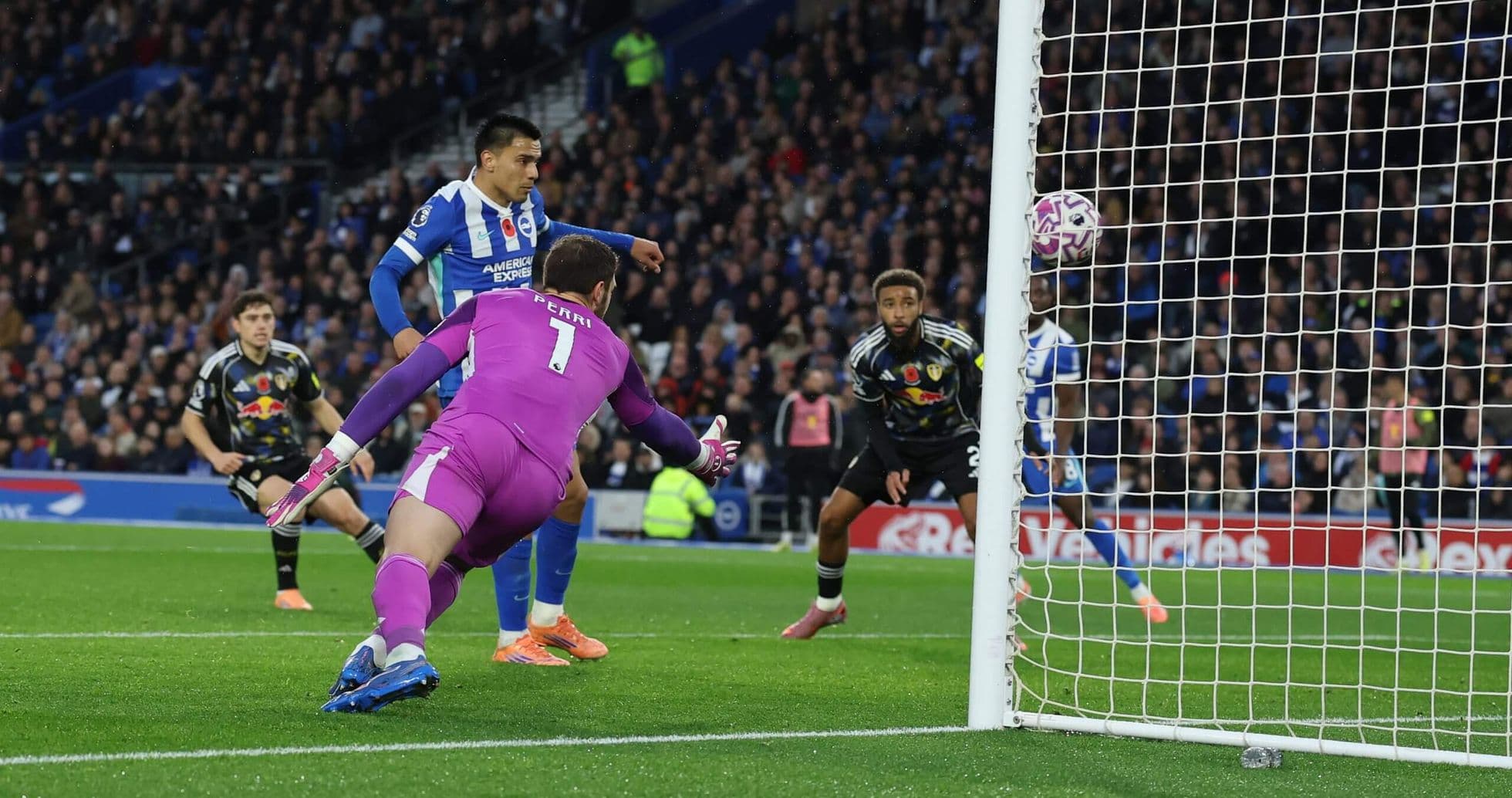
Leeds vs Brighton: Tactical Clash in Premier League Showdown
Elland Road hosts a high-stakes late-season clash on 17 May 2026 as Leeds welcome Brighton in Premier League round 37. With the visitors chasing European football and the hosts aiming to lock in mid-table safety and momentum, this has all the ingredients of a tense, tactical contest rather than an end-of-season dead rubber.
Leeds sit 14th in the league in 2025, on 44 points with a goal difference of -5 after 36 matches. Brighton arrive in West Yorkshire in 7th place on 53 points, with a +10 goal difference and currently occupying the spot that leads to the Conference League play-offs. For Brighton, every point is precious in the race to secure continental football; for Leeds, a strong finish could turn a solid return to the top flight into a genuinely encouraging platform.
Form and statistical profile
In the league, Leeds’ recent form line of DWDWW underlines a quietly impressive late surge. Across all phases they have 10 wins, 14 draws and 12 defeats from 36 games, scoring 48 and conceding 53. The numbers show a side that has become resilient rather than spectacular: they average 1.3 goals scored and 1.5 conceded per match, but their home record is a clear strength.
At Elland Road in the league, Leeds have played 18, winning 8, drawing 5 and losing just 5, with 28 goals scored and only 21 conceded. That’s 1.6 goals for and 1.2 against per home game, and 5 home clean sheets. They have also failed to score at home in only 5 of 18, underlining a consistent attacking threat in front of their own fans.
Brighton, by contrast, have built their season on a balanced profile. Across all phases they’ve won 14, drawn 11 and lost 11, scoring 52 and conceding 42. Their average of 1.4 goals scored and 1.2 conceded per game reflects a side that can both hurt opponents and control matches. But the away numbers are more mixed: 5 wins, 5 draws and 8 defeats from 18 on the road, with 22 goals scored and 25 conceded (1.2 for, 1.4 against). They have kept 5 away clean sheets but also failed to score in 4 away fixtures, so their travelling form has been inconsistent.
Both teams are trending positively. Brighton’s form line of WLWDW in the league shows three wins in their last five, and across the season they’ve managed a longest winning streak of three. Leeds’ biggest winning run is two, but their current unbeaten stretch in the league hints at a side that has tightened up and learned how to manage games.
Tactical shapes and stylistic clash
The tactical battle looks intriguing. Leeds have been notably flexible across the season, using a variety of systems. Their most common shape is 4-3-3 (12 times), but they have also frequently lined up in 3-5-2 (10 times) and 3-4-2-1 (6 times), with occasional turns to back fives and different midfield structures. That suggests a coach willing to adapt to opponent strengths and injuries, and a squad capable of switching between pressing high and protecting space with an extra centre-back.
Brighton, by contrast, have been structurally stable. They have lined up in 4-2-3-1 a remarkable 31 times, with only occasional use of 4-3-3 (4 times) and 3-4-2-1 (once). Expect a double pivot in front of the back four, full-backs asked to advance, and a central attacking midfielder linking midfield to the front line. That continuity has underpinned their strong defensive record and their ability to progress the ball methodically.
Leeds’ card distribution hints at a team that grows more aggressive as matches wear on: a high share of yellows between minutes 31–75, and their only red card arriving between 46–60. Brighton’s bookings spike just after half-time (46–60), suggesting they often raise the intensity early in the second period. Discipline and game management in those middle phases could be decisive, especially with a referee of Michael Oliver’s stature in charge.
Key players and attacking threats
The standout attackers on both sides are their joint top scorers in the league this season: Daniel Welbeck for Brighton and Dominic Calvert-Lewin for Leeds, each with 13 goals.
Welbeck, at 35, has been a central figure for Brighton. He has 13 league goals and 1 assist from 35 appearances (24 starts), with 27 of his 45 shots on target. His all-round contribution is notable: 460 passes with 20 key passes at 78% accuracy, plus defensive work (23 tackles, 9 interceptions). Brighton’s 4-2-3-1 gives him regular service from wide and from the No. 10, and his movement in and around the box remains a major threat.
Calvert-Lewin has been equally important for Leeds. He has 13 goals and 1 assist in 33 appearances (28 starts), and his 64 shots include 32 on target. His physical presence is underlined by 446 duels contested and 175 won, and he draws a high number of fouls (37), giving Leeds set-piece opportunities around the area. His passing accuracy (57%) is lower than Welbeck’s, reflecting a more direct, target-man role rather than link play in tight spaces.
Penalty data is a subtle but important factor. Team-level numbers show Leeds have scored 6 penalties from 6 across all phases, while Brighton have converted 3 from 3. However, at individual level, Welbeck has scored 1 penalty but missed 2 this season, while Calvert-Lewin has scored 4 and missed 1. That means neither primary forward has been flawless from the spot; any late penalty could carry psychological weight, especially for Brighton.
Injuries and selection issues
Both squads have significant absentees and doubts.
For Leeds, I. Gruev (knee), G. Gudmundsson (muscle) and N. Okafor (calf) are all ruled out. J. Bogle (hamstring), F. Buonanotte (hamstring) and P. Struijk (hip) are listed as questionable. The confirmed losses hit depth in midfield and attack, while the doubts affect full-back and defensive versatility. Given Leeds’ frequent shifts between back three and back four systems, Struijk’s availability in particular could influence the chosen shape.
Brighton are without K. Mitoma (thigh), S. Tzimas (knee) and A. Webster (knee). Mitoma’s absence removes a major wide threat and ball-carrying outlet, while Webster’s injury affects their central defensive rotation. D. Gomez (knee) and M. Wieffer (injury) are questionable, potentially impacting midfield and defensive cover. Even so, Brighton’s reliance on a settled 4-2-3-1 suggests they will try to maintain their usual structure, with squad players stepping into familiar roles.
Head-to-head: recent competitive history
The last five competitive meetings between these clubs, all in the Premier League, show a clear Brighton edge but with Elland Road often providing balance:
- 1 November 2025: Brighton 3-0 Leeds at the Amex Stadium – Brighton win.
- 11 March 2023: Leeds 2-2 Brighton at Elland Road – draw.
- 27 August 2022: Brighton 1-0 Leeds at the Amex Stadium – Brighton win.
- 15 May 2022: Leeds 1-1 Brighton at Elland Road – draw.
- 27 November 2021: Brighton 0-0 Leeds at the Amex Stadium – draw.
Across these five, Brighton have 2 wins, Leeds have 0, and there have been 3 draws. Notably, all three Elland Road fixtures in this run have ended level, while Brighton have taken both home games.
The tactical balance and likely pattern
Brighton’s more settled structure and superior league position suggest they will aim to control possession, building patiently through their 4-2-3-1 and looking to create shooting opportunities for Welbeck in and around the box. Their away record, however, indicates vulnerability when games become stretched: 25 goals conceded in 18 away matches and 8 defeats on the road.
Leeds’ flexibility and strong home numbers point towards a game plan built on intensity and exploiting transitions. A 4-3-3 would allow them to press Brighton’s double pivot aggressively and feed Calvert-Lewin with early crosses and direct balls, while a back three could be used to protect against Brighton’s wide rotations and give wing-backs license to attack the flanks vacated by Brighton’s full-backs.
Set pieces could be crucial. Calvert-Lewin’s aerial strength, combined with Brighton’s occasional frailty in chaotic away games, makes corners and free-kicks a clear route to goal for Leeds. Conversely, Brighton’s technical quality around the box and Welbeck’s movement can punish any lapses in concentration from a Leeds defence that has conceded 53 times in the league.
Discipline and game management will also matter. Leeds’ tendency to pick up cards in the middle phases and Brighton’s spike in bookings just after half-time suggest that the period immediately following the interval could be especially combative. With European football in sight for Brighton and pride and momentum on the line for Leeds, emotional control will be key.
The verdict
On paper, Brighton are the stronger side: higher in the table, better overall goal difference, and with a recent head-to-head edge. However, their away inconsistency, combined with Leeds’ solid home record and current unbeaten league run, narrows the gap considerably.
Expect Brighton to see more of the ball and create sustained pressure phases, but Leeds’ direct threat through Calvert-Lewin and their adaptability in structure make them dangerous whenever the game breaks open. With three consecutive draws between these sides at Elland Road in recent seasons and both teams carrying key absences, another tight, hard-fought encounter feels likely.
A narrow margin either way would not surprise, but the data points most strongly towards a balanced contest in which Brighton’s European push meets stiff resistance from a Leeds side intent on finishing the season strongly in front of their own fans.
Related News

Bournemouth vs Liverpool Prediction: Key Stats and Betting Tips

Tottenham vs Aston Villa Predicted Lineups: Team News for Premier League Clash
Brighton vs Arsenal: Premier League Clash Preview

Manchester City vs Sunderland: Premier League Clash Preview
Tottenham vs Aston Villa: Early Relegation Battle

Brentford vs Chelsea Predicted Lineups: Team News and Match Insights