
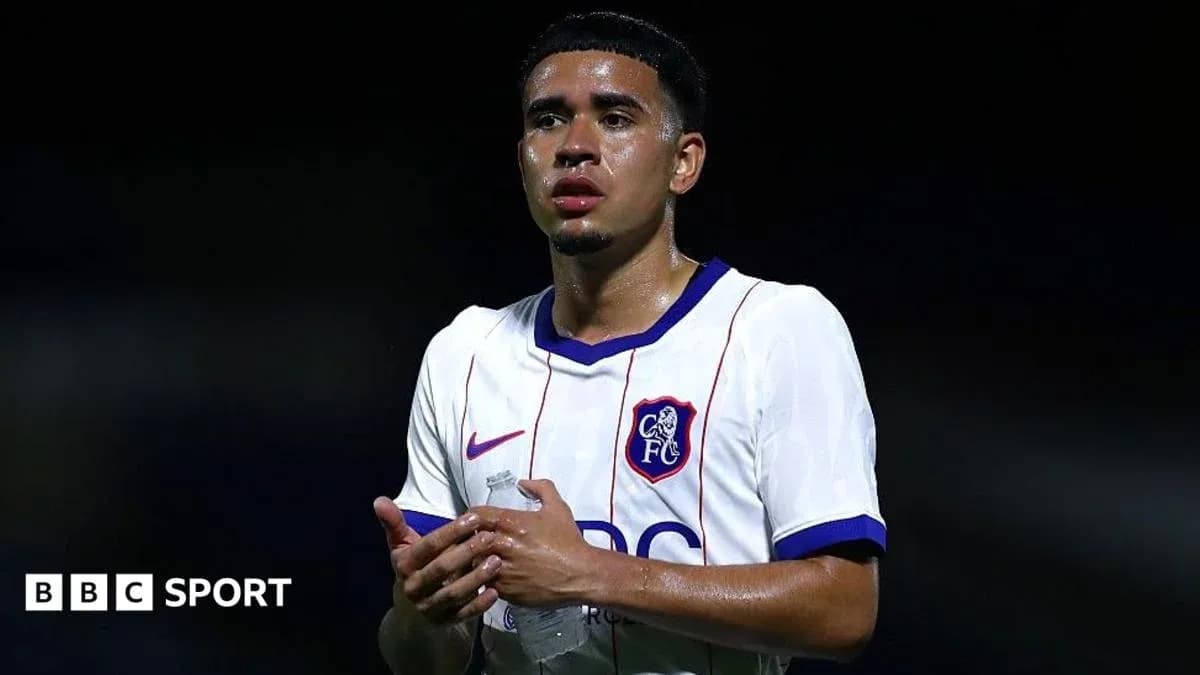
Kendry Paez's Journey: From Prodigy to Chelsea Academy
Kendry Paez finally wore Chelsea blue on Saturday. Not under the lights at Stamford Bridge. Not in the Premier League. For Cobham Next Gen, away at Arsenal, in front of a far smaller crowd than the hype that once followed his name.
Three years after agreeing a £17.27m move from Independiente del Valle, the Ecuadorian attacking midfielder came on as a 12th-minute substitute for Chelsea’s newly renamed Under-21 side in a 4-1 win. It was a quiet debut in one sense, but the symbolism was loud enough: one of South America’s most talked-about teenagers is starting again from the bottom of the ladder.
From prodigy to question mark
Paez turned 19 this year. By that age, many at Chelsea expected him to be knocking on the first-team door. Instead, new head coach Xabi Alonso has been blunt. The midfielder is “not in my plans”, and the club list him as an academy player on their website.
That is a sharp turn from the trajectory that once defined him.
At 15, Paez became the youngest debutant and goalscorer in Ecuadorian top-flight history. He stepped into the Copa Libertadores in the same season, facing the intensity of South America’s biggest club competition before most players finish school.
The milestones kept falling. In 2023, at 16 years and 131 days, he made his second appearance for Ecuador and became the second-youngest South American to feature in World Cup qualifying, behind only Diego Maradona. A month later, he became the youngest South American to score in a World Cup qualifier, netting in a 2-1 win away to Bolivia.
By the time Chelsea agreed the deal, Paez already had 18 caps and two international goals. The narrative wrote itself: another wonderkid secured early, a future star locked in.
Chelsea treated him like one. He trained regularly with the first team before he was even eligible to register after his 18th birthday. When violence erupted in Ecuador in early 2024, the club stepped in, helping provide security for Paez, his family and the family of international team-mate Moises Caicedo.
The club invested, on and off the pitch. The story was supposed to be straightforward. It hasn’t been.
Loans, criticism and a stalled rise
The first real test came in Europe. Paez joined Strasbourg, part of the same ownership group as Chelsea, and started brightly. He won Ligue 1’s Young Player of the Month award in September and looked on course to validate the hype.
Then the tone changed.
“We expect more, clearly,” then-manager Liam Rosenior said later that season. “I’m tired of using the excuse of the player's youth.” One goal in 21 appearances followed. The loan, despite the obvious pathway between the clubs, was cut short.
River Plate came next. A two-year loan to one of Argentina’s giants looked like a chance to reset in a football culture closer to home. Instead, familiar concerns resurfaced. Sources in Argentina highlighted doubts about his attitude and pointed to a flat display in April’s Superclasico, a 1-0 defeat to Boca Juniors at the Monumental, as emblematic of his struggles.
Soon after, club president Stefano Di Carlo named Paez among 15 players training away from River’s first team. Other voices around the club felt he deserved more chances, but the outcome was the same: the loan ended early, by mutual consent, after one goal in 14 appearances and just 461 minutes on the pitch.
Back in Ecuador, the unease grew. A country that had built him up as the next great attacking talent started to wonder what had gone wrong.
Michel Deller, owner of Independiente del Valle, spoke with a mixture of affection and concern to Hincha Amarillo. "He's like a son to us. We care about him deeply. "He's a good kid who's had a tough time and has made decisions that have complicated his life. "We are always hopeful he'll show his exceptional talent one again but right now, it's up to him to decide what to do with his life."
There was also the off-field noise. A few months after Chelsea had helped safeguard his family, Paez was filmed in a New York strip club while away on international duty. For a teenager already under the microscope, it added fuel to the narrative.
Chelsea and those close to the player do not dismiss the concerns, but they feel the picture has been exaggerated. Their stance is simple: he is 19. He needs time – and structure – to grow as both footballer and person.
A new start in the shadows
That structure now lives at Cobham.
Fifa regulations blocked Chelsea from sending Paez on another overseas loan this season after they filled all six available international loan slots. A move within English football was explored but did not materialise. The result is a reset that no one had planned for: Paez back in the academy system, with his development under Chelsea’s direct watch.
The early signs are modest, but not empty.
In the EFL Trophy at Wycombe Wanderers, in front of just 778 fans, Paez produced a late reminder of his quality. Deep into added time, from a short corner routine, he whipped in an outswinging cross that Harrison Bettoni tapped home. Moments later, another Paez delivery caused panic as Chelsea chased an equaliser. They lost, but for a brief spell he bent the game to his will.
For most of the night he was peripheral, stationed as a right-sided No 10 in a system mirroring Alonso’s back-three shape, operating in pockets rather than running the show. He came on in the 62nd minute, having mostly kept to himself in the warm-up. Spanish-speaking, still adjusting, he looked slightly apart from his team-mates before kick-off.
Yet those flashes matter. At this stage, they have to.
Paez is not some raw academy hopeful learning the basics. He already has 27 caps for Ecuador, an appearance at this summer’s World Cup and more than 100 senior games behind him, including 70 for Independiente. That experience gives him a platform. It also raises the stakes. Players with that kind of résumé are not usually rebuilding their careers in under-21 football.
Chelsea’s gamble, still alive
Inside Cobham, there is no sense of writing him off. If anything, the mood is cautiously upbeat.
Chelsea like what they have seen from his attitude since he returned. He is training daily in an elite, stable environment. Family members attended his recent match at Wycombe, offering a layer of support that has not always been present during his travels. The club can now monitor every detail of his progress rather than relying on reports from abroad.
Academy games at Chelsea draw regular attention from scouts across the English Football League and beyond. For Paez, that matters. A strong run of form between now and January could unlock a first loan in English football. If one of the six international loan slots opens up, a move back overseas could be on the table too.
The stakes are clear. So is the opportunity.
This is not an unsalvageable story. It is a stalled one. The same left foot that shredded defences in Ecuador and lit up early international nights has not vanished. It just needs a stage he can control and a mindset that matches the talent.
Chelsea once believed they had secured one of South America’s most coveted young players. That belief has been dented, not destroyed. The club, his old team in Ecuador and those close to him all say the same thing in different ways: the next chapter depends on him.
He has the shirt now. The question is what he does with it.
Related News
Mikel Merino's Leadership Shines in Carabao Cup Match

Celtic Supporter Arrested for Alleged Assault on Frankie Kent
Teenage Revolution: The Premier League's Rising Stars

Hibernian's Struggles Continue at Easter Road

Bayern Munich Eye Nick Woltemade as Future Successor to Harry Kane

Manchester United Eyes Jarrad Branthwaite for Defensive Rebuild