
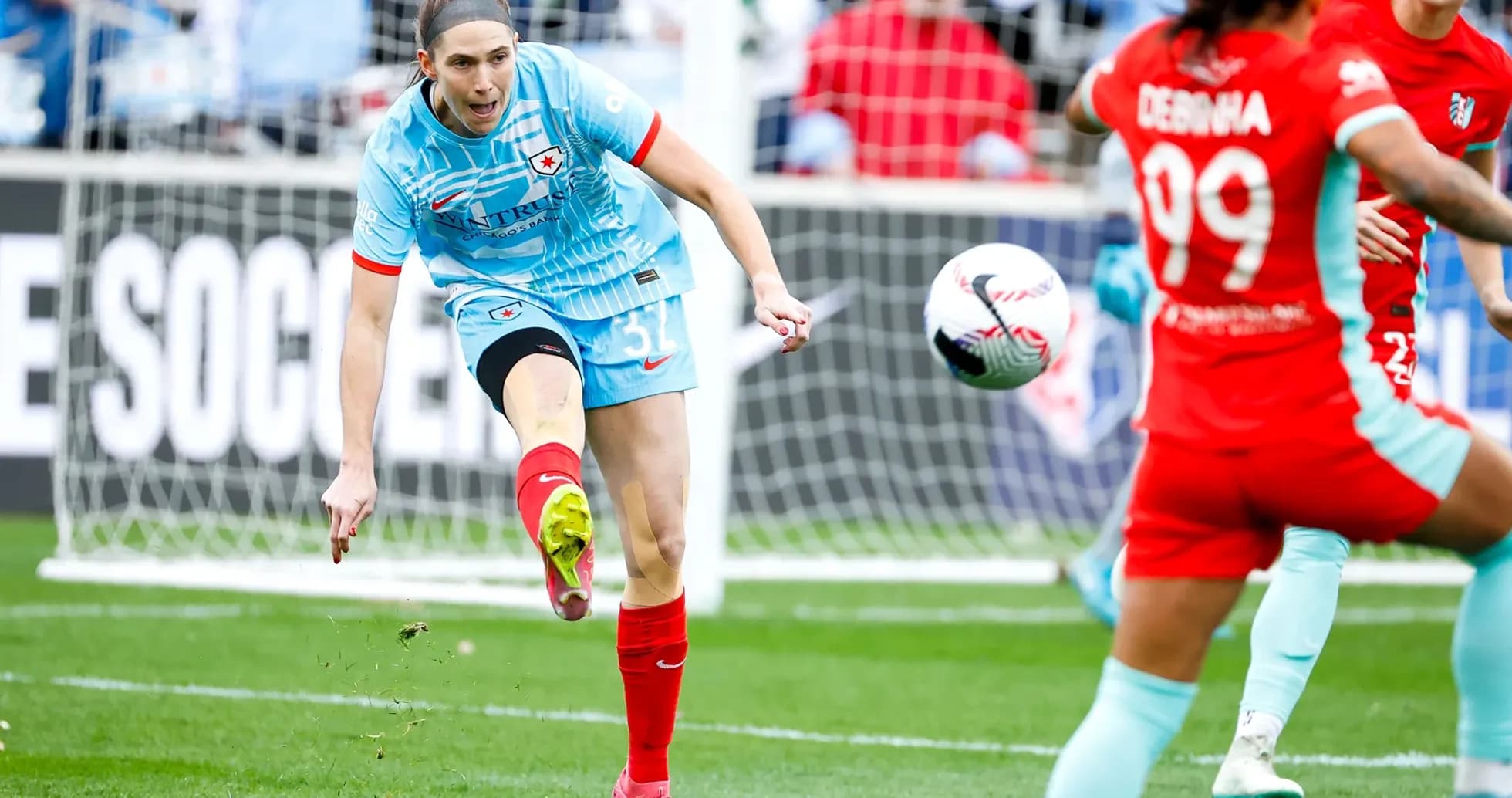
Kansas City W Dominates Chicago Red Stars W 3–0 at CPKC Stadium
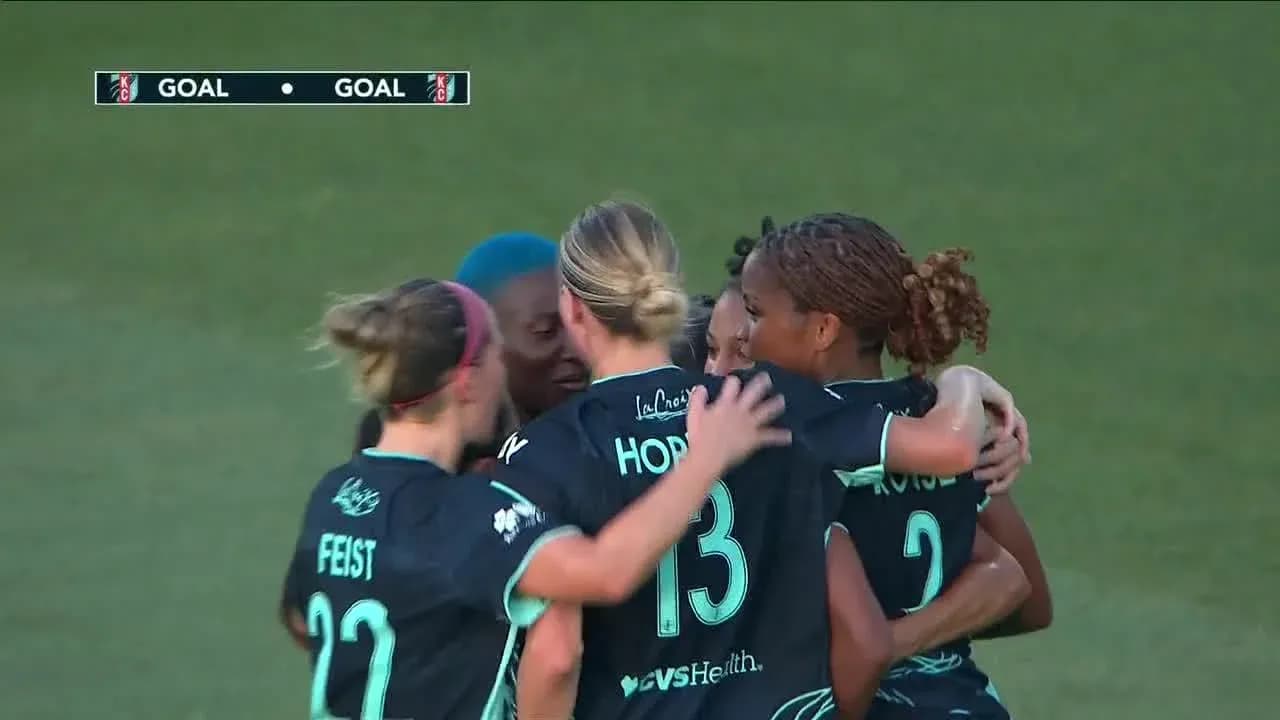
The evening at CPKC Stadium closed with a statement. Under the Kansas sky, Kansas City W dismantled Chicago Red Stars W 3–0, a scoreline that did more than settle a group-stage fixture in the NWSL Women; it crystallized the contrasting trajectories of two squads heading into the heart of the season.
Following this result, the table tells a sharp story. Kansas City sit 6th with 12 points from 8 matches, their overall goal difference at -4 (10 scored, 14 conceded) still reflecting early-season volatility rather than current form. Chicago, by contrast, are 15th with 6 points from 9 games, and their overall goal difference of -14 (4 for, 18 against) underlines a side struggling to find either balance or belief.
I. The Big Picture – A home fortress taking shape
The venue mattered. At home this campaign, Kansas City have been perfect: 3 wins from 3, 7 goals for and just 2 against. Their attacking average at home stands at 2.3 goals per game, while they concede only 0.7. That platform of control and incision was visible again here, as Chris Armas leaned into a 4-3-3 that has now complemented his preferred 4-2-3-1 and added a more vertical edge.
On their travels, Chicago arrived with a stark record: 4 away matches, 4 defeats, 0 goals scored and 10 conceded. An away attacking average of 0.0 against an away defensive average of 2.5 goals conceded per game framed this as a test of resilience more than ambition. Over 90 minutes, those numbers felt less like a warning and more like a prophecy fulfilled.
II. Tactical Voids – What was missing, and what it created
There were no listed absentees in the pre-match data, which meant both coaches could lean on their core structures. Yet “tactical absences” emerged in different ways.
For Kansas City, the shift from their more commonly used 4-2-3-1 (6 league uses) to a 4-3-3 (now used 2 times) redefined spaces in midfield. With Lorena behind a back four of L. Rouse, E. Ball, K. Sharples and I. Rodriguez, the defensive line had a clear platform: hold a medium block, compress the middle third, and let the front three threaten in transition. The absence, in a sense, was of a classic No. 10; instead, the creative burden was shared across L. LaBonta, C. Bethune and B. Feist.
Chicago mirrored the 4-3-3 but could not mirror the control. Their season-long pattern of failing to score – 7 matches overall without a goal, including all 4 away – reappeared. J. Huitema, N. Gomes and R. Gareis formed a front line that often found itself isolated, starved of the kind of service that might have pinned Kansas City’s full-backs deeper.
Disciplinary trends hinted at where the game might tilt. Kansas City’s yellow-card distribution this season peaks between 31–45 minutes at 37.50%, while Chicago’s is also heaviest in that same 31–45 window at 42.86%. The first half, and especially its closing stretch, was always likely to be spiky. Yet Kansas City managed that edge better, channeling aggression into duels and counter-pressing rather than rash challenges.
III. Key Matchups – Hunter vs Shield, and the engine room
The “Hunter vs Shield” narrative belonged to T. Chawinga against a Chicago defense that has been porous away from home. Chawinga, one of the league’s standout attacking threats with 3 goals and 1 assist in total, arrived in this match as Kansas City’s cutting edge. Across her season so far she has produced 5 total shots with 3 on target, and crucially, she is not just a finisher but a carrier: 4 dribble attempts with 3 successes, 26 duels contested and 13 won. Against a Chicago back line that has already conceded 10 away goals, her directness and ability to win duels tilted the field.
Behind her, the true orchestrator was C. Bethune, the heartbeat of Kansas City’s “Engine Room.” Bethune’s season numbers frame her influence: 2 goals and 2 assists in total, 184 total passes with 6 key passes, and 23 dribble attempts with 9 successes. She is not just a passer but a relentless connector, capable of turning second balls into structured attacks. Her 12 total tackles, 1 blocked shot and 7 interceptions show why she is more than a luxury creator; she is the hinge between Kansas City’s press and their possession.
Opposite her, Chicago needed someone from the trio of M. Hayashi, A. Farmer and J. Grosso to disrupt Bethune’s rhythm. The task was to close central lanes and prevent Kansas City from playing through the thirds. But with Chicago’s overall defensive average of 2.0 goals conceded per game and a tendency to crack as matches wear on, the midfield screen never quite solidified.
At the back, K. Sharples quietly underpinned Kansas City’s composure. With 274 total passes at 77% accuracy this season, 9 tackles, 11 interceptions and 7 successful blocked shots, Sharples is the archetype of a modern centre-back: aggressive in stepping out, reliable in distribution. Against a Chicago attack that had yet to score away, her positioning and timing ensured that Lorena was rarely exposed.
IV. Statistical Prognosis – What this performance signals
Following this result, the underlying patterns align with the scoreline. Kansas City’s overall attacking average of 1.3 goals per game is being inflated by their home dominance, while their total defensive average of 1.8 conceded still reflects earlier away frailties more than current home reality. The clean-sheet record – 1 at home and 1 overall before this match – now begins to look like the start of a trend rather than an anomaly.
Chicago’s prognosis is more stark. An overall attacking average of 0.4 goals per game, and 0.0 on their travels, is unsustainable for any side with ambitions of climbing from 15th. Their away defensive average of 2.5 conceded per match, combined with a -14 total goal difference (4 scored, 18 allowed), paints a picture of a team that breaks too easily once the first line of pressure is bypassed.
In narrative terms, this 3–0 was not just a home win; it was a crystallization of identities. Kansas City are becoming a ruthless home side, built on a dynamic midfield led by Bethune, a sharp edge in Chawinga, and a stabilizing presence in Sharples. Chicago remain a team searching for both a defensive anchor and an attacking spark, their structure sound in theory but brittle in practice.
If Expected Goals numbers were laid over this contest, they would likely confirm what the eye and the season data already suggest: Kansas City, at CPKC Stadium, now play like a side whose performance level belongs in the playoff conversation, while Chicago’s current metrics forecast a long, hard climb just to escape the league’s lower reaches.
Related News
Orlando Pride W vs Portland Thorns W: Playoff Showdown
San Diego Wave W vs Kansas City W Predicted Lineups: Team News for NWSL Women
Orlando Pride W vs Portland Thorns W Prediction: Key Stats and Betting Tips
San Diego Wave W vs Kansas City W: Key NWSL Clash Preview
San Diego Wave W vs Kansas City W Prediction: Key Stats and Betting Tips
Portland Thorns and Chicago Red Stars Draw in NWSL Showdown