
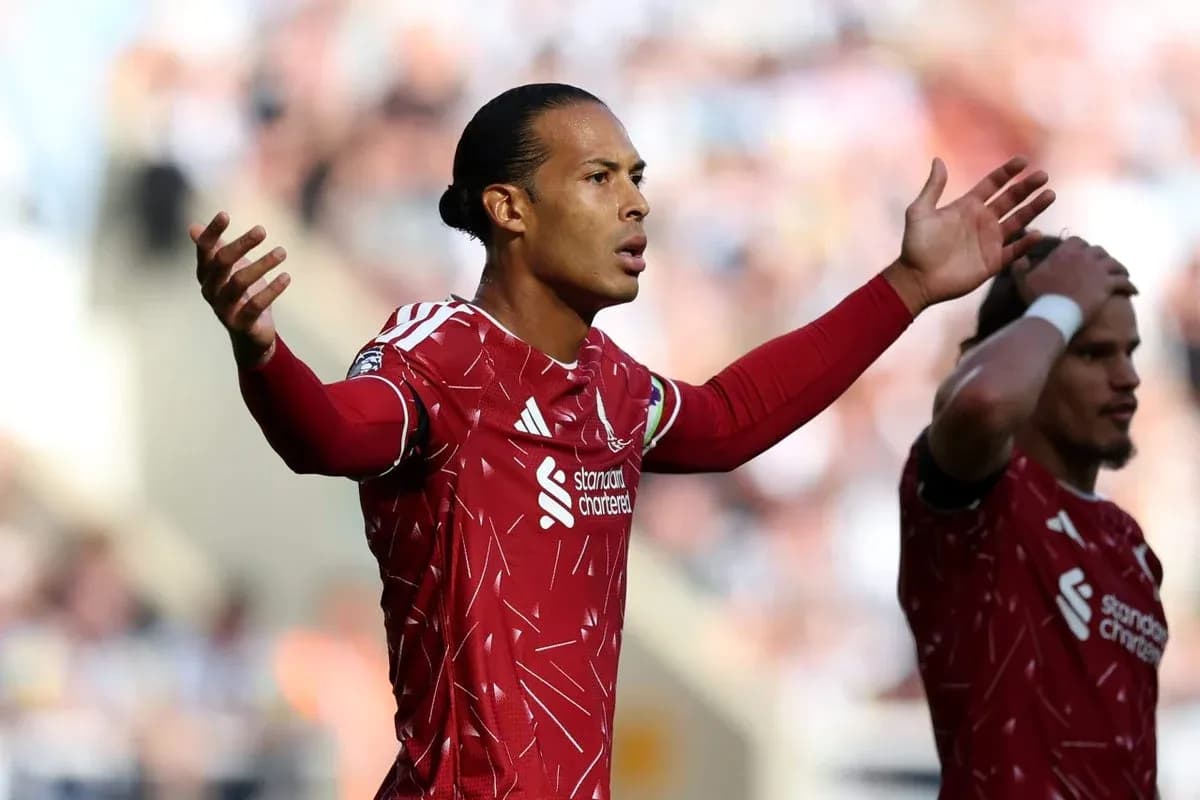
Iraola's Liverpool: Understanding Rest Defence After Newcastle Draw
Andoni Iraola walked into Liverpool with one big question hanging over him: could his football scale?
It worked at Rayo Vallecano. It worked at Bournemouth. High intensity, relentless pressing, collective running. Perfect for survival fights and mid-table disruption. But at a club that expects to chase a Premier League title, where you have the ball far more often and opponents sit deeper, that same model gets examined under a harsher light.
At St James’ Park, in a wild, breathless 2-2 draw with Newcastle United, the scrutiny narrowed onto one niche, very modern concept: rest defence.
By full-time, it was no longer a coaching buzzword. It was the lens through which both Newcastle goals were being replayed, rewound and dissected.
What rest defence really is
Strip football back and it’s simple: you either have the ball or you don’t. When you have it, you attack. When you lose it, you defend. Everyone knows that.
What gets lost in the noise is the moment in between — that split second when an attack breaks down and the game flips. That’s where rest defence lives.
The term is borrowed from German: Restverteidigung. Not “rest” as in relax, but “rest” as in “what’s left over”. In other words, when you commit players forward in attack, what’s left behind to deal with the counter?
Rest defence is the structure, positioning and mindset of those players not directly involved in the attack. Are they close enough to potential outlets? Are they ready to press the first pass? Are the spaces in front of the back line protected? Or are you one loose touch away from being ripped open?
Against Newcastle, Liverpool found out what happens when those answers aren’t good enough.
The first goal: space, risk and punishment
Newcastle’s opener starts with Liverpool in a promising attacking position. That’s what makes it so damaging.
Ryan Gravenberch receives the ball, spins neatly and drives into space. On the surface, it’s everything Iraola wants: verticality, aggression, a midfielder punching through the lines.
Look a little deeper and the warning lights flash.
Gravenberch is the deepest of Liverpool’s midfielders. Dominik Szoboszlai has pushed high into the front line, darting in behind. Florian Wirtz has moved left and is also thinking about the box. All three are surging towards goal.
Behind them, a huge pocket of grass opens up in front of Liverpool’s defence.
That zone is exactly where a counter-attack breathes. And in it lurks Will Osula, with no Liverpool player close enough to shut him down if the ball turns over.
Virgil van Dijk later admitted he was too deep. Wirtz, at the same time, has gone a touch too aggressive, especially with Szoboszlai already so high. The chain reaction is obvious: when the move breaks, no one has quick access to Osula. The centre-backs are retreating, not stepping in.
Then comes the decision that unlocks it all.
Gravenberch tries to slide a risky pass into Alexander Isak. He has other options. He can attempt a difficult feed to Szoboszlai to his right, which would at least push the play towards a more crowded area. He can shoot, which ends the phase either with a chance or a goal-kick. Both outcomes are relatively safe for Liverpool’s defensive structure.
Instead, he forces the pass. It bobbles loose on the edge of the Newcastle area, and Amar Dedic manages to stab it out towards Osula.
Now Liverpool’s flimsy rest defence is fully exposed.
Another detail bites. Milos Kerkez isn’t tight enough to Anthony Elanga. If he’s closer, he might cut out Dedic’s prod or at least slow the break. He doesn’t. Osula receives under no pressure, gathers speed and drives at a retreating back line.
Van Dijk can’t show him away from danger, allowing the pass into Elanga. Kerkez, still on the wrong side of the duel, lets Elanga get around him and into space. One of the quickest players in the league now has a direct run at goal.
Elanga finishes calmly. Newcastle lead 1-0 inside five minutes. Liverpool’s attacking ambition has just been turned against them.
The second goal: same problem, slightly different shape
Newcastle’s second comes from a similar pattern, even if Liverpool’s structure is marginally better.
This time, Szoboszlai has improved access to Yoane Wissa as Gravenberch again pushes forward and Wirtz drops in to cover. The message from the dressing room at half-time has clearly landed: protect the space.
Yet the centre-backs remain a touch too deep. One could step into midfield, the other hold the cover. Neither does. The line stays cautious.
Then the familiar theme: a high-risk choice on the ball.
Gravenberch, again at the heart of it, attempts an audacious backheel. It’s eye-catching, but the reward doesn’t justify the exposure it creates if it fails. It does fail.
The ball breaks, Wirtz and Szoboszlai sprint back and initially seem to have the situation under control. They flood the zone, numbers up against Newcastle’s forwards. This is the moment for a tactical foul, the cynical yellow card that kills a counter at birth.
It never comes. Wissa wriggles past both, powers through the gap and drives at the box.
Liverpool still have bodies back, but they never quite get tight enough. They don’t win the duel. They don’t smother the shot. Joe Willock arrives at the edge of the area and lashes in a sharp finish.
Once again, there are questions about individual defending — timing of challenges, aggression in duels — but the root problem is the same: risky decisions in possession combined with a rest defence that isn’t robust enough to absorb the turnover.
What this says about Iraola’s Liverpool
None of this followed Iraola around at Bournemouth. His teams there were praised for their organisation without the ball, their compactness and their ability to spring forward without leaving the back door wide open.
The difference now is context.
Liverpool will have more of the ball than Bournemouth ever did. They’ll face deeper blocks, more counter-attacks, more moments where their rest defence is tested. Every structural flaw is magnified.
The good news for Liverpool is that these are fixable problems — and fixable without ripping up Iraola’s blueprint.
Tactically, the tweaks are obvious. Midfielders need a sharper awareness of each other’s positioning. If Gravenberch drives forward, someone has to slide in behind him. One centre-back can step into the zone in front of the defence when the midfield vacates it, with the partner holding the space in behind. Risk on the ball has to be weighed against the exposure it creates if possession is lost.
None of that dilutes Iraola’s attacking intent. It just underpins it.
Personnel and the puzzle at the base of midfield
There’s also a human layer to this.
Gravenberch’s instinct is to carry the ball, to surge into space, to open the game up. That’s a strength. It’s also a structural risk if the rest of the team doesn’t compensate.
He is not solely to blame for what went wrong at St James’ Park — far from it. But his profile in the deepest midfield role does change the rest-defence equation. If the player at the base wants to drive forward, the unit around him has to be built to absorb that.
Iraola has options. Trey Nyoni looked the most natural fit for that deeper role in pre-season, offering more positional discipline. Alexis Mac Allister, if his physical output holds, has also shown he can balance progression with protection.
Those are internal solutions. They don’t require a frantic dash to the transfer market. They do require clarity about what that position needs to be in this system: a playmaker, yes, but also an anchor.
A different kind of opening-day worry
Many expected Liverpool under Iraola to look wild in the press, disjointed on the ball and vulnerable because they couldn’t string phases together.
What emerged on opening weekend was almost the opposite.
Liverpool dominated possession at St James’ Park. They created enough chances to win. Their structure with the ball often looked coherent and dangerous. The problems came when those attacks broke, when risky choices collided with a rest defence still learning its angles.
That’s not a crisis. It’s a starting point.
If Iraola and his players can tighten the “rest” without losing the edge of their attack, this will be remembered as an early warning, not an early verdict on their ceiling.
Related News
Transfer Rumors: Haaland’s Two Options; Real Madrid Targets $100 Million Premier League Star
Manchester United Targets Premier League Forward to Strengthen Attack
Liverpool Eyes 17-Year-Old Mexican Midfielder Gilberto Mora for Summer Transfer
Summer 2026 Transfer Window: Manchester United and Tottenham Struggle with New Signings
Liverpool Maintain Interest in Real Madrid Midfielder Amid Transfer Challenges
Transfer Insider Warns Tottenham About Costly Sale of Will Lankshear