
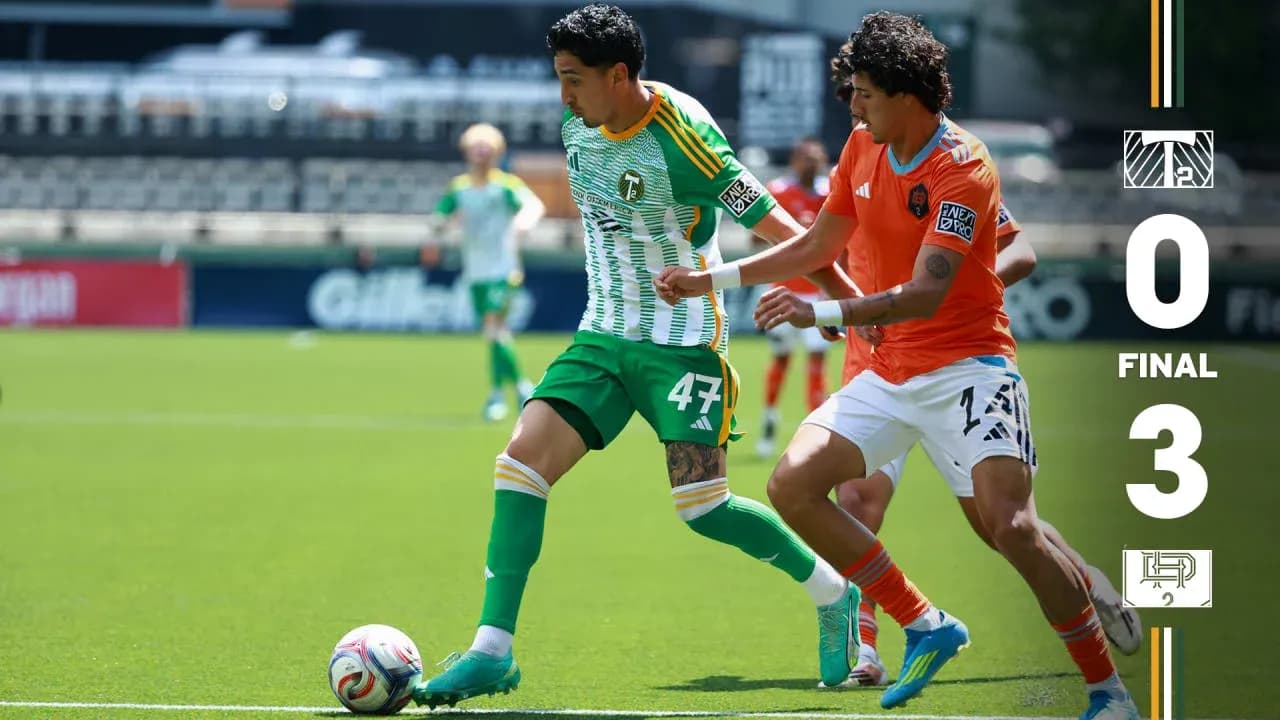
Houston Dynamo FC II Dominates Portland Timbers II: A 3–0 Showdown
Providence Park under the lights, a group-stage night in MLS Next Pro, and two sides whose seasons could hardly be more different. Portland Timbers II came in as a volatile contender, sitting 2nd in the Pacific Division and 5th in the Eastern Conference group table with 20 points from 11 games, a goal difference of -1 overall (14 scored, 15 conceded). Houston Dynamo FC II arrived as the league’s juggernaut: 1st in the Frontier Division and 1st in the Eastern Conference group, a perfect 31 points from 11, with an imposing overall goal difference of +23 (28 for, 5 against).
Following this result, a 3–0 away win for Houston, the night felt less like a clash of peers and more like a demonstration of what an unbeaten machine looks like when it visits a fragile but ambitious side.
I. The Big Picture: Styles Colliding
Heading into this game, Portland’s season had been defined by extremes. Overall they had won 6 and lost 5 with no draws, scoring 15 and conceding 18 in total. At home, their attacking output was respectable at 1.4 goals per game (10 scored in 7), but that was undercut by 1.9 goals conceded per home match (13 allowed in 7). They were a side that leaned into chaos, trusting their ability to outscore opponents but often paying for defensive looseness.
Houston, by contrast, were the league’s clearest expression of control. In total this campaign they had 11 wins from 11, scoring 30 and conceding just 5. On their travels they were relentless: 7 away wins from 7, 15 goals scored and only 5 conceded, averaging 2.4 goals for and 0.7 against away from home. Their defensive record at home was even more brutal—13 scored, none conceded—but what made them terrifying was that the standard barely dropped on their travels.
That tension—Portland’s volatility versus Houston’s ruthless stability—framed everything that unfolded.
II. Tactical Voids and Discipline
Neither data set lists specific absentees, but the tactical void for Portland was structural rather than personnel-based. Jack Cassidy named an XI with S. Joseph, S. Jura, A. Bamford, N. Lund, C. Ondo, E. Izoita, V. Enriquez, C. Griffith, L. Fernandez-Kim, N. Santos and G. Guerra. It was a side heavy on youthful energy, capable of vertical transitions, but one that has consistently struggled to manage game states.
Heading into this game, Portland’s disciplinary pattern already hinted at a team that often has to chase and scramble. Their yellow cards cluster heavily between 61–75 minutes (29.63%) and 76–90 minutes (22.22%), with another spike just after the break (18.52% between 46–60). It paints a picture of a team that starts reasonably controlled but becomes increasingly stretched and desperate as the match wears on.
Houston’s discipline profile, by contrast, is controlled aggression. Their yellows are more evenly spread, but there is a late-game edge: 21.43% of their yellows arrive in the 76–90 window, and 17.86% between 61–75. That suggests a side that presses and competes right to the end, but typically from a position of scoreboard strength rather than panic.
In a match that ended 3–0 by full time, the absence of red-card risk on both sides (no red-card incidents in their season distributions so far) meant Houston could maintain their intensity without fear of losing control. Portland, already defensively fragile at home, simply had no safety net once the first goal went in before the break.
III. Key Matchups: Hunter vs Shield, and the Engine Room
The “Hunter vs Shield” narrative here was less about individual scorers and more about collective profiles. Portland’s attack, while not prolific, is functional: 1.4 goals per game overall, 1.4 at home. They had failed to score in 3 matches in total, but they also showed the capacity to hit 3 at their best in both home and away fixtures.
Facing them was arguably the league’s most complete defensive unit. In total this campaign Houston had conceded just 5 goals in 11 games. On their travels they had allowed only 5 in 7, and they had never failed to win away. The shield, in this case, was reinforced by structure: Houston had 6 clean sheets overall, including 2 away, and had not failed to score once this season. There was no obvious weak seam to pull at.
Within Portland’s XI, C. Griffith stood out as a symbolic figure. Listed as the club’s leading presence across the top-scorer, top-assist and card charts for the league, he represents both their attacking hope and their emotional core. Yet his statistical line—no goals, no assists in his recorded appearance—underlines a broader truth: Portland’s threat is more collective chaos than individual brilliance.
Opposite him, Houston’s spine of Pedro Cruz in goal, V. Silva and R. Miller at the back, and the midfield pairing of Gustavo Dohmann and M. Arana formed the quiet engine behind their perfect record. With Houston’s biggest away win a 4–1 statement and their heaviest away concession only a single goal, the back line and midfield screen have consistently suffocated opponents before they can build momentum.
In this match, that dynamic played out starkly. A first-half Houston goal fractured Portland’s fragile confidence, and the visitors’ midfield simply denied the home side the transitions they rely on. Every attempted surge from V. Enriquez or N. Santos met a well-set block; every hopeful ball toward C. Ondo or Griffith was swallowed by a back line accustomed to absorbing and launching.
IV. Statistical Prognosis and xG-Style Verdict
We do not have explicit xG numbers, but the season-long patterns allow a clear inference. Heading into this game, Houston’s attack at 2.7 goals per match overall and 2.4 away suggests that they regularly generate a high volume of quality chances. Portland’s defence, conceding 1.9 per game at home and 1.6 overall, suggests that opponents find good looks far too easily, especially once the game stretches.
On the other side, Portland’s attack at 1.4 goals per match running into a defence that allows only 0.5 in total and 0.7 away was always likely to be suppressed. Houston’s clean-sheet rate—6 in 11 overall—combined with Portland’s 3 games in total without scoring made a home blank a real possibility, which the 3–0 scoreline ultimately confirmed.
Following this result, the narrative is clear. Houston Dynamo FC II continue to look like a side whose underlying numbers match their perfect record: high expected goals for, low expected goals against, and a tactical identity that travels seamlessly. Portland Timbers II, meanwhile, remain a dangerous but flawed outfit—capable of bursts of attacking threat, but with defensive metrics and disciplinary patterns that make them vulnerable to exactly the kind of clinical, structured opponent they faced here.
In a group stage that will tighten as the season wears on, this match felt like a measuring stick. Houston measured up as title favourites; Portland, for all their courage, were shown the distance they still have to travel.
Related News

MLS Winners and Losers: Rising USMNT Star Cavan Sullivan, St. Louis City's Smart Moves, and Chicago Fire's Struggles Without Hugo Cuypers

MLS Highlights: Portland Timbers End Drought, Josh Sargent Shines, Cavan Sullivan Impresses
Tacoma Defiance vs Colorado Rapids II Stats: Head-to-Head Record

St. Louis City II vs Vancouver Whitecaps II: Head-to-Head Stats and Match Preview
Atlanta United II vs New York City II Stats: Head-to-Head Record
Houston Dynamo FC II vs Austin II Stats: Head-to-head Record