
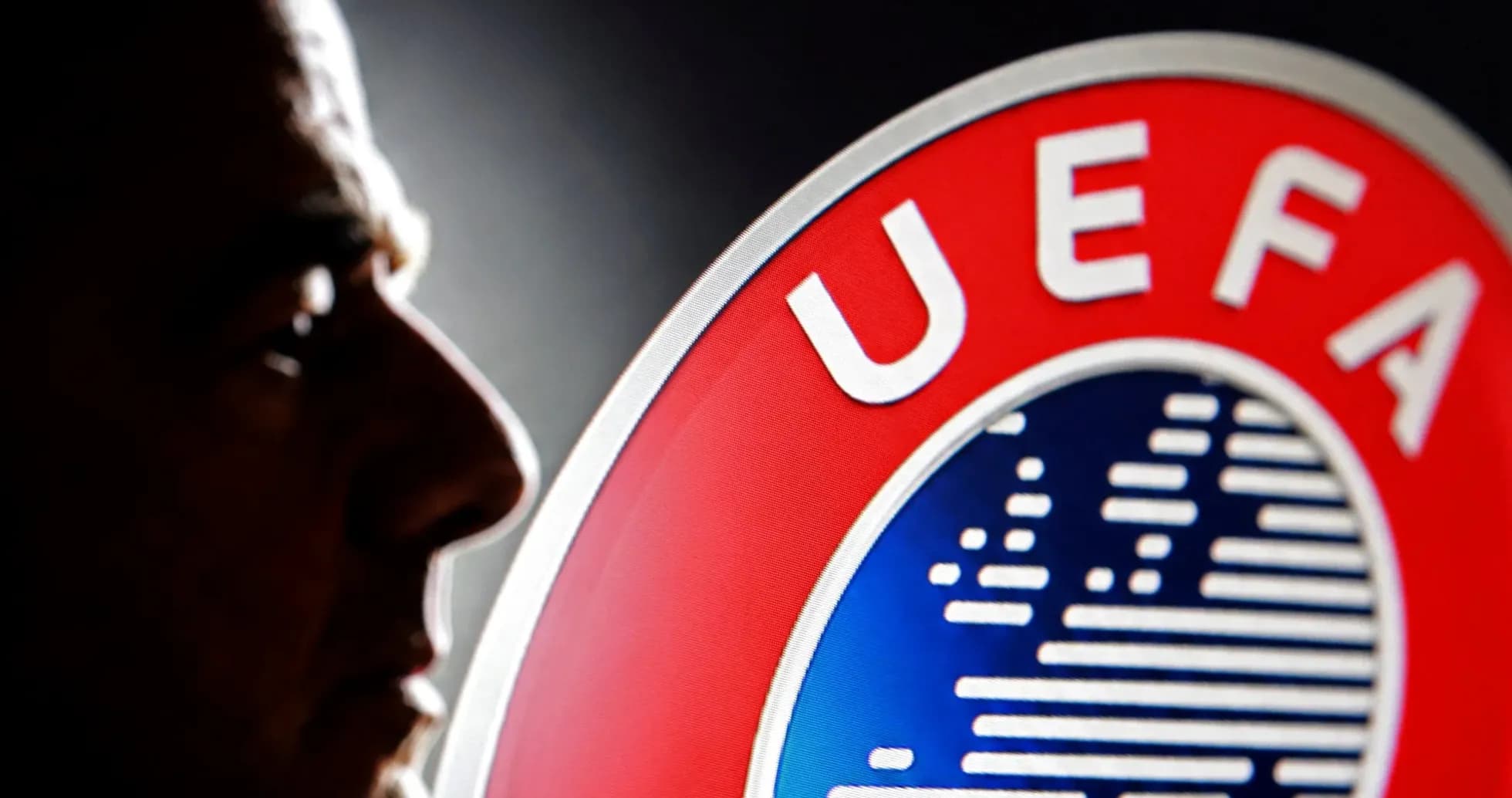
Gianni Infantino's Crisis: From King of Football to Governance Turmoil
Gianni Infantino’s fall from grace has been as swift as it has been spectacular.
Less than a fortnight ago, he sat alongside Donald Trump at MetLife Stadium, basking in the glow of a World Cup final that ticked every box FIFA cares about: record crowds, record revenue, record reach. The US president has called him the “King of Football”. On that July night, it did not feel like an exaggeration.
There were boos when Infantino and Trump walked out to present medals to Spain and Argentina, but they were swallowed by the noise of a 104th and final match in a supersized tournament that had just delivered $15bn in revenue for the 2023-26 cycle. Infantino left New York with letters of support from about 200 of FIFA’s 211 member federations. His re-election next March looked like a coronation, not a contest.
That world has vanished in days.
From kingmaker to crisis manager
The turning point came with a plan that, on paper, promised more money for everyone. In reality, it detonated the most serious governance crisis FIFA has faced since the Sepp Blatter era.
Infantino’s idea was to carve out FIFA’s most lucrative assets – the World Cup and other tournaments, broadcasting, sponsorship, ticketing and hospitality – into a new subsidiary, FIFA Forward Enterprise (FFE). Around 20 percent of this cash machine would be sold to private investors for $4.2bn, valuing the whole operation at $20bn.
The “anchor investor” was set to be Thrive Eternal, a vehicle launched by Joshua Kushner, brother of Jared Kushner, Donald Trump’s son-in-law. Private equity and sovereign wealth funds have already reshaped European club football. Infantino’s proposal was to let that money into the game’s ultimate prize.
In return, FIFA’s 211 member associations, already the legal owners of the organisation under Swiss law, were offered an extraordinary windfall: $20m each, on top of the $10m they are already due over the next four years. Under the projections, those payments would rise to $22m per federation through 2034 and $24m to 2038.
For small federations in places such as Andorra, Montserrat or Papua New Guinea, those numbers are transformative. For the giants – England, Spain, France – the calculation is different. They have commercial power of their own and a vested interest in protecting club competitions and existing revenue streams.
The deadline to accept the offer was set for September 19. Infantino seemed convinced that money would talk.
It did. Just not in the way he expected.
The backlash builds
The resistance was almost total.
Some of FIFA’s own vice presidents opposed the plan. So did senior executives. All of UEFA’s member associations rejected it. The confederations of Asia and North America came out against it. Britain’s prime minister criticised it. The global body representing domestic leagues lined up with the dissenters. Fans around the world voiced their anger.
By the end of the week, Infantino looked increasingly isolated.
His senior adviser Carlos Cordeiro, a former Goldman Sachs banker and ex-US Soccer president, resigned and publicly branded the deal “bad”. FIFA’s chief operating officer, Kevin Lamour, issued a blistering statement defending his colleagues and implicitly challenging his boss’s judgment, a move that in most administrations would make his position – or Infantino’s – untenable.
The decisive blow landed in Europe. On Thursday, UEFA’s member federations pledged to boycott all FIFA competitions unless Infantino dropped the FFE project. That was not a symbolic threat. European teams dominate the men’s World Cup and Club World Cup, the very tournaments that underpin FIFA’s financial model.
UEFA and its clubs feared exactly what private investors would inevitably demand: more games, bigger tournaments, new formats to squeeze extra value out of the calendar. That would crowd out domestic leagues and the UEFA Champions League, stretch already exhausted elite players, and test the limits of broadcast and sponsorship markets that are not infinite.
The anger was not only about the destination, but the route. Infantino had spent the last year shaping the project in near secrecy, with minimal consultation, while spending conspicuous time in Trump’s orbit. Even Trump, he said on Friday, had not discussed the sell-off plan with the FIFA president.
By then, the damage was done.
A plan abandoned, a presidency exposed
On Friday, under intense pressure, Infantino pulled the plug.
“Having listened carefully to all the views, it has become clear that the project has created divisions of a nature that, regardless of the level of support, are no longer in the interest of the objective set out in the first place,” he said in a statement.
The wording tried to frame the retreat as an act of statesmanship. The reality is more brutal: he misread the room, misjudged the politics and underestimated the visceral attachment many inside and outside the game still feel to the World Cup as a public good, not a financial asset.
Scrapping FFE has not settled the issue. It has simply moved the battle to a different front: Infantino’s own future.
He flew out of New York last week with written pledges of support from around 200 federations. Now, even that base looks shaky. The very federations that stood to gain most financially – particularly in Africa, which holds 54 votes – had been strikingly cautious, publicly neutral at best, about the proposal. The South American confederation CONMEBOL, led by FIFA vice president Alejandro Dominguez, said only that it would study the offer “with the rigour it demands”.
Dominguez has his own reasons to stay close to Infantino. He is relying on the president to push through an expanded 64-team World Cup in 2030 that would give more matches to minority co-hosts Argentina, Paraguay and Uruguay, who are currently due just one game each. The rest of the 104 fixtures are scheduled for Spain, Portugal and Morocco.
That delicate political arithmetic now collides with a more fundamental question: does Infantino still have the authority to lead?
The numbers game
The election timetable is tight. November 18 is the deadline for presidential candidates to declare, four months before the vote on March 19 in Rabat, Morocco, where FIFA has its African headquarters.
Infantino was re-elected unopposed in 2019 in Paris and again in 2023 in Kigali, Rwanda. Under FIFA’s statutes, he is allowed one more four-year term, taking him to 2031.
The FFE structure looked, to many, like a vehicle that could have extended his influence well beyond that date – a commissioner-style role at the helm of a semi-privatised commercial arm, with a pay package far beyond his current salary and bonuses of more than $6m a year. That prospect alone unnerved plenty of stakeholders.
To win a contested election, a candidate needs 106 votes – a simple majority of the 211 members. Confederations rarely vote as perfectly aligned blocs, but the arithmetic is clear. If most of UEFA’s 55 associations, CONCACAF’s 35 and Asia’s 46 drift away from Infantino, the foundation of his power crumbles.
Names of potential challengers are no longer whispered; they are openly discussed. Paris Saint-Germain president Nasser Al-Khelaifi, a key figure in both European club football and the Qatari sports project, is regularly mentioned. So is Canadian FIFA vice president Victor Montagliani, a central player in North and Central American football. Sheikh Salman bin Ebrahim Al Khalifa, the long-serving AFC president from Bahrain who narrowly lost to Infantino in 2016, may yet decide the time is right for another run.
Until this week, such scenarios felt theoretical, the stuff of long-term plotting rather than imminent reality. Infantino’s grip on power, built on development money and political alliances across Africa, Asia and the Americas, looked too strong.
The events of the past few days have changed that calculation.
A presidency on the brink
The World Cup that ended on July 19 was supposed to be Infantino’s crowning achievement: 104 games, record revenues, and a narrative of global growth he could sell to every corner of the planet. Instead, the tournament now looks like the high-water mark of his presidency.
He has discovered, late and abruptly, that there are still red lines in global football. Selling a slice of the World Cup to private capital crossed one of them.
The UEFA-led boycott threat forced him to retreat. The resignations and public interventions from within his own inner circle stripped away the illusion of internal unity. The federations that once saw him as indispensable now see something else: a leader who overreached, and a job that might suddenly be winnable.
Infantino has time, allies and the machinery of incumbency on his side. He can still rebuild bridges, repackage his vision and try to turn the narrative back to development money and global expansion.
The question is whether the game will let him – or whether the scramble to replace the “King of Football” has already begun.
Related News
Raphinha’s Hat-Trick Powers Barcelona to 7-2 Victory Over Racing Santander
Carabao Cup Fourth Round Draw: Liverpool Set to Clash with Chelsea, Arsenal to Face Fleetwood Town
Key Football Matches to Watch in Azerbaijan This Autumn
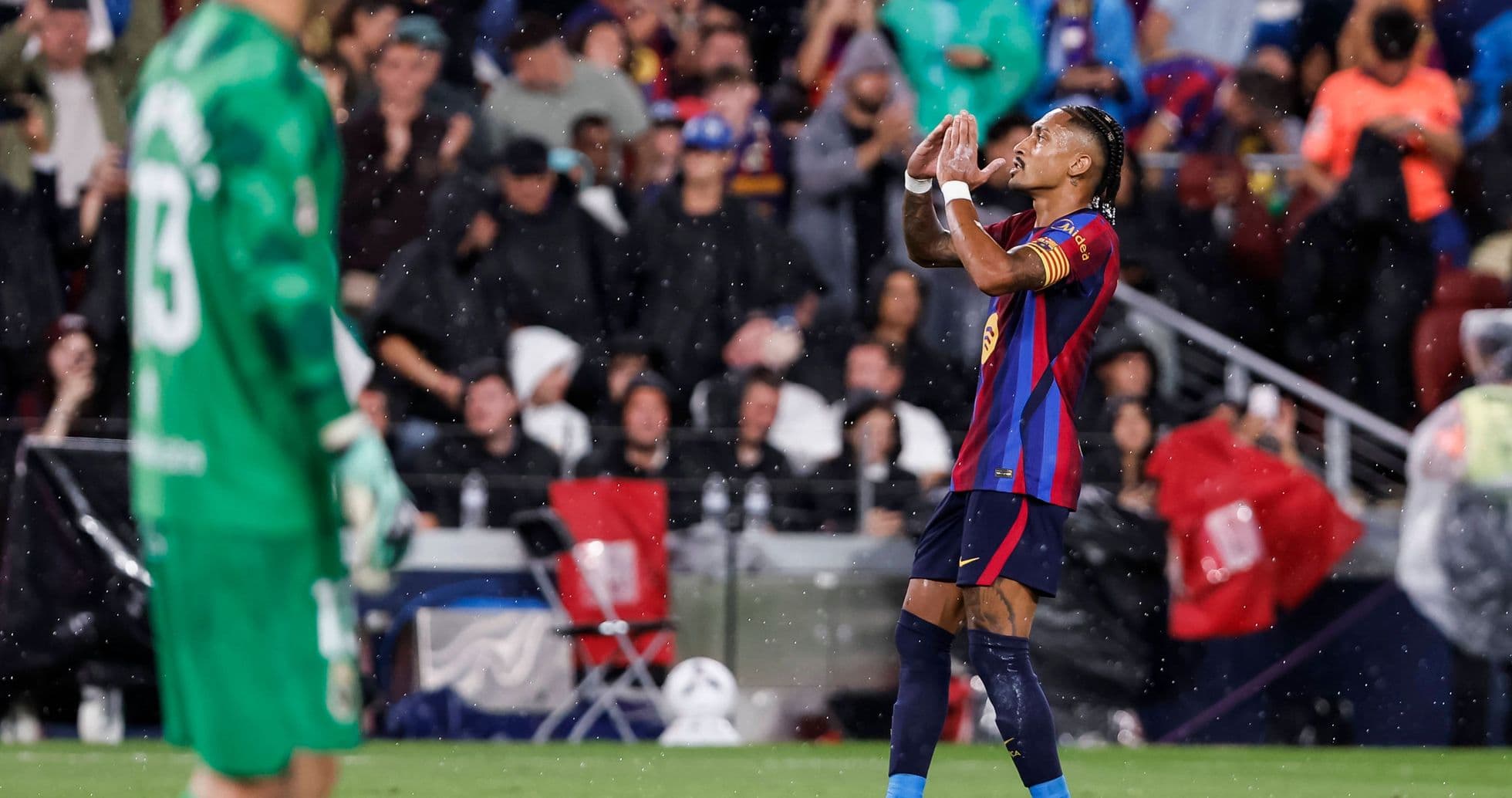
Raphinha's Hat-Trick Drives Barcelona to 7-2 Triumph Over Racing Santander
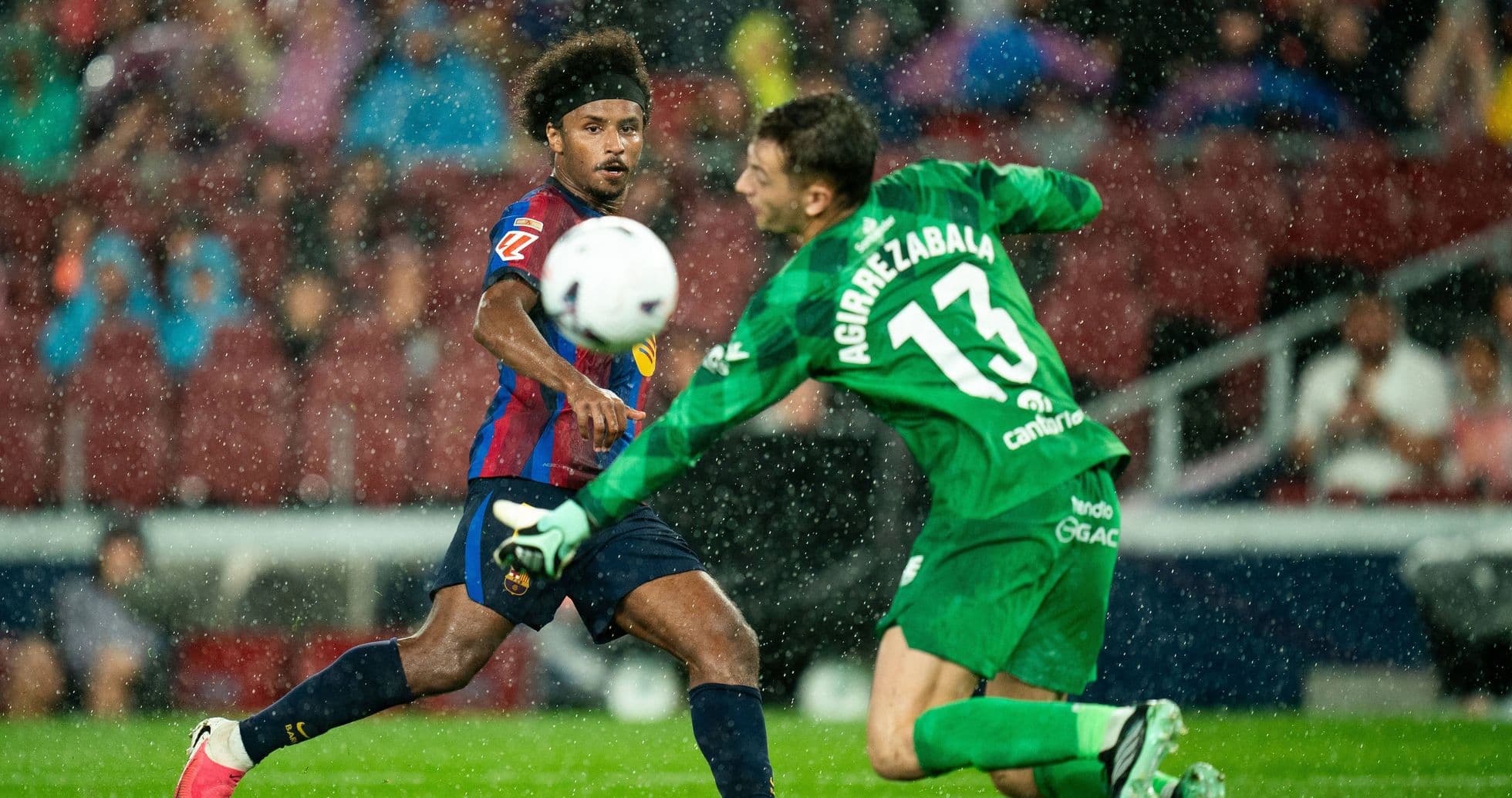
Hansi Flick Leads Barcelona to Record-Breaking Seven Wins in a Row
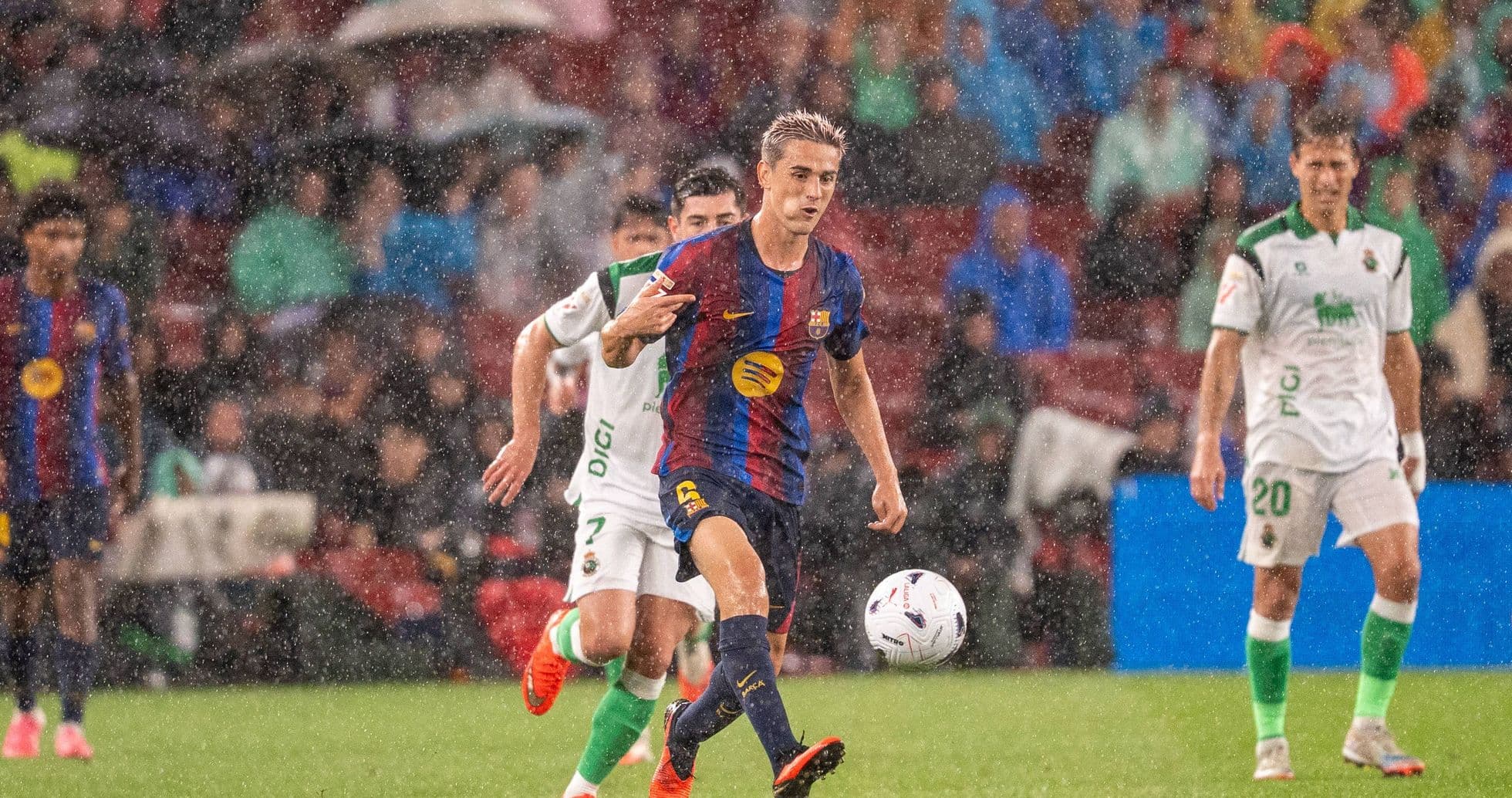
Gavi Reflects on Injury Return as Barcelona Dominate Racing Santander 7-2