
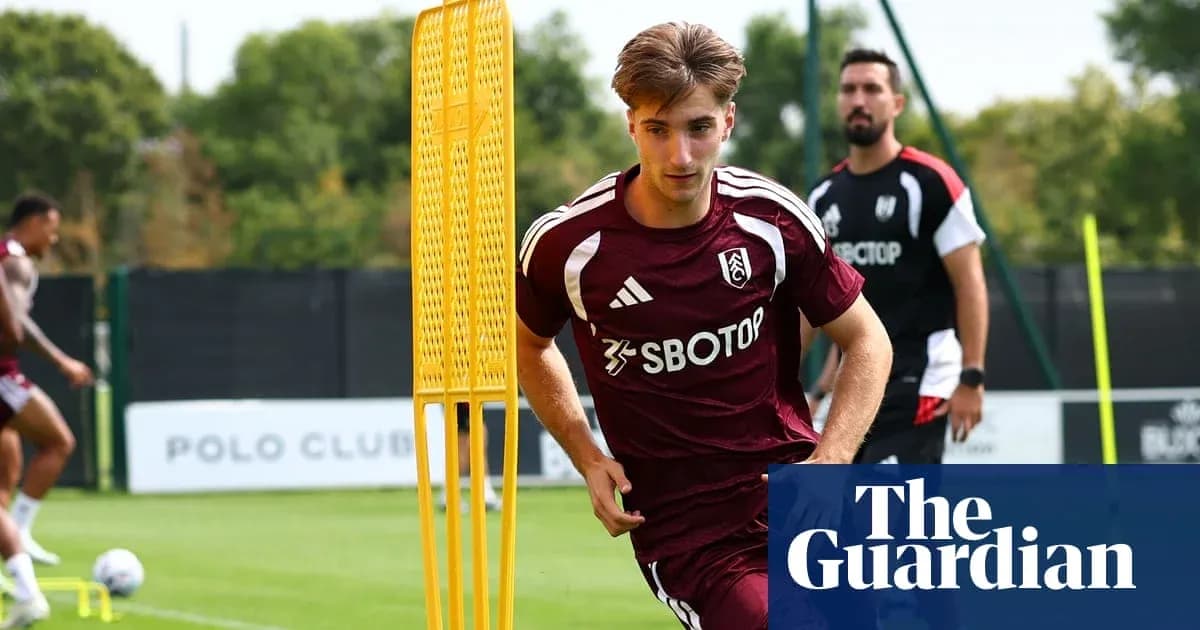
Fulham's 2025-26 Season Preview: From Silva's Legacy to Arbeloa's Vision
Guardian writers’ predicted position: 15th
Last season: 11th
A riverbank era ends
By the time Marco Silva finally walked away from the Thames, the surprise was that it had taken five years. He had rebuilt Fulham’s reputation, dragged them away from the yo‑yo years and parked them, with a certain swagger, in the Premier League’s middle class. His teams played front-foot football, turned cast-offs into assets and, crucially, made Craven Cottage somewhere opponents no longer enjoyed visiting.
He also made no secret of his frustrations. Silva wanted a squad built for Europe; the ownership’s caution and spiralling costs said otherwise. The parting of ways felt less like a shock than an overdue divorce. He leaves behind a club that has been looking up the table, not over its shoulder, and a fanbase that had grown used to being entertained.
Now the safety net has gone.
Arbeloa, Madrid and a new experiment
Into that space steps Álvaro Arbeloa, a name from another footballing universe. Where Silva grafted his way through the coaching ladder, Arbeloa arrives with medals: World Cup, Champions League, a long association with Real Madrid and the ear of Florentino Pérez. As a frontline manager, though, he is almost a blank page.
Fulham have chosen to lean into that Madrid connection. Gonzalo García and César Palacios, both shaped in the Spanish giants’ system and previously coached by Arbeloa, have followed him to west London. They share the same agency, the same pathway, the same bet: that Fulham can be a Premier League finishing school for Bernabéu talent.
Talk has already swirled around further Real prospects such as Endrick and Thiago Pitarch. If even some of that comes to pass, Craven Cottage starts to look less like a traditional English club and more like a satellite campus – a Santiago Bernabéu on the Thames, with all the volatility that implies.
This is a sharp turn from Silva’s preference for hardened pros. Raúl Jiménez and Harry Wilson, two of his standard-bearers, have gone. Wilson, especially, leaves a void after the best season of his career, tempted away to Leeds just as he looked utterly at home by the river.
Fulham’s new strategy is clear: go younger, buy earlier, polish harder. It is a model that has made Brentford, Brighton and Bournemouth look clever and modern. But those clubs are built on deep data operations and years of alignment. Fulham are trying to pivot in real time. For a club that has always felt slightly enigmatic, the mystery has only thickened.
Money, marble and a tightrope
Off the pitch, the story is just as stark. Fulham were runners-up at the football business awards for stadium experience, a nod to the Riverside Stand’s first full season of high-end hospitality. The new stand glitters, and it has to. The latest financial results showed a pre-tax loss of £44.5m for 2024-25, softened only by João Palhinha’s sale in July 2024. No such windfall has arrived since.
The Khan family’s commitment is not in doubt on the balance sheet. Overall investment sits at an estimated £900m, with staff costs running at 117% of turnover. Those numbers explain why Silva never got the spending spree he craved. They also explain why the Riverside has become more than a vanity project: it is a financial lifeline.
That lifeline comes at a cost to match. The most expensive season ticket in the Premier League is now at Craven Cottage – £3,084 for the full Riverside experience. Shahid Khan and his son Tony, the vice-chair and director of football operations, have become lightning rods for anger over rising prices and a sense that the club courts tourists more than it cherishes its core support.
Khan’s superyacht Kismet, crowned superyacht of the year in 2025 and modelled in part on the Palace of Versailles, can be hired for more than $3m a week. It is an easy symbol for disgruntled fans to reach for when they are told the club must cut its cloth. The accounts show heavy backing. The terraces want something that feels less like Versailles and more like Fulham.
Arbeloa’s football: continuity with a twist
On the touchline, at least, there is a thread of continuity. Where Silva’s playing career barely flickered, Arbeloa’s burned among the elite. He has worked with the best, played under serial winners, and was even sounded out by Pérez to replace Xabi Alonso mid-season in Madrid in 2025-26 before that move fell away.
His first step outside the Real bubble now comes in SW6. Shahid Khan has already framed the appointment around youth, stressing Arbeloa’s belief in giving young players real chances. That aligns with the recruitment shift and the new pipeline from Spain.
Crucially for a club that has grown used to open, attacking football, Arbeloa is no pragmatist in retreat. His philosophy fits the Craven Cottage tradition: front-foot, expansive, with an emphasis on technical quality. The question is whether he can graft Premier League nous onto that framework quickly enough.
Gonzalo García: the headline act
Gonzalo García is the poster boy for this new era. His name burst into wider view at last summer’s Club World Cup, where he won the Golden Boot and drew comparisons with Raúl – praise that carries serious weight at the Bernabéu. Goals against Juventus and Borussia Dortmund in the Champions League underlined the point: this is not a YouTube mirage.
Yet he still found himself squeezed by the star power of Vinícius Júnior and Kylian Mbappé. Fulham have stepped into that gap, offering him the role of leading man rather than understudy. His reputation in Spain is as much about his work without the ball as his finishing, a trait that should serve him well in England.
Last season’s injuries to Rodrigo Muniz left Jiménez to grind through heavy minutes as the central striker. García is younger, sharper, and arrives with a wave of expectation that will not be easy to surf. If he gets it right, though, Fulham’s attack suddenly looks younger, quicker and far more marketable.
The numbers that demand change
For all the stylistic praise, the data told a more worrying story last season. Fulham fielded the oldest side in the Premier League. Legs that once pressed aggressively now lagged. They recorded the fewest high turnovers in the division – those moments when you win the ball back high and launch a fresh attack within 40 metres of the opposition goal.
Even Real Madrid, hardly evangelists for relentless pressing, outstripped Fulham on that front. Arbeloa knows this world. The challenge is to inject intensity into a squad being rebuilt on the fly, without losing the composure on the ball that has become part of the club’s identity.
Does he drag the team towards a more modern, aggressive press? Or does he try to split the difference between Madrid’s control and the Premier League’s chaos? His answer will shape Fulham’s season.
The next wave: Kusi-Asare and company
Jonah Kusi-Asare is the other intriguing strand of this youth-first policy. Signed from Bayern Munich last summer, he arrived with a buy-back clause attached – a clear sign of how highly the Germans rate him. Bayern had plucked him from AIK; Fulham are now the next step in that chain.
The Sweden Under-21 forward is already being likened to Alexander Isak. At 6ft 5in, he offers a completely different profile to García: rangy, aerially dominant, a classic focal point with modern feet. His Premier League exposure so far is minimal – seven substitute appearances, no goals – but his loan, now made permanent, came alive at under-21 level.
Hayden Mullins, then Fulham’s under-21 coach and now in charge at Newport, watched him score five goals in six matches. Those who see him regularly talk about a player still working out his body and his game. If he clicks, Fulham suddenly have two very different young strikers to build around.
World Cup afterglow
The World Cup has left its own imprint on the squad. García made his senior Spain debut in a pre-tournament friendly against Iraq but did not make the final cut for a squad that went on to lift the trophy. That near miss will sting – and may fuel him.
Antonee Robinson, by contrast, enhanced his standing. The USA left-back had an excellent tournament until the co-hosts were knocked out in the last 16 by Belgium, with Timothy Castagne involved on the other flank. His blend of athleticism and reliability looks more valuable than ever in a side likely to skew younger elsewhere.
Luc de Fougerolles, still awaiting a Premier League debut, showcased his defensive promise in Canada’s run to the knockout rounds. For a teenager yet to play a league minute, those experiences matter.
Then there is Sander Berge. The Norwegian midfielder produced a standout World Cup as Norway reached the quarter-finals. His calm on the ball and ability to knit play together could be vital in a side that may otherwise lean heavily on youthful exuberance.
An enigmatic club, now at a crossroads
So what exactly are Fulham this season? A mid-table Premier League outfit with a smart new stand and a steady plan? A Madrid-adjacent academy experiment? A club pushing against its financial limits while charging some of the highest prices in the country?
Silva’s Fulham were flawed but knowable. Arbeloa’s version is anything but. The squad is younger, the press must be sharper, and the margin for error thinner. Craven Cottage will still be a lovely place to watch football. The question is whether the football on the pitch matches the ambition in the boardroom – and whether this Madrileño gamble keeps Fulham looking up, or drags them back into the old relegation orbit.
Related News
Transfer Rumors: Haaland’s Two Options; Real Madrid Targets $100 Million Premier League Star

Manchester United Targets Premier League Forward to Strengthen Attack

Liverpool Eyes 17-Year-Old Mexican Midfielder Gilberto Mora for Summer Transfer
Summer 2026 Transfer Window: Manchester United and Tottenham Struggle with New Signings
Liverpool Maintain Interest in Real Madrid Midfielder Amid Transfer Challenges
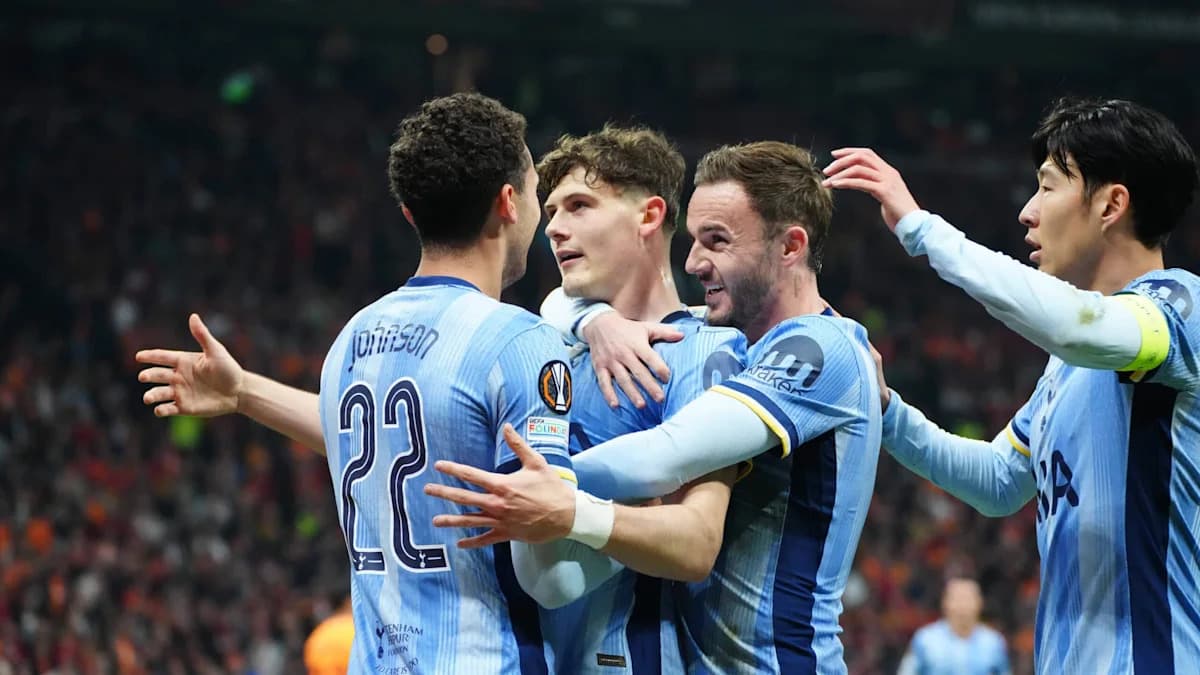
Transfer Insider Warns Tottenham About Costly Sale of Will Lankshear