
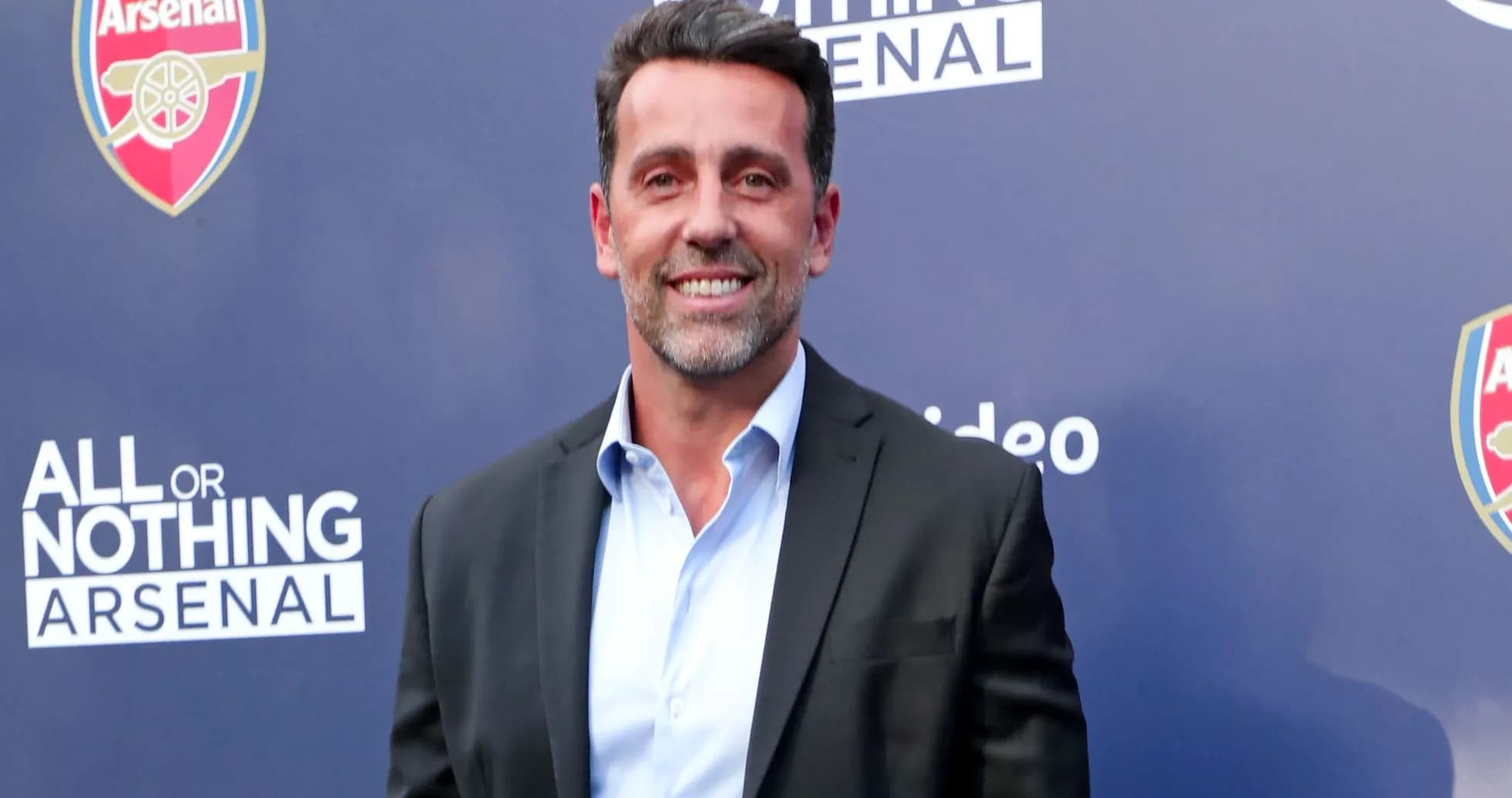
Edu's Departure from Nottingham Forest: A Turbulent Chapter Ends
Edu’s turbulent Nottingham Forest chapter is over. Just over a year after arriving as global head of football to spearhead an ambitious multi-club project, the Brazilian executive has officially left the club, according to The Athletic.
It is an exit that has felt inevitable for months.
A quiet goodbye
Edu, 48, had effectively vanished from the day-to-day life of Forest long before his departure became formal. He has not attended a match since February. He has not been seen at the City Ground or the training ground since early March, when the first reports of his likely exit surfaced.
Forest are not planning a grand statement or a replacement search. There will be no fanfare, no farewell interview. The club do not intend to formally announce his departure, and they will not recruit a direct successor.
Instead, Chief Football Officer George Syrianos has quietly taken on a broader brief. His responsibilities expanded when Edu was first sidelined, and his growing influence has also helped cover the gap left by Ross Wilson, who departed for Newcastle United in October last year. The power structure has shifted without the club ever saying very much.
From European push to survival scramble
Edu’s role came under fierce scrutiny during a chaotic season at the City Ground. Under Nuno Espirito Santo, Forest had flirted with the edges of the Champions League race. That optimism evaporated with startling speed.
A breakdown in the relationship between Nuno and Edu proved decisive. The fallout triggered Nuno’s exit and with it the sense of a clear direction. Forest’s form collapsed, and the club slid from European outsiders into a tense relegation battle.
The dugout then became a revolving door.
Ange Postecoglou lasted just 39 days in charge before being removed. Sean Dyche followed, only to be dismissed in February. Vitor Pereira stepped in briefly, then made way for former Crystal Palace boss Oliver Glasner. Each change was billed as a reset. None brought the stability Forest craved.
What was meant to be a structured, long-term football project instead looked increasingly like firefighting.
Recruitment under fire
The instability on the touchline was matched by turbulence in the transfer market. Edu’s recruitment at Forest drew sharp criticism from supporters and pundits alike.
Backed by significant investment, Forest chased big names. The returns were meagre. Omari Hutchinson, Douglas Luiz and Oleksandr Zinchenko were among the high-profile arrivals who struggled to justify their reputations or reshape the team’s fortunes at the City Ground.
The pattern jarred with the image Edu had built elsewhere. For a club trying to punch above its weight in the Premier League, the sense that money was being spent without clear reward only amplified the pressure on the Brazilian and the project he was meant to lead.
A stark contrast to Arsenal heights
The failure of the Forest experiment sits in sharp contrast to Edu’s rise in North London.
He joined Arsenal in 2019 as the club’s first technical director and quickly became central to their rebuild. He appointed former teammate Mikel Arteta as manager later that year, backing him through difficult early spells, and in November 2022 he was promoted to sporting director. Under that structure, Arsenal re-emerged as title contenders.
His resignation from Arsenal in November 2024 came as a surprise across the game. Until this Forest spell, his executive career had been framed as one of steady, high-level success, mirroring his status as a player in Arsenal’s legendary 2003-04 ‘Invincibles’ side.
At Forest, the narrative flipped.
A heavyweight résumé, a bruising setback
Edu does not leave English football as a novice administrator who flew too close to the sun. Before his European executive roles, he built a substantial body of work behind the scenes.
He spent five years as director of football at Corinthians, one of Brazil’s giants. He served briefly as an advisor to the Iran national team at the 2014 World Cup. He then spent three years as general coordinator for the Brazil national side, operating at the heart of one of the most demanding football environments on the planet.
That background helped turn him into one of the most respected executives in the game. Which is why this Forest spell, with its managerial churn, recruitment misfires and quiet, unannounced exit, feels like a jarring low point.
The question now is simple: does this chapter mark the beginning of a decline in his boardroom influence, or will a figure with Edu’s track record turn this bruising experience into fuel for his next move?
Related News
Iraola's Return to Bournemouth: Liverpool's New Era
JJ Gabriel's Future in Doubt as 'Kid Messi' Considers Leaving Man Utd
Owen Elding's Long-Awaited Call-Up to Ireland's Squad

Nick Woltemade Shines in Juventus Victory Over NEC Nijmegen
Todd Boehly's Chelsea Tenure: From Showman to Footnote

Manchester City vs Sunderland: Maresca’s Winning Streak Continues