
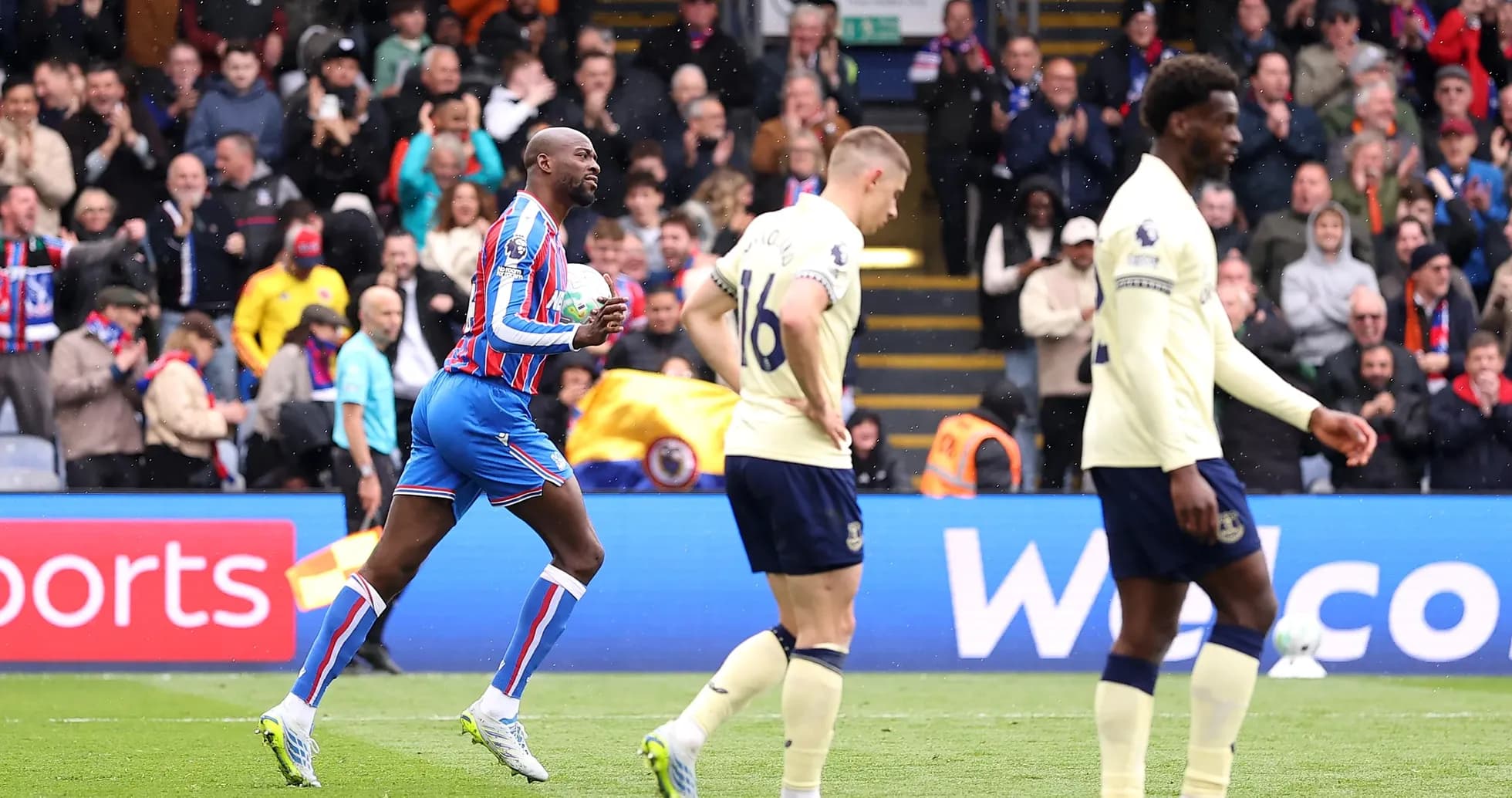
Crystal Palace vs Everton: A Tactical Draw at Selhurst Park
Selhurst Park had the feel of a late‑season crossroads rather than a dead rubber. In the London drizzle, Crystal Palace and Everton – 15th and 10th respectively in the Premier League table heading into this game – played out a 2-2 draw that neatly encapsulated their 2025‑26 identities: Palace’s structural ambition under Oliver Glasner against Everton’s rugged, often attritional pragmatism.
Palace arrived with a clear statistical profile. Overall this campaign they had taken 44 points from 35 matches, with a goal difference of -6, built on tight margins: 38 goals scored and 44 conceded. At Selhurst Park they had been stubborn rather than spectacular, winning 4 of 18, drawing 9 and losing 5, with just 18 goals for and 21 against. The numbers underline a side that rarely cuts loose – averaging 1.0 goals for and 1.2 against at home – but one that is structurally organised: 12 clean sheets in total and a heavy reliance on a back three.
Everton, by contrast, came in with a more balanced but equally hard‑edged profile. Sitting 10th with 49 points from 36 games, their overall goal difference of 0 (46 for, 46 against) reflects a team that lives in the fine details. On their travels they had been quietly efficient: 7 wins, 5 draws and 6 defeats from 18 away matches, with 21 goals scored and 22 conceded, an average of 1.2 both for and against away from home. It is a profile of a side that rarely gets blown away but also rarely dominates.
The tactical stage was set by absences. Palace were without a whole tier of potential game‑changers: C. Doucoure and E. Guessand (both knee injuries), E. Nketiah (thigh) and B. Sosa (injury) all listed as Missing Fixture. For a team whose season has been shaped by fine margins, losing Doucoure’s ball‑winning presence and Nketiah’s penalty‑box instincts stripped depth from both ends of the pitch.
Everton’s own casualty list was no less significant. J. Branthwaite’s hamstring injury removed a first‑choice centre‑back whose physicality and recovery pace are central to their defensive line, while I. Gueye’s absence deprived them of their most natural midfield screener. Most intriguingly, J. Grealish – one of the league’s leading chance‑creators with 6 assists and 40 key passes – was also ruled out with a foot injury. His omission forced Everton to lean even more heavily on structure rather than individual incision.
Glasner’s response was pure system football. Palace lined up in their now‑familiar 3‑4‑2‑1, with D. Henderson behind a back three of C. Richards, M. Lacroix and J. Canvot. The wing‑backs, D. Munoz and T. Mitchell, were tasked with stretching the pitch, while A. Wharton and D. Kamada formed the central hinge. Ahead of them, I. Sarr and B. Johnson floated between lines, feeding J. S. Larsen as the single reference point.
The selection spoke to Palace’s season-long blueprint. Their league statistics show 31 uses of a 3‑4‑2‑1, and the defensive spine has been reliable: Lacroix, in particular, embodies the “shield” role. Across the campaign he has blocked 17 shots, a clear indicator of how aggressively he steps out to protect the box, and his red card on the league’s disciplinary charts underscores how fine the line is between front‑foot defending and overstepping.
Everton, intriguingly, came without a listed formation in the match data, but their season numbers betray a strong 4‑2‑3‑1 identity (used 21 times). The personnel fit that template: J. Pickford in goal; a back four anchored by J. Tarkowski and M. Keane, flanked by V. Mykolenko and J. O’Brien; a midfield core of T. Iroegbunam and J. Garner; M. Rohl, K. Dewsbury-Hall and I. Ndiaye operating between the lines behind Beto.
Garner is Everton’s “engine room” in every sense. Officially listed as a defender in the season data, his role is that of a deep‑lying playmaker and enforcer rolled into one. Across the campaign he has produced 7 assists and 52 key passes, while also making 115 tackles and blocking 9 shots. The disciplinary cost is high – 11 yellow cards – and Everton’s team profile mirrors that edge: their yellow-card distribution spikes late, with 21.74% of bookings arriving between 76-90', and a further 15.94% in 91-105'. This is a side that tackles on the brink as legs tire and spaces open.
Palace’s own card profile is more evenly spread, though there is a notable concentration before half-time: 19.72% of their yellows arrive between 31-45', often as they wrestle back control before the interval. Their red-card pattern is even more telling: both dismissals have come between 46-75', a period where intensity can tip into recklessness. In a match that finished 2-2, it is easy to imagine that emotional volatility shaping the ebb and flow, even without a dismissal on the day.
The “Hunter vs Shield” narrative runs through both squads. For Palace, the pure finisher is actually on the bench: J. Mateta, one of the league’s more efficient strikers this season, has scored 11 goals from 55 shots, with 31 on target. He is a penalty specialist too, converting 4 from 4. That he began among the substitutes underlines Glasner’s faith in Larsen’s all‑round game and the fluid front line of Sarr and Johnson, but it also provided a potent late‑game option if Palace needed to chase.
Everton’s attacking spearhead, Beto, is less statistically decorated in the provided data but structurally vital. His presence pins centre‑backs, freeing Dewsbury-Hall and Ndiaye to attack the half‑spaces. Against a Palace defence that concedes an average of 1.3 goals overall and 1.2 at home, the plan was clear: drag Lacroix and Richards into wide duels, then flood the central lane with second runners.
In the middle of the park, the “Engine Room” battle pitted Wharton and Kamada against Garner and Iroegbunam. Wharton’s metronomic passing is crucial to Palace’s build-up, while Kamada offers the vertical thrust. Garner, by contrast, is both Everton’s primary distributor and their most aggressive presser. His duel numbers – 319 contested, 194 won – highlight a player who thrives in chaos, and his propensity to foul (36 committed) made him a walking tactical foul, especially as Palace broke through Sarr’s pace.
From a statistical prognosis standpoint, the 2-2 scoreline feels almost pre‑ordained by the numbers. Palace’s home attack at 1.0 goals per game and Everton’s away output at 1.2 point to a mid‑scoring contest; both defences concede 1.2 on their respective home/away splits. Neither side has a penalty miss on the season – Palace have scored all 7 of their spot-kicks, Everton both of theirs – so any incident in the box was always likely to be decisive rather than squandered.
Defensively, Palace’s 12 clean sheets overall and Everton’s 11 speak to systems that can lock down when game state demands, but both teams’ card profiles and late‑game booking surges suggest matches often become stretched in the final quarter. Here, that chaos produced four goals rather than a stalemate.
Following this result, the tactical story remains consistent: Palace’s 3‑4‑2‑1 continues to offer structure but relies heavily on moments from a rotating cast of forwards, with Mateta looming as the pure finisher in reserve. Everton’s 4‑2‑3‑1 identity remains anchored by Garner’s dual role as creator and destroyer, with the absences of Branthwaite and Grealish only reinforcing how much their system leans on collective discipline.
On a day when the numbers predicted balance, Selhurst Park got exactly that: a draw shaped by structure, scarred by absences, and decided in the thin margins where xG, discipline and late‑season fatigue intersect.
Related News
Bournemouth vs Liverpool Prediction: Key Stats and Betting Tips

Tottenham vs Aston Villa Predicted Lineups: Team News for Premier League Clash
Brighton vs Arsenal: Premier League Clash Preview

Manchester City vs Sunderland: Premier League Clash Preview
Tottenham vs Aston Villa: Early Relegation Battle

Brentford vs Chelsea Predicted Lineups: Team News and Match Insights