
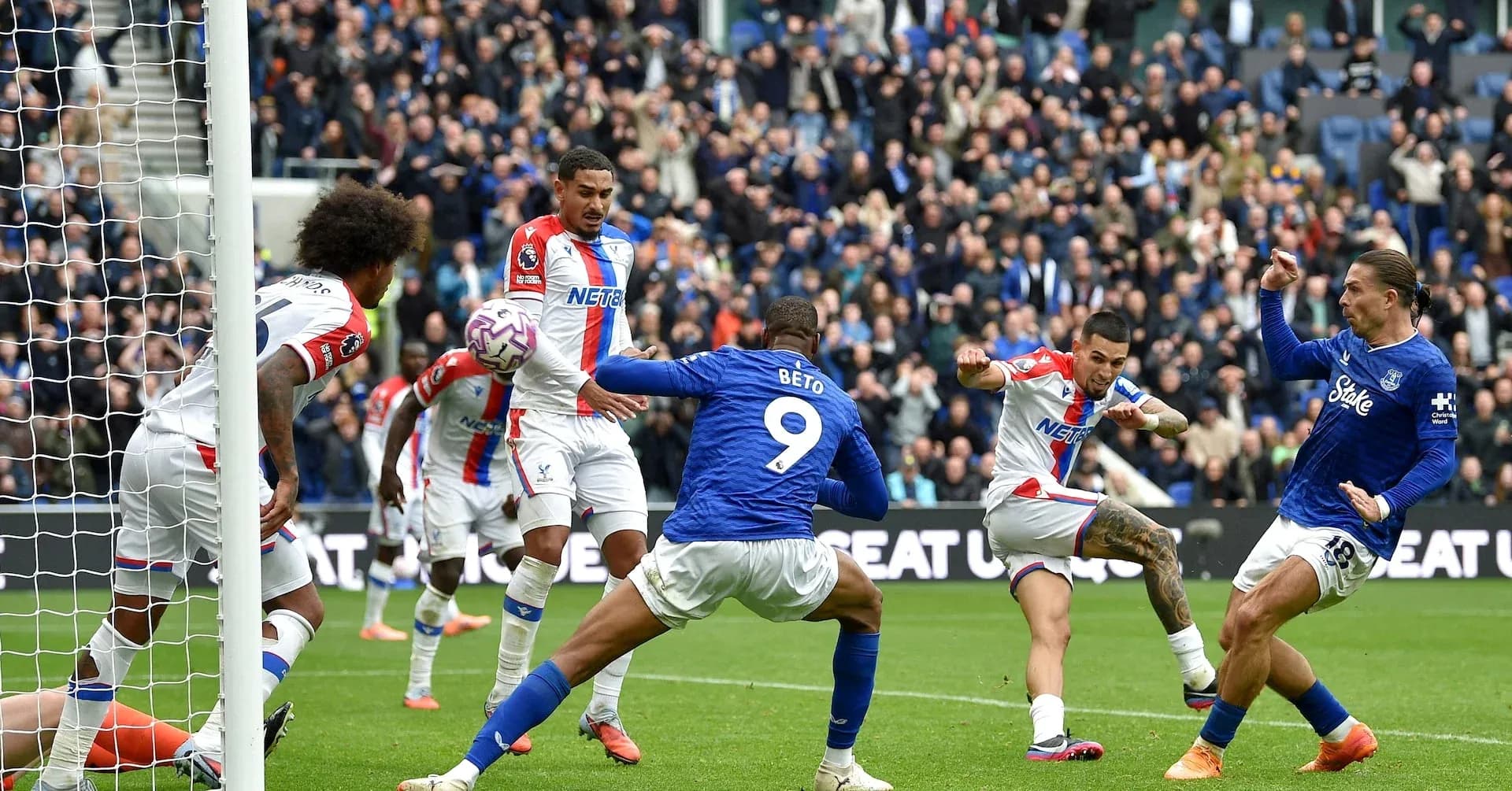
Crystal Palace vs Everton: Premier League Mid-Table Clash
Selhurst Park stages a mid-table scrap with very different emotional tones on 10 May 2026, as 15th-placed Crystal Palace host 10th-placed Everton in the Premier League. Safety looks within reach for Palace, but they are still glancing over their shoulder; Everton arrive with a top-half finish in sight and a five‑point cushion over their hosts.
Context and stakes
In the league, Crystal Palace sit 15th on 43 points after 34 matches (11 wins, 10 draws, 13 defeats, goal difference -6). Everton are 10th with 48 points from 35 games (13 wins, 9 draws, 13 defeats, goal difference 0).
For Palace, the task is twofold: mathematically close out survival and restore some home authority at Selhurst Park, where they have drawn more than they have won. For Everton, a solid away record and a stronger overall goal profile offer a platform to push for a top‑10, possibly even top‑eight, finish depending on other results.
Referee T. Bramall takes charge in London, with both sides carrying notable absentees that could shape the tactical picture.
Form and tactical identity
Crystal Palace: back three, narrow margins
Across all phases this season, Palace have leaned heavily on a back-three system: the 3-4-2-1 has been used in 30 matches, with 3-4-3 appearing four times. It underpins a cautious, structure-first approach:
- In the league overall: 34 played, 11 wins, 10 draws, 13 defeats.
- Goals for: 36 (1.1 per game).
- Goals against: 42 (1.2 per game).
At Selhurst Park in the league:
- Home record: 4 wins, 8 draws, 5 defeats from 17.
- Goals for: just 16 (0.9 per game).
- Goals against: 19 (1.1 per game).
- Clean sheets: 7 at home (12 overall), showing the defensive framework can be solid.
- Failed to score: 7 home games (11 total) underline their attacking inconsistency.
Palace’s “form” string in the league reads LLDWD, a run that mixes resilience with a lack of cutting edge. Their biggest home win is 2-0, and their heaviest home defeat 0-3, reinforcing the sense of a team usually involved in low‑margin contests.
The key attacking reference is clear: Jean-Philippe Mateta. The French striker is Palace’s standout scorer in the league:
- 10 league goals in 28 appearances (24 starts).
- 53 shots, 30 on target.
- 4 penalties scored, none missed.
- Aerial and physical presence (192cm, 88kg) that fits the lone‑forward role in a 3-4-2-1.
With Palace often operating with two narrow attacking midfielders behind him, Mateta’s ability to occupy centre-backs and finish limited chances is central to their threat. His perfect penalty record this season adds a reliable route to goal when Palace do draw fouls in the box.
Defensively, Palace are relatively disciplined but not immune to lapses. Their card distribution shows a tendency to pick up yellows in the 31-60 minute window, suggesting intensity spikes around half-time and the early second half.
Everton: structured 4-2-3-1 and balanced numbers
Everton arrive with a more balanced statistical profile:
- In the league overall: 35 played, 13 wins, 9 draws, 13 defeats.
- Goals for: 44 (1.3 per game).
- Goals against: 44 (1.3 per game).
Away from home:
- Away record: 7 wins, 4 draws, 6 defeats from 17.
- Goals for: 19 (1.1 per game).
- Goals against: 20 (1.2 per game).
- 5 away clean sheets (11 overall).
- Failed to score away: 5 matches.
Their most-used shape is a 4-2-3-1 (21 games), with a single appearance of 4-3-3. That double pivot is important: it stabilises transitions and allows the attacking midfield line to press and combine higher up the pitch.
Everton’s recent league form string, DLLDW, is mixed but underlines that they remain competitive. They have shown the capacity for both emphatic wins and heavy defeats:
- Biggest home win: 3-0.
- Biggest away win: 0-2.
- Heaviest home defeat: 1-4.
- Heaviest away defeat: 2-0.
They also possess a reliable penalty unit this season, scoring both of their two spot-kicks.
Team news and selection implications
Crystal Palace are hit hardest in attack and on the left:
- C. Doucoure – Missing Fixture (knee injury).
- E. Guessand – Missing Fixture (knee injury).
- E. Nketiah – Missing Fixture (thigh injury).
- B. Sosa – Missing Fixture (injury).
The absence of Nketiah removes an alternative central option or second striker profile, increasing the load on Mateta. Without Sosa, Palace lose a natural left-sided outlet and set-piece quality from that flank, which is significant in a wing-back system.
For Everton:
- J. Branthwaite – Missing Fixture (hamstring injury).
- J. Grealish – Missing Fixture (foot injury).
- I. Gueye – Questionable (injury).
- T. Iroegbunam – Questionable (injury).
Branthwaite’s absence disrupts Everton’s first-choice central defensive partnership, potentially weakening their ability to deal with Mateta’s physicality. If Idrissa Gueye is unavailable, Everton’s midfield loses a key ball-winner and screen in front of the back four, which could open spaces for Palace’s attacking midfielders between the lines.
Head-to-head: Everton edge recent history
Looking at the last five competitive meetings (Premier League and FA Cup, no friendlies):
- 05 October 2025 – Everton 2-1 Crystal Palace, Hill Dickinson Stadium (Premier League).
- 15 February 2025 – Crystal Palace 1-2 Everton, Selhurst Park (Premier League).
- 28 September 2024 – Everton 2-1 Crystal Palace, Goodison Park (Premier League).
- 19 February 2024 – Everton 1-1 Crystal Palace, Goodison Park (Premier League).
- 17 January 2024 – Everton 1-0 Crystal Palace, Goodison Park (FA Cup, 3rd Round Replays).
Across these five, Everton have 4 wins, Crystal Palace have 0, and there has been 1 draw. Crucially, Everton have won both league visits to Selhurst Park in this sequence, each by a 2-1 scoreline.
That pattern feeds into a psychological edge: Everton have consistently found a way to score twice against Palace in recent league meetings, while Palace have not managed more than a single goal in any of these five games.
Tactical battles to watch
- Mateta vs reshaped Everton centre-back pairing
With Branthwaite out, Everton’s back line may feature a less familiar partnership. Mateta’s aerial presence and movement between centre-back and full-back channels will be a primary Palace weapon, especially from crosses and set pieces. - Palace wing-backs vs Everton wide players
Palace’s 3-4-2-1 relies on wing-backs to provide width. Everton’s 4-2-3-1 can pin them back with wingers and overlapping full-backs. If Palace’s wing-backs are forced deep, their attacking output could suffer, increasing their reliance on direct balls into Mateta. - Midfield control and second balls
If Gueye is missing, Everton’s ability to dominate second balls and break up play diminishes. Palace, who often operate with two central midfielders in front of a back three, could gain more time to build attacks and feed the half-spaces. - Set pieces and penalties
Palace have a strong penalty taker in Mateta (4 scored, 0 missed this season), and both teams have multiple clean sheets but also a habit of conceding in short bursts. Set pieces and spot-kicks could be decisive in a tight game.
The verdict
Data and recent history lean slightly towards Everton. They:
- Sit higher in the league (10th vs 15th).
- Score more and concede at a similar rate.
- Have a strong away record (7 wins in 17).
- Dominate the recent head-to-heads (4 wins and 1 draw from the last 5).
However, several factors temper that advantage:
- Palace’s home record, while not prolific, is stubborn: 8 draws from 17 and 7 clean sheets.
- Everton’s defensive reshuffle without Branthwaite could be exposed by Mateta.
- Palace’s structure in a back three and their decent clean-sheet count suggest this may be another tight, low‑margin contest.
The most logical expectation is a close game, with Everton marginally more likely to take something from Selhurst Park, but Palace well capable of grinding out a draw if they keep the game compact and Mateta takes one of the limited chances that come his way. A one‑goal margin either way, or a score draw, fits the balance of evidence.
Related News

Tottenham vs Aston Villa Predicted Lineups: Team News for Premier League Clash
Brighton vs Arsenal: Premier League Clash Preview

Manchester City vs Sunderland: Premier League Clash Preview
Tottenham vs Aston Villa: Early Relegation Battle

Brentford vs Chelsea Predicted Lineups: Team News and Match Insights
Brighton vs Arsenal Prediction: Key Stats and Betting Tips