
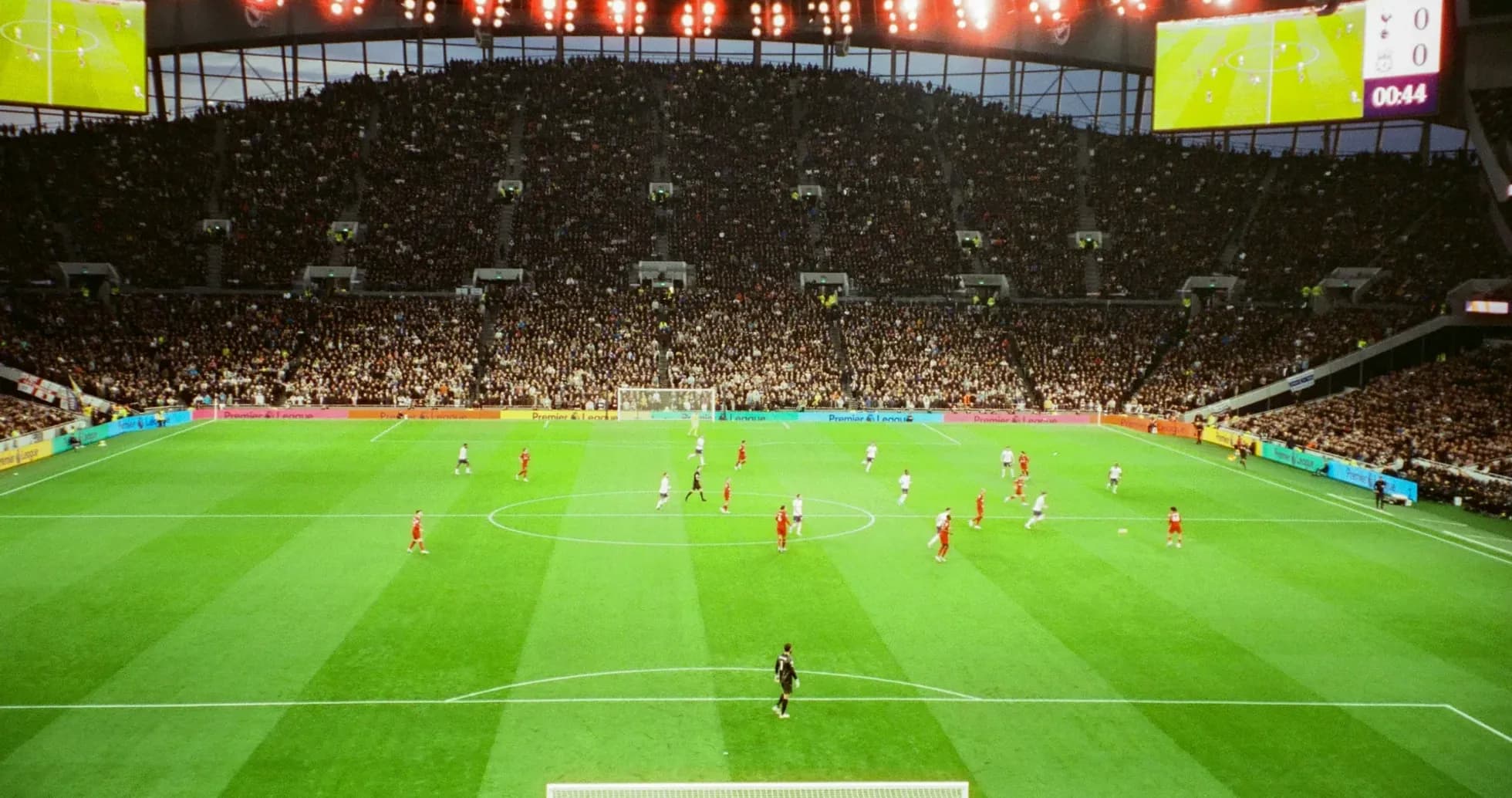
Crystal Palace vs Everton: Tactical Analysis of 2-2 Draw
Crystal Palace and Everton shared a 2-2 draw at Selhurst Park in Premier League Regular Season - 36, a match that was tactically defined by contrasting structures and phases of control. Palace, in a 3-4-2-1 under Oliver Glasner, dominated territory and possession (59%) and generated higher attacking volume and quality (21 shots, 2.66 xG). Everton, in a 4-2-3-1, were more selective but efficient in transition, turning 13 shots and 1.44 xG into two goals. The halftime score of 1-1 reflected Palace’s recovery from an early setback, and the full-time 2-2 underlined Everton’s resilience under pressure and Palace’s inability to convert superiority into a decisive margin.
Scoring Sequence
The scoring sequence began with Everton striking first. On 6', James Tarkowski converted for the visitors, setting the tone for Everton’s threat from early attacking phases and set-piece-like situations. Palace responded on 34', when Ismaïla Sarr levelled the match, restoring parity before the interval. The halftime score was Crystal Palace 1-1 Everton, consistent with the flow: Everton’s early punch, then Palace’s sustained pressure.
Discipline
Discipline tilted towards Everton. Card log (chronological):
- 30' James Garner (Everton) — Foul
- 45' Vitaliy Mykolenko (Everton) — Foul
Crystal Palace finished with 0 cards; Everton with 2, total 2 cards in the match.
Second Half
The second half again opened with Everton landing the first blow. On 47', Beto scored, assisted by James Tarkowski, re-establishing Everton’s lead at 1-2 and highlighting Tarkowski’s dual role as scorer and provider. Glasner’s first structural reaction came on 65': Jørgen Strand Larsen (OUT) was replaced as Jean Philippe Mateta (IN) came on for J. S. Larsen (65'), a direct centre-forward swap that altered the profile of Palace’s focal point. Everton answered with fresh legs in attack on 70', as Beto (OUT) was replaced: Thierno Barry (IN) came on for Beto (70'), shifting their forward reference.
Palace’s pressure finally told on 77', when Jean Philippe Mateta equalised to make it Crystal Palace 2-2 Everton. Glasner then looked to rebalance midfield aggression and control: Brennan Johnson (OUT) was withdrawn as Jefferson Lerma (IN) came on for B. Johnson (80'), a move to stabilise central zones and protect against Everton’s counters. Everton, meanwhile, refreshed their attacking midfield lines at 80', with Merlin Röhl (OUT) replaced as Tyrique George (IN) came on for M. Rohl (80'), and at 90+4', Kiernan Dewsbury-Hall (OUT) was replaced as Carlos Alcaraz (IN) came on for K. Dewsbury-Hall (90+4'), an ultra-late change to add energy and defensive running in the final moments.
Tactical Analysis
Tactically, Palace’s 3-4-2-1 was designed to dominate the ball and overload the half-spaces. The back three of Chris Richards, Maxence Lacroix and Jaydee Canvot provided a stable platform, enabling Daniel Muñoz and Tyrick Mitchell to push high as wing-backs. With Adam Wharton and Daichi Kamada as central pivots, Palace sought to progress through structured possession, reflected in their 459 passes, 382 accurate (83%). The high shot volume (21 total, 15 inside the box, 8 on target) and 2.66 xG show that the structure effectively created chances, especially via Ismaïla Sarr and Brennan Johnson attacking the channels around Everton’s full-backs and half-spaces between centre-back and full-back.
Jean Philippe Mateta’s introduction for Jørgen Strand Larsen did not change the shape but altered the nature of the penalty-box threat. Mateta offered more physical presence and penalty-area instincts, which correlated with Palace’s second goal and sustained box occupation in the final third. The later introduction of Jefferson Lerma for Brennan Johnson subtly shifted Palace towards a 3-5-1-1 out of possession, with Lerma adding ball-winning capacity and protecting transitions against Everton’s counters.
Everton’s 4-2-3-1 was more reactive but structurally clear. Jordan Pickford, who made 6 saves, anchored a defensive block that absorbed long spells of pressure. The back four of Jake O'Brien, James Tarkowski, Michael Keane and Vitaliy Mykolenko had to cope with Palace’s width and rotations; Tarkowski in particular was central to both boxes, scoring the opener and assisting Beto for the second goal. The double pivot of Tim Iroegbunam and James Garner (booked on 30' for “Foul”) aimed to disrupt Palace’s central combinations, but Everton’s 13 fouls and two yellow cards (the second to Mykolenko on 45' for “Foul”) show the cost of repeated last-ditch interventions.
Statistical Verdict
In attack, Merlin Röhl, Kiernan Dewsbury-Hall and Iliman Ndiaye supported Beto, with Everton leaning heavily on direct progressions and transitional attacks rather than sustained possession (313 passes, 232 accurate, 74%). The 10 shots inside the box and 1.44 xG indicate that while Everton attacked less often, they reached high-value areas when they did, particularly through early deliveries and second-ball wins after clearances.
From a statistical verdict, Crystal Palace’s 59% possession, 21 shots and 2.66 xG versus Everton’s 41% possession, 13 shots and 1.44 xG underline that Palace were the more proactive and territorially dominant side. Palace’s passing structure was cleaner: 459 passes, 382 accurate (83%), compared to Everton’s 313 passes, 232 accurate (74%). Defensively, Dean Henderson’s 5 saves against Pickford’s 6, combined with Palace’s “goals prevented” of 1.2 and Everton’s identical 1.2, suggest both goalkeepers performed at a similar shot-stopping level relative to shot quality faced.
Overall, Palace’s Overall Form in this match reflected a well-drilled possession team capable of sustained chance creation but lacking ruthless finishing to translate clear statistical superiority into three points. Everton’s Defensive Index, despite conceding 21 shots and 2.66 xG, was buoyed by Pickford’s interventions and last-line defending from Tarkowski and Keane, while their offensive efficiency in transition ensured that, despite being second-best in many metrics, they emerged with a valuable away point.
Related News
Bournemouth vs Liverpool Prediction: Key Stats and Betting Tips
Tottenham vs Aston Villa Predicted Lineups: Team News for Premier League Clash
Brighton vs Arsenal: Premier League Clash Preview
Manchester City vs Sunderland: Premier League Clash Preview
Tottenham vs Aston Villa: Early Relegation Battle

Brentford vs Chelsea Predicted Lineups: Team News and Match Insights