
Cremonese vs Pisa: A Tactical Breakdown of Serie A's 3-0 Showdown
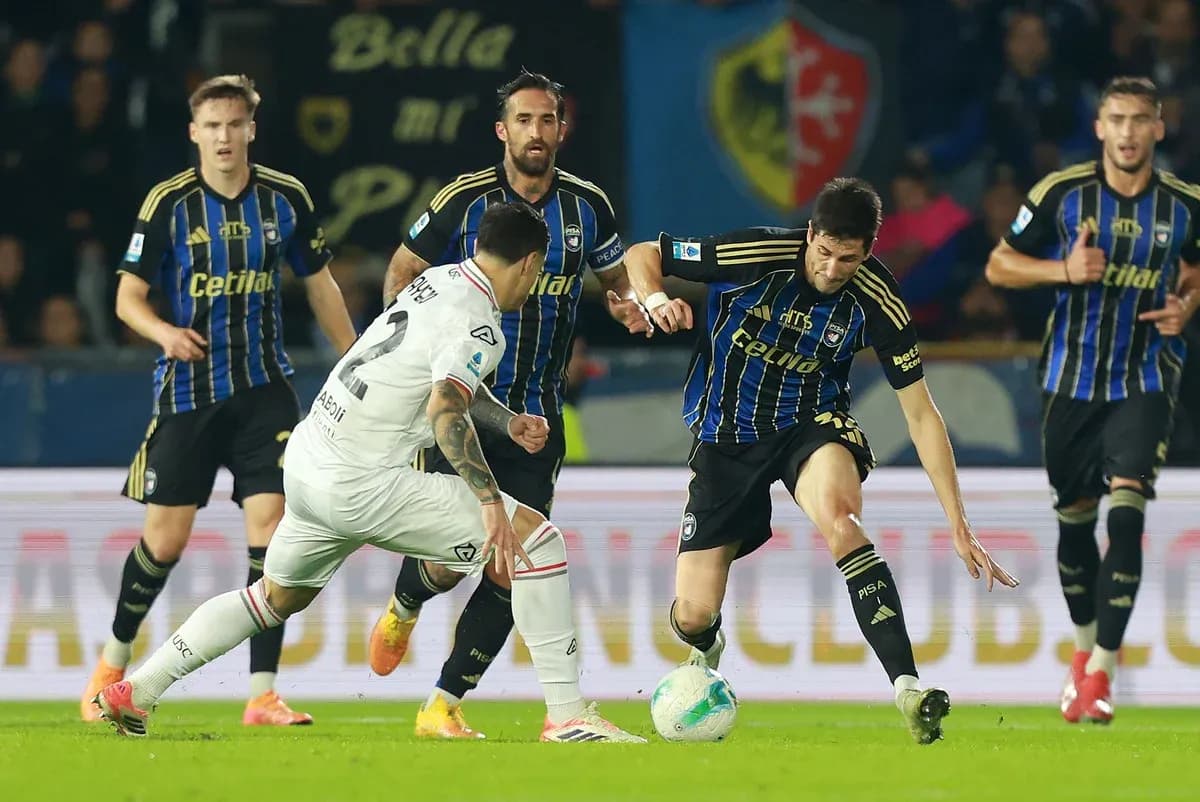
Stadio Giovanni Zini felt less like a relegation battleground and more like a stage for a late-season statement as Cremonese dismantled Pisa 3-0 in Serie A’s Regular Season - 36. Under the eye of referee Giovanni Ayroldi, the home side turned a fragile campaign into a powerful performance, leading 1-0 at half-time and never loosening their grip.
Following this result, the standings context frames the story. Cremonese sit 18th on 31 points with a goal difference of -23, built from 30 goals scored and 53 conceded across 36 matches. Pisa are rooted to 20th on 18 points, their -41 goal difference the brutal arithmetic of 25 goals for and 66 against. Both are destined for Serie B, but this match was about identity and pride as much as points.
Cremonese’s seasonal DNA has been one of struggle but not surrender. Overall they average 0.8 goals for and 1.5 against per game, with only 7 wins in 36. At home, the numbers are modest yet telling: 0.9 goals scored and 1.4 conceded on their own pitch, with 6 clean sheets. Pisa’s profile is harsher: in total they score 0.7 and concede 1.8 per match. On their travels they have not won once, drawing 8 and losing 10, with 16 goals for and 43 against – an away average of 0.9 scored and 2.4 conceded that foreshadowed the collapse in Cremona.
Tactical Voids and Absences
Both coaches walked into this fixture with significant absentees that shaped their benches and contingency plans.
Marco Giampaolo had to cope without F. Baschirotto (thigh injury), R. Floriani and F. Moumbagna (both muscle injuries), plus M. Payero (knock). None appear in the matchday squad, forcing Cremonese to lean heavily on the core that has carried them through the season: E. Audero in goal, a back four of F. Terracciano, M. Bianchetti, S. Luperto and G. Pezzella, a hard-working midfield band, and the front two of F. Bonazzoli and J. Vardy.
Oscar Hiljemark’s Pisa arrived even more depleted. F. Coppola and M. Tramoni (muscle injuries), D. Denoon (ankle injury) and the inactive C. Stengs all missed out, trimming his options to alter the game from the bench. With survival already slipping away, Pisa’s 3-4-2-1 looked more like a damage-limitation framework than a platform for revolt.
Disciplinary trends also hovered over the tactical landscape. Cremonese’s yellow cards cluster late, with 27.27% of their bookings arriving between 76-90 minutes, and their reds skewing into added time: 66.67% of their dismissals between 91-105 minutes. Pisa mirror that late volatility, with 25.33% of their yellows in the final quarter hour and a spread of reds from 16-60 and 91-105 minutes. This match, however, saw discipline hold just enough for Cremonese to keep control rather than implode under pressure.
Key Matchups
The headline duel was always going to orbit F. Bonazzoli. As Cremonese’s leading scorer in Serie A with 9 goals and 1 assist in 33 appearances, he represents the clearest cutting edge in a side that otherwise averages under a goal per game. His 54 shots, 30 on target, and 13 key passes speak of a forward who both finishes and links.
Across from him stood a Pisa defence that has been porous all season. In total they have conceded 66 goals; on their travels, 43 in 18 games. The structure here was a back three of S. Canestrelli, A. Caracciolo and R. Bozhinov in front of A. Semper. Caracciolo, a warrior figure with 71 tackles, 24 successful blocks and 45 interceptions, plus 9 yellow cards, epitomises their last-ditch defending. Yet the systemic weakness – particularly when Pisa are forced to defend in transition and wide areas – has repeatedly undone his individual efforts.
Giampaolo’s 4-4-2 maximised this mismatch. With J. Vandeputte operating from the left as the creative hinge – 5 assists, 53 key passes and 887 completed passes at a 77% accuracy rate – Cremonese could isolate Pisa’s outside centre-backs and force them into uncomfortable lateral shifts. Vandeputte’s ability to receive between the lines and feed Bonazzoli and Vardy turned Pisa’s back three into a constantly rotating, often disorganised line.
Engine Room
In midfield, the contest was about control and chaos. For Cremonese, A. Grassi and Y. Maleh formed the central axis, flanked by T. Barbieri and Vandeputte. Their task was to compress the space around Pisa’s pivots, disrupt build-up and then break quickly.
Pisa’s central resistance came through I. Touré and E. Akinsanmiro, with F. Loyola and M. Leris providing width. Touré, who has 42 tackles, 8 successful blocks and 24 interceptions this season, plus a red card on his record, is a combative presence who can tilt games physically. But his passing accuracy of 65% underlines a recurring issue: when pressed, Pisa’s midfield often turns the ball over cheaply.
Cremonese exploited exactly that. With the home side averaging 10 clean sheets overall and Pisa failing to score in 20 of their 36 matches, Giampaolo could trust his back line to hold firm while his midfield stepped high. S. Luperto and M. Bianchetti defended aggressively behind Pezzella and Terracciano, allowing Barbieri and Vandeputte to spring forward on turnovers.
Statistical Prognosis and Tactical Verdict
Following this result, the numbers and the narrative align. Cremonese, a side that usually scores 0.9 at home, punched above their weight with three unanswered goals, echoing their biggest home win of the season (also 3-0). Pisa, whose worst away defeats have reached 5-0, once again folded on their travels, conceding in patterns that mirror their season-long 2.4 away goals against average.
The Expected Goals story, even without raw xG values in the data, is easy to sketch from the structural trends. Cremonese generate limited volume across the season but create higher-quality looks when they can press high and use Bonazzoli’s movement. Against a Pisa side that concedes frequently, fails to keep compactness in the channels, and has only 1 away clean sheet, the pre-match xG tilt would have favoured the home side clearly.
Defensively, Cremonese’s 10 clean sheets in total versus Pisa’s 25 goals scored overall – and only 16 on their travels – pointed to a strong likelihood of a shutout if Giampaolo’s side avoided late-game disciplinary lapses. They did exactly that, managing the tempo and never allowing Pisa’s front trio of S. Moreo, I. Vural and F. Stojilkovic to settle into threatening zones.
In tactical terms, this was a match where plan and profile fused perfectly for Cremonese. The 4-4-2 gave structure, Bonazzoli and Vardy provided vertical menace, Vandeputte stitched the phases together, and a disciplined back four protected Audero. Pisa’s 3-4-2-1, by contrast, exposed their season-long flaws: an overworked Caracciolo, a midfield that struggles under pressure, and an attack starved of clean service.
The verdict is clear. In a meeting of relegated sides, Cremonese looked like a team with a blueprint to rebuild, Pisa like one still searching for the first draft.
Related News

Frosinone vs Como Prediction: Key Stats and Betting Tips

Fiorentina vs Napoli Prediction: Key Stats and Betting Tips

AS Roma vs Inter: Serie A Showdown on 19 September 2026

Inter’s Dominance in 5–3 Win Over Udinese

AS Roma vs Inter Prediction: Key Stats and Betting Tips
Lazio and AC Milan Battle to a 2–2 Draw: Early Serie A Insights