
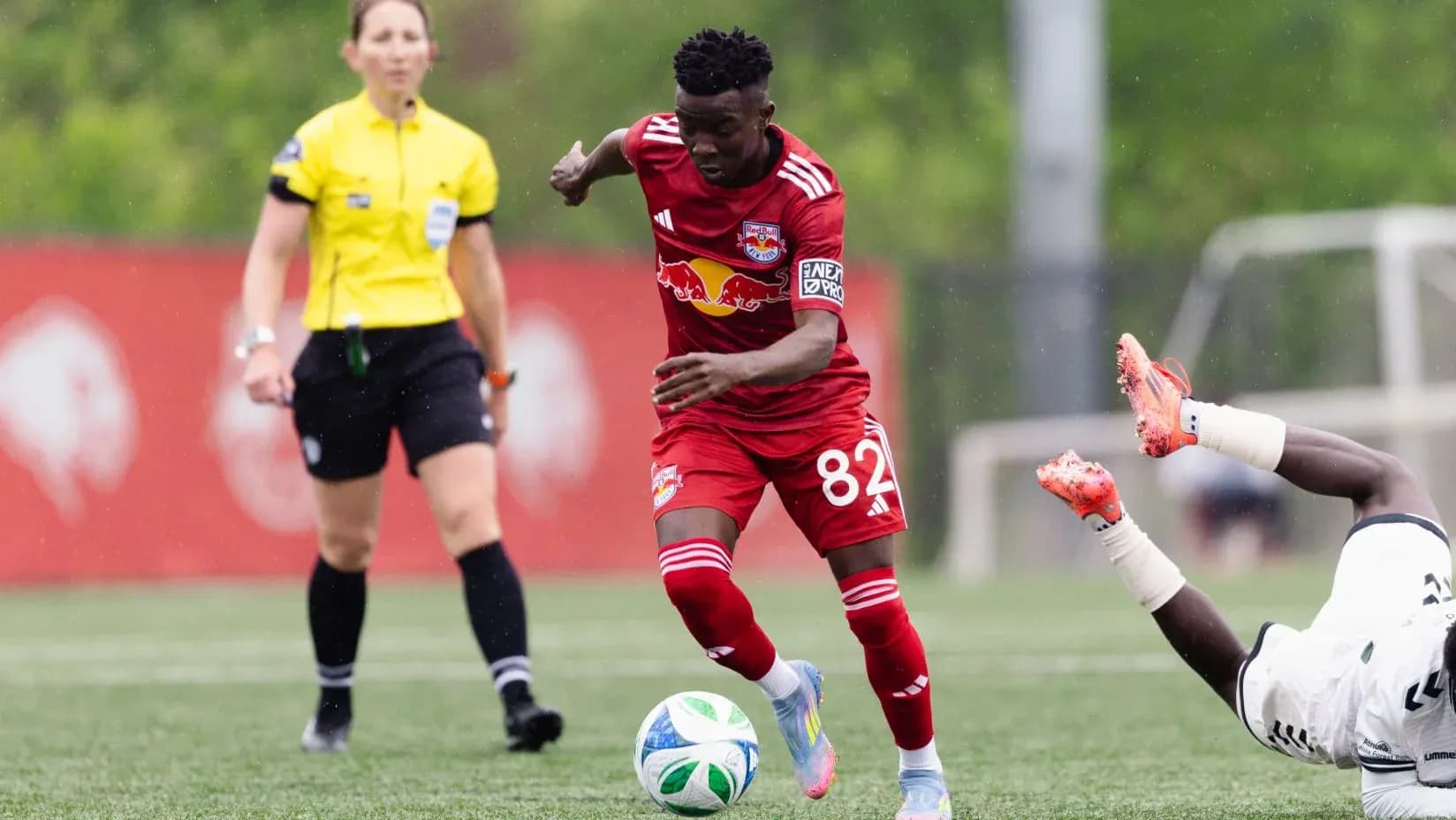
Connecticut FC Upsets New York RB II in MLS Next Pro Clash
Under the late lights at MSU Soccer Park, this MLS Next Pro group-stage fixture felt like a small-season referendum for both clubs. New York RB II came in as the standard-setter of the Eastern Conference, sitting 2nd in the conference table with 23 points from 11 matches and a goal difference of 10, the same numbers that had them top of the Northeast Division. Connecticut FC arrived as the chasers, 13th in the conference with 11 points and a goal difference of -5, but with just enough volatility in their form to be dangerous.
By full time, the story was clear: a 3–1 away win for Connecticut FC, built on early ruthlessness and disciplined game management, had punctured the aura around a New York side that had been defined by attacking fluency and relentless home pressure.
I. The Big Picture: Season DNA vs. Match Reality
Heading into this game, New York RB II’s season profile was straightforward: front-foot, high-risk football. Overall they had scored 25 goals and conceded 17 across 11 matches, averaging 2.3 goals for and 1.5 against per game. At home, the numbers were even more extreme: 18 goals scored at an average of 2.6 per match, but 12 conceded at 1.7 per game. They rarely played in half-measures: 7 wins, 4 losses, no draws, and only 1 clean sheet in total. The attack always turned up; the defense always offered a chance.
Connecticut FC’s season had been more jagged. Overall, they had 14 goals for and 18 against in 10 games, averaging 1.4 scored and 1.8 conceded. On their travels, though, they were a different animal: 11 away goals at an average of 1.8 per match, matching New York’s own away scoring rate and hinting at a side that could open up when not burdened by home expectation. Their away defensive record—11 conceded at 1.8 per game—suggested chaos rather than control, but chaos can be a weapon against a side like New York.
On paper, this was a clash between a top seed with promotion ambitions and a mid-table spoiler. On the pitch, Connecticut treated it like a cup tie, starting with a ferocity that turned the first half into their platform.
II. Tactical Voids and Discipline: Where the Game Tilted
With no formal injury list provided, both coaches had near full decks, but the lineups told their own story. New York RB II’s XI—featuring A. Stokes, D. Gjengaar, A. Sanchez, J. Masanka Bungi, and the attacking presence of M. Jimenez and B. Rodriguez—was young and aggressive, in line with a side that had failed to score in exactly zero matches this season. The mandate was clear: keep the streak of scoring in every game alive and overwhelm Connecticut at home.
Connecticut FC’s selection leaned on balance. G. Rankenburg anchored the side, with defenders such as R. Van Hees, J. Stephenson, and L. Kamrath providing a platform behind a midfield that included S. Sserwadda and D. Lacy. Up front, the threat of B. Tanyi and Caua Paixao offered pace and directness—perfect tools to exploit New York’s open structure.
Disciplinary trends framed the risk. Heading into this game, New York’s yellow cards clustered heavily in the final quarter of matches: 37.50% of their bookings arrived between 76–90 minutes, part of a broader late-game spike where fatigue and emotion crept in. Connecticut had a similar late-game edge, with 26.67% of their yellows in the 76–90 range and their only red card of the season also coming in that window.
In a contest where New York would likely be chasing if they fell behind, those late spikes in aggression were always going to matter. Connecticut’s ability to build an early 2–0 half-time lead allowed them to lean into that dynamic, drawing New York into a game of frustration and recovery rather than control.
III. Key Matchups: Hunter vs Shield, Engine Room vs Disruptors
Without individual goal tallies in the data, the “Hunter vs Shield” narrative becomes about collective patterns. New York’s home attack—18 goals, 2.6 per match—was the hunter, designed to swarm. Connecticut’s away defense—11 conceded at 1.8 per game—was the shield, imperfect but used to stress.
Connecticut’s early two-goal burst flipped that script. Protecting a lead, their back line and midfield unit, led by the likes of Van Hees, Stephenson, Kamrath, and Sserwadda, could compress the central zones where New York typically thrive. Players such as P. Sokoloff and N. Worth were forced to operate in tighter pockets, while Jimenez and Rodriguez had to chase the game against a compact block rather than attacking a level scoreline.
In the “Engine Room” battle, Connecticut’s midfielders were tasked with disrupting New York’s rhythm more than dictating their own. Lacy and Sserwadda, supported by R. Mora-Arias and I. Kasule, were effective in turning transitions into quick vertical attacks, the kind that align with Connecticut’s away scoring average of 1.8 goals per match. Every turnover became a chance to stretch New York’s defense, which had already conceded 12 times at home this season.
New York’s inability to convert territorial pressure into a multi-goal response underlined a subtle tactical void: they have the tools to attack space, but chasing a structured low block is a different question. Their season profile—no draws, all-or-nothing football—suggests a side less comfortable in slow, methodical siege.
IV. Statistical Prognosis and What the Result Tells Us
Following this result, the numbers behind both teams feel more logical. Connecticut’s away attack once again hit its 1.8-goal ceiling and then some, finding three on the night. New York’s defense, already leaking 1.7 goals per home game heading in, was exposed early and never fully stabilized.
Both sides remain perfect from the spot this season, each having scored 1 penalty from 1 attempt with no misses, but this match was decided in open play, where Connecticut’s efficiency outstripped New York’s volume.
From an xG-style perspective, even without explicit values, the pattern is clear: a high-chance, high-risk New York side was punished by a Connecticut team built to counterpunch away from home. The late-card tendencies for both clubs never fully boiled over into reds, but the underlying discipline data explains the edgy tone of the second half as New York chased an unlikely comeback.
Tactically, this game will be a reference point. For New York RB II, it is a warning that their attacking identity must be paired with better home defensive structure if they are to justify their top seeding in a playoff environment. For Connecticut FC, it is proof that their away blueprint—vertical, opportunistic, and collectively disciplined—can unsettle even the conference’s elite when executed with conviction.
Related News

MLS Winners and Losers: Rising USMNT Star Cavan Sullivan, St. Louis City's Smart Moves, and Chicago Fire's Struggles Without Hugo Cuypers

MLS Highlights: Portland Timbers End Drought, Josh Sargent Shines, Cavan Sullivan Impresses
Tacoma Defiance vs Colorado Rapids II Stats: Head-to-Head Record

St. Louis City II vs Vancouver Whitecaps II: Head-to-Head Stats and Match Preview
Atlanta United II vs New York City II Stats: Head-to-Head Record
Houston Dynamo FC II vs Austin II Stats: Head-to-head Record