
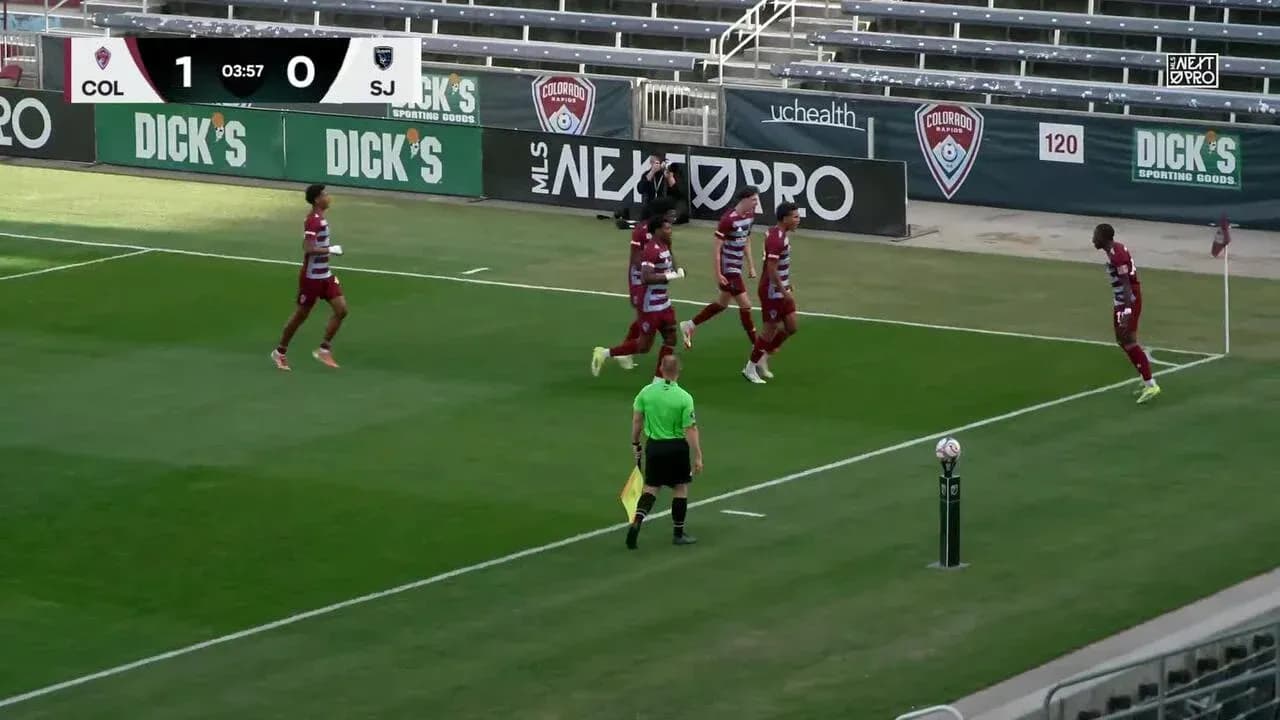
Colorado Rapids II vs Sporting KC II: A Clash of Footballing Identities
On a cool night at CIBER Field, Colorado Rapids II and Sporting KC II met in a fixture that felt less like a routine Group Stage date and more like a stress test of two very different footballing identities. The scoreboard told a blunt story—3–1 to Sporting KC II, with all four goals arriving before the interval—but beneath that, the squads and their season-long tendencies were laid bare.
Heading into this game, Colorado were a team trapped in a spiral. Across the season they had played 9 matches in total, losing all 9. Their overall goal difference in the standings sat at -12, built from 10 goals for and 22 against. The deeper performance data painted an even harsher picture: overall they conceded 25 goals, an average of 2.8 per match, with 3.0 conceded at home. The Frontier Division table had them 7th in their group and 14th in the Eastern Conference snapshot, both underlining a side struggling to adapt to the demands of MLS Next Pro.
Sporting KC II arrived with their own scars but a more functional edge. In total they had played 12 matches, winning 3 and losing 9, with 14 goals scored and 29 conceded in the standings for a goal difference of -15. Their statistical profile showed 15 goals for and 31 against overall, conceding 2.6 on average. On their travels they had been more dangerous, scoring 8 goals in 4 away matches at an average of 2.0, even as they leaked 2.5 away goals per game. The Frontier Division rank of 6th and Eastern Conference rank of 11th suggested a team that, while fragile, at least had a puncher’s chance.
Against that backdrop, the lineups told their own story of where each project stands.
Erik Bushey’s Colorado XI carried the look of a young, developmental core still searching for balance. Z. Campagnolo in goal fronted a back line anchored by G. Gilmore and K. Sawadogo, with J. De Coteau and J. Cameron completing a defensive unit that has been relentlessly tested—Colorado had yet to record a single clean sheet at home or away. In front of them, the midfield blend of K. Stewart-Baynes, L. Strohmeyer and A. Fadal was tasked with doing two jobs at once: shielding a vulnerable defense that concedes heavily, and connecting to an attack that, despite the defeats, does manage to score. At home they averaged 1.2 goals per match, part of a total 10 goals this campaign, suggesting there is at least some cutting edge.
Up top, the trio of J. Copeland, C. Aquino and M. Diop were the nominal front line. For a team that had failed to score only once in total, this attacking band was less the problem than the platform behind it. The bench—K. Starks, R. Garcia, S. Wathuta, B. Jamison, N. Strellnauer, J. Chan Tack, N. Tchoumba, Q. Bedwell and S. Siegler—offered Bushey options in every line, but none with a season-long track record of transforming results. With no top scorers data available, Colorado’s threat felt more collective than star-driven.
On the opposite side, Istvan Urbanyi’s Sporting KC II starting group looked more settled in its spine. J. Kortkamp took the gloves, backed by a defensive line featuring J. Francka, P. Lurot, N. Young and Z. Wantland. This is not a watertight unit—31 goals conceded in total and 10 away—but it has at least withstood enough punishment to allow their attack to win games. In midfield, G. Quintero and Z. Loyo Reynaga formed the connective tissue, with B. Mabie and K. Hines providing width and vertical running. M. Rodriguez and S. Donovan rounded out a front unit that, particularly on their travels, has shown a willingness to attack early and often; away from home they had already scored 7 league goals before this match, and 8 in total across all competitions in the statistical block.
The Sporting bench—J. Molinaro, T. Burns, T. Ikoba, D. Russo, J. Ortiz, L. Antongirolami and T. Haas—gave Urbanyi flexibility to alter the tempo, especially in wide and attacking zones. That depth mattered in a season where their form line of “WLLLW” in the standings snapshot hinted at volatility but also the capacity to respond.
If there was a “Hunter vs Shield” narrative here, it was less about an individual marksman and more about a structural clash: Sporting’s away attack, averaging 2.0 goals per game, against a Colorado defense that, at home, was conceding 3.0. The first half delivered on that imbalance. Sporting hit three before the break, exploiting the same frailties that have seen Colorado concede heavily across all phases this season. Colorado’s lone goal before half-time, making it 3–1 at the interval, was emblematic of their campaign: flashes of attacking competence drowned out by defensive leakage.
The “Engine Room” duel was similarly tilted. With no specific playmaker stats, we judge by roles and patterns. Quintero and Loyo Reynaga operated with more security than Stewart-Baynes and Strohmeyer, largely because Sporting’s structure and away confidence allowed them to play higher and more aggressively. Colorado’s midfield, by contrast, was constantly being forced backwards to plug gaps, a dynamic that has contributed to their lack of control and their inability to turn possession into sustained pressure.
Discipline and game management also loomed in the background. Heading into this game, Colorado’s yellow card timing showed a spike between 31–45 minutes, with 33.33% of their cautions coming in that window, and a notable late-game edge between 61–75 minutes at 23.81%. Red cards were evenly distributed across four ranges from 16–75 minutes, each at 25.00%, indicating a team that can lose composure at almost any stage. Sporting’s yellows were more spread, with 20.00% each in the 16–30, 31–45 and 76–90 ranges, and no reds at all. That relative composure helped them manage a two-goal cushion through a second half in which the scoreline froze but the tactical currents remained.
Following this result, the statistical prognosis for both squads hardens. Colorado’s season-long trends—no wins in total, 0 clean sheets, and an overall concession rate of 2.8 goals per match—are now backed by another home defeat in which they allowed three before the interval and could not mount a sustained comeback. Their attacking average of 1.1 goals overall is not disastrous, but it is nowhere near enough to offset the defensive damage.
Sporting KC II, meanwhile, reinforce their identity as a dangerous but leaky side. Their away scoring profile remains a strength, and their penalty record—1 taken, 1 scored, 100.00% conversion—underlines a small but important clinical edge in decisive moments. Defensively, conceding 2.6 goals per match overall still leaves them on a knife-edge in many fixtures, but against a Colorado team that has yet to find a foothold, it was more than sufficient.
In tactical terms, this match felt like a confirmation rather than a revelation. Colorado’s young, rotating cast continues to be asked to grow up in a hurry amid heavy defeats. Sporting’s more settled core, led by Kortkamp at the back and a mobile attacking band in front, remains capable of exploiting soft underbellies, especially away from home. Until Colorado can tighten the spaces in front of Campagnolo and reduce the volume of chances against, nights like this at CIBER Field will keep following the same script.
Related News

MLS Winners and Losers: Rising USMNT Star Cavan Sullivan, St. Louis City's Smart Moves, and Chicago Fire's Struggles Without Hugo Cuypers

MLS Highlights: Portland Timbers End Drought, Josh Sargent Shines, Cavan Sullivan Impresses
Tacoma Defiance vs Colorado Rapids II Stats: Head-to-Head Record
St. Louis City II vs Vancouver Whitecaps II: Head-to-Head Stats and Match Preview
Atlanta United II vs New York City II Stats: Head-to-Head Record
Houston Dynamo FC II vs Austin II Stats: Head-to-head Record