
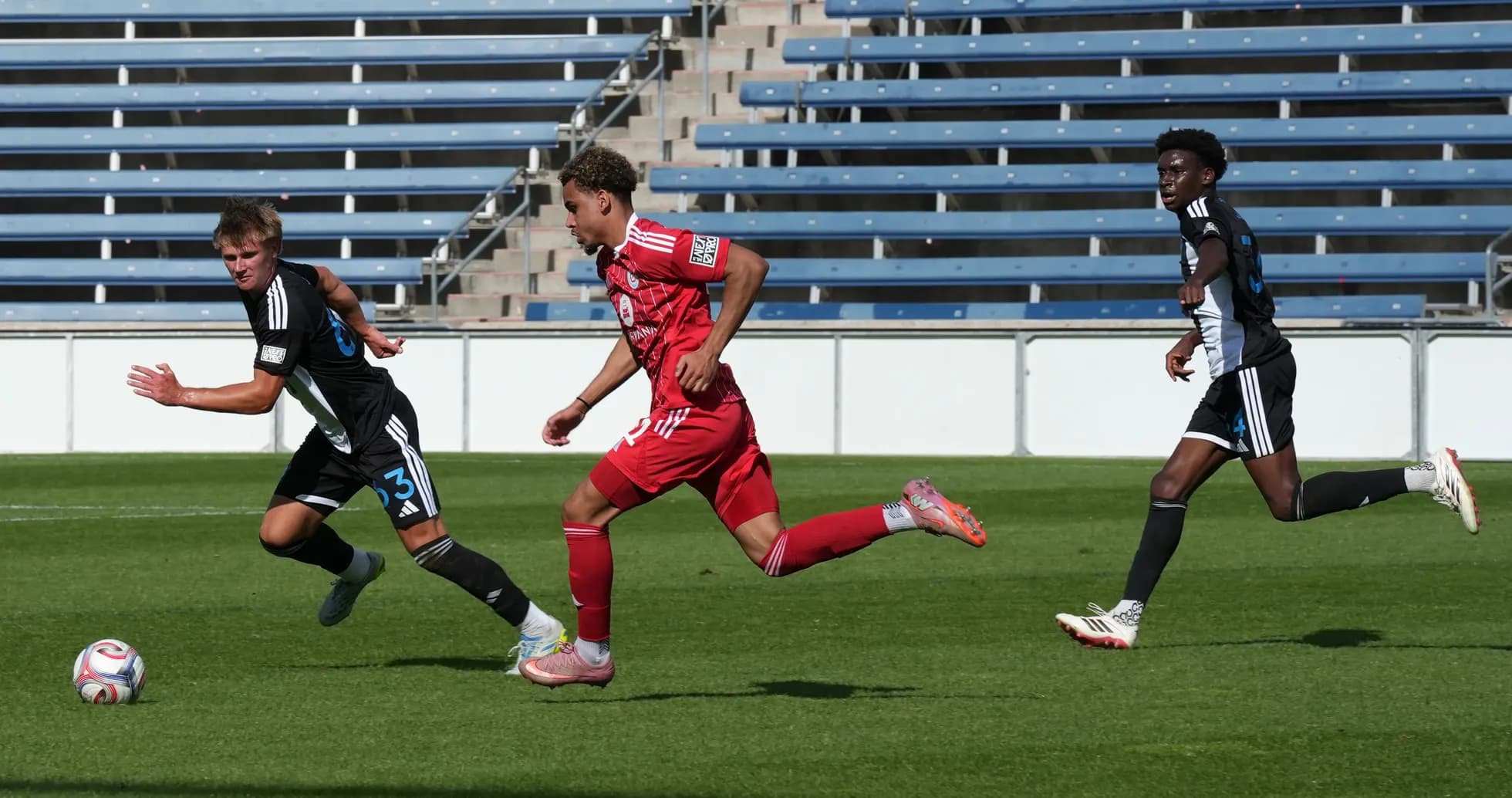
Chicago Fire II Triumphs Over Crown Legacy in Thrilling 3-2 Match
SeatGeek Stadium under the lights, a May evening in MLS Next Pro, and a meeting of two very different footballing identities: Chicago Fire II, the volatile spoiler, and Crown Legacy, the division’s ruthless frontrunner. Following this result, a 3-2 home win for Chicago, the narrative of both squads shifts subtly but significantly.
I. The Big Picture – Clash of Styles, Collision of Trajectories
Crown Legacy arrived as a machine. Heading into this game they sat 1st in the Central Division and 2nd in the Eastern Conference, with 23 points from 10 matches and a towering overall goal difference of 16, built from 29 goals for and 13 against in league play. Their season DNA was clear: relentless attack, especially at home, where they had scored 16 and conceded just 2, but still potent on their travels with 13 away goals despite 11 conceded.
Chicago Fire II, by contrast, were chaos merchants. Heading into this game they were 6th in the Central Division and 10th in the Eastern Conference, with 13 points from 9 matches and an overall goal difference of -3 (10 scored, 13 conceded in the standings snapshot). Their season statistics sharpen that picture: overall they had 13 goals for and 14 against, conceding slightly more than they scored, but always threatening to explode. At home they averaged 1.6 goals for and 1.8 against; on their travels, 1.3 for and 1.3 against. SeatGeek Stadium is never dull.
This match, a group-stage fixture in MLS Next Pro, delivered exactly what the numbers promised: goals, swings of momentum, and a sense that both teams live on the edge.
II. Tactical Voids and Discipline – Managing Risk in a High-Event Game
There were no listed absentees, so both sides came with full decks, but the tactical voids here were structural rather than personnel-based.
Chicago’s lineup was a study in youthful balance. J. Nemo anchored from the back, with a defensive unit built around D. Nigg, C. Cupps, J. Sandmeyer, and H. Berg. Ahead of them, the spine of D. Hyte and O. Pineda provided legs and bite, while C. Nagle, V. Glyut, D. Boltz, and R. Turdean offered the attacking thrust. On the bench, the likes of O. Pratt, M. Napoe, and E. Chavez gave the coach options to add pace or control late on.
Crown Legacy’s XI reflected their top-of-the-table swagger. L. Kalicanin started in goal, shielded by a back line featuring E. Curtis, W. Holt, A. Johnson, and A. Kamdem. The midfield mix of D. Longo, E. Pena, and S. Tonidandel was designed to keep the ball and set the tempo, feeding an attacking trio of N. Richmond, H. Mbongue, and the lively N. Berchimas. From the bench, B. Urtecho, A. Ouedraogo, and M. Smalls were among those ready to tilt the game further forward.
Disciplinary trends shaped how both sides approached the duels. Chicago’s yellow cards this season cluster between 46-60 and 61-75 minutes (26.67% in each band), with another 20.00% in the 76-90 window. They tend to grow more aggressive as the match wears on, a symptom of defending leads or chasing deficits. Crown Legacy show a similar mid-to-late spike: 26.09% of their yellows arrive between 46-60 minutes, and 21.74% between 76-90, with a further 8.70% deep into stoppage (91-105). They even carry the shadow of a late red card, with 100.00% of their reds this season coming in that 91-105 band.
In a tight 3-2, those patterns matter. Both squads are prone to emotional, card-heavy second halves, and this fixture fit that psychological profile: a high-tempo, high-risk contest in which the line between controlled aggression and chaos is razor-thin.
III. Key Matchups – Hunter vs Shield, Engine Room Battles
The most compelling duel in this fixture was structural: Chicago’s erratic but improving home attack versus Crown Legacy’s occasionally porous away defence.
On their travels Crown Legacy averaged 3.0 goals for and 2.4 against, a wildly open profile. Chicago at home, with 1.6 goals for and 1.8 against, are used to trading blows. The “Hunter vs Shield” dynamic was inverted here: the nominal “shield” of Crown Legacy’s back line, so dominant at home (0.4 goals conceded on average), became far less reliable away, and Chicago’s front unit smelled vulnerability.
Players like R. Turdean and D. Boltz, supported by the craft of C. Nagle and the energy of V. Glyut, were always going to test that away fragility. Chicago’s biggest home win this season, a 3-2, mirrors the scoreline here and underlines their pattern: they can hit three at SeatGeek Stadium, but they almost always leave the door open.
In midfield, the “Engine Room” clash pitted Chicago’s ball-winners and shuttlers, notably D. Hyte and O. Pineda, against Crown Legacy’s technical core of D. Longo, E. Pena, and S. Tonidandel. Crown Legacy’s season-long form line of WWWWWWWLWL speaks to their ability to impose their rhythm; yet Chicago’s willingness to press and foul in those key 46-75 minute windows disrupted that fluency just enough.
Out wide and between the lines, Crown Legacy’s attacking trio of N. Richmond, H. Mbongue, and N. Berchimas embodied the “Hunter” archetype. With 31 goals overall this campaign and a highest away win of 1-4, they are built to punish transitions. That they still scored twice away from home fits their profile perfectly; that they conceded three is the cost of their high wire act.
IV. Statistical Prognosis – xG Story Without the Numbers
We lack explicit xG figures, but the season data sketches a plausible expected goals narrative.
Crown Legacy entered with an overall scoring average of 3.1 goals per match and 1.4 conceded. Chicago came in at 1.4 scored and 1.6 conceded overall. Put those together and a high-scoring encounter was always the likeliest outcome. A 3-2 scoreline feels like a natural meeting point of those curves: Chicago slightly outperforming their usual attacking output, Crown Legacy hitting close to their away scoring norm but underperforming defensively.
Defensive solidity clearly tilted this game. Chicago, despite their negative goal difference heading in, managed to bend without breaking against one of the league’s most explosive attacks. Crown Legacy, meanwhile, saw their away defensive average of 2.4 conceded worsen marginally here, reinforcing the idea that their title credentials rest heavily on outscoring opponents rather than shutting them down.
Following this result, Chicago Fire II strengthen their identity as the league’s wild card: capable of toppling giants at SeatGeek Stadium, living in high-variance scorelines, and leaning on the collective energy of a young squad featuring the likes of J. Nemo, D. Nigg, and R. Turdean. Crown Legacy remain the benchmark, but this defeat underlines a clear tactical warning: on their travels, their attacking brilliance can be matched—and occasionally surpassed—by teams willing to embrace the chaos they create.
Related News

MLS Winners and Losers: Rising USMNT Star Cavan Sullivan, St. Louis City's Smart Moves, and Chicago Fire's Struggles Without Hugo Cuypers

MLS Highlights: Portland Timbers End Drought, Josh Sargent Shines, Cavan Sullivan Impresses
Tacoma Defiance vs Colorado Rapids II Stats: Head-to-Head Record

St. Louis City II vs Vancouver Whitecaps II: Head-to-Head Stats and Match Preview
Atlanta United II vs New York City II Stats: Head-to-Head Record
Houston Dynamo FC II vs Austin II Stats: Head-to-head Record