
Celtic's European Collapse: A Failure of Desire and Leadership
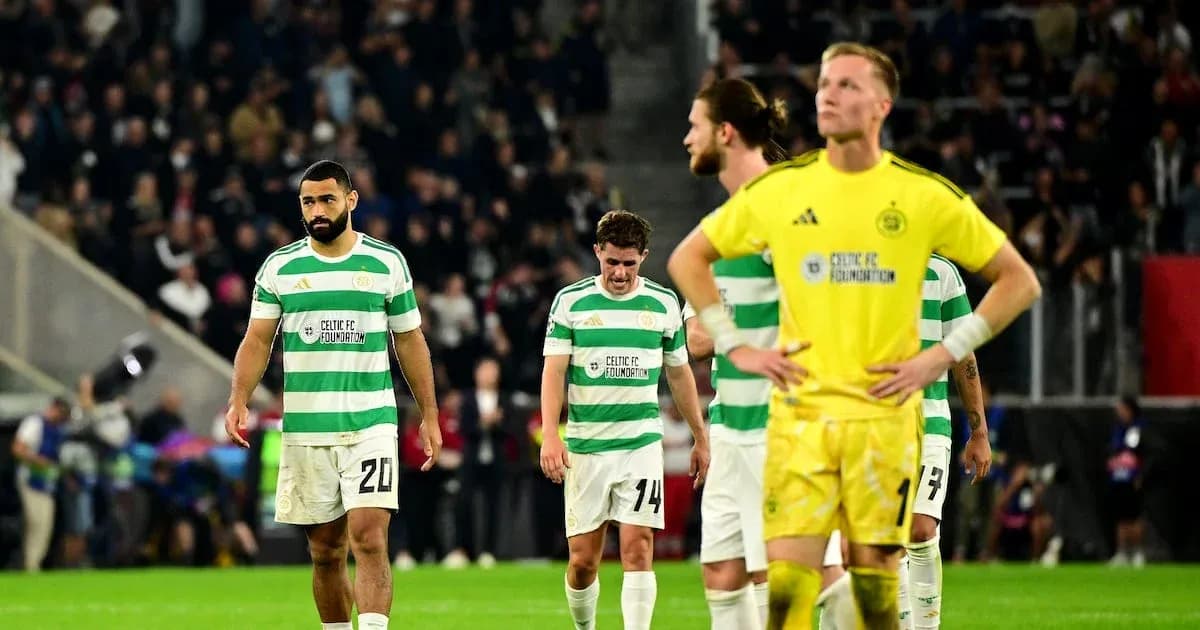
Celtic’s European collapse has been branded a failure of desire, leadership and depth by some of the club’s most decorated former players, after Martin O’Neill’s side somehow let a four-goal aggregate lead disintegrate in a 5-1 defeat by LASK.
What should have been a routine passage into the Champions League became a full-scale inquest. The Europa League now awaits instead.
“Those players were hiding”
Stiliyan Petrov, who knows O’Neill’s demands better than most from their time together at Celtic and Aston Villa, did not hold back as he watched on.
“You have to stand up and be counted, show character, be able to deal with the pressure,” he said on Amazon Prime. “Those players were hiding.
“When they had to take responsibility with the ball, they didn’t take it. They were losing the ball very easily. LASK were better in second balls, more aggressive. They wanted it more.”
Celtic’s identity under O’Neill has long been built on control and authority. On this night, Petrov saw neither.
“Celtic try to dominate games and be in control. But there was nothing there. They couldn’t take the sting out the game, they couldn’t slow the game down.
“Sometimes you need big players to do that. You need players to control that, control the team. You have to stand up, be brave and be strong.
“You have to run more, you have to close people down, you have to make decisions on the pitch, important decisions and important moments that make the difference. Those decisions were not there.”
The criticism cut to the core: this was not about tactics, but about nerve, responsibility and basic competitive edge.
Lennon questions physicality
Neil Lennon, another former Celtic captain and manager now in charge at Dunfermline, honed in on something even more alarming – the sight of Celtic players visibly flagging long before the final whistle.
“Physically they weren’t up to it, running power they weren’t up to it,” he said. “LASK were the better team and they wanted it more, and that’s not something you can say about a Martin O’Neill team very often.”
Then came the detail that will trouble supporters and staff alike.
“Second half I saw three or four players go down with cramp. It’s only 65-70 minutes into the game. That’s a worry for me.
“It could be a physical thing, it could be a psychological thing. For me it’s a sign of not being strong. They looked exhausted at times.”
In a tie of this magnitude, with a four-goal cushion in hand, Celtic looked drained when they should have been ruthless.
Brown turns spotlight on the bench
If the starting XI crumbled, Scott Brown’s concern lay in what came next. The former captain watched as O’Neill turned to his bench across 120 agonising minutes, introducing Liam Scales, Anthony Ralston, Dane Murray, Luke McCowan, Reo Hatate and Sebastian Tounekti.
Brown’s verdict on BBC Radio Scotland was blunt.
“I don’t think the subs made any impact on the game. You want something from them – running power, a bit of calmness on the ball – and we didn’t get that.
“They are bringing players in that are actually in the starting 11 but it shows you, on that bench, they need better quality players to come on.”
The message was clear: the drop-off in quality is too steep, and in Europe that gap is mercilessly exposed.
Schmeichel warns of “huge ramifications”
Kasper Schmeichel, who lived through last season’s play-off disappointment in Celtic colours, saw more than just a bad night. He saw a sliding door moment.
“This is going to have huge ramifications,” he said on Amazon Prime. “The Champions League is unique and the Europa League doesn’t have the same prestige. It impacts players’ lives and particularly the players that maybe we were looking to sign, that could have an impact on it.
“I know it’s going to be a really, really hard reaction towards the players, towards the management.
“It’s going to be a monumental task for them to motivate themselves and to get the fans back on side. Because you saw at the end, it wasn’t pleasant scenes. And we saw what happened last season, it’s not pleasant. And it’s not pleasant to be a player in that environment either.”
The financial hit is one thing. The blow to Celtic’s pulling power in the transfer market, and the strain on the dressing room and support, may be even more significant.
O’Neill: “That’s my team and that’s my responsibility”
For O’Neill, a man who has managed Celtic in more than 300 games and led them to a European final, this ranked right at the top of his personal list of disappointments.
“I would say absolutely, yes,” the 74-year-old said when asked if it was among his most painful nights. “I’d put it down before the disappointment of losing the Uefa Cup final in 2003, but it’s so, so disappointing.”
The story of the night, in his eyes, was written in the missed chances and the lifelines handed to LASK.
“We should have been out of sight by half-time. We scored a goal, which was great, we missed two great, great opportunities. And then we give them a lifeline just before half-time and then one just after it. And they come roaring back.
“And obviously we conceded, from our viewpoint, not good goals at all. But that’s my team and that’s my responsibility.”
Pressed on whether his squad is strong enough for this level, O’Neill parked the wider debate but did not hide from the failure on the night.
“These are tough games. And it might only be a Champions League qualifying game, but it felt like a Champions League game. I thought they were a fine side. But that doesn’t matter. We should have been able to have seen it through. And we didn’t do. Talking about the squad, that’s for another day.”
McGregor: “We got what we deserved”
If the manager sounded wounded, his captain sounded damning. Callum McGregor did not look for alibis.
“We got what we deserved,” he told Amazon Prime. “I thought we were so passive. All night. We actually looked scared to go and win the game, and when you are 3-0 up it’s psychological.
“To be honest I didn’t think we were that good in the first leg either. We scored at good times and kind of got away with it. You go 3-0 and you think you’ve got a real chance but when you play like that you can’t have any excuse whatsoever.
“We have to suck it up, apologise to the supporters and the club because there is no way that we should lose that game … Now you’ll see what kind of characters are in there.”
That last line hangs over Celtic now. A four-goal lead squandered, Champions League dreams gone, trust with the fans fractured. The next few weeks will reveal whether this was just one catastrophic night – or the moment an entire season’s trajectory started to tilt.
Related News
Transfer Rumors: Haaland’s Two Options; Real Madrid Targets $100 Million Premier League Star
Manchester United Targets Premier League Forward to Strengthen Attack

Liverpool Eyes 17-Year-Old Mexican Midfielder Gilberto Mora for Summer Transfer
Summer 2026 Transfer Window: Manchester United and Tottenham Struggle with New Signings
Liverpool Maintain Interest in Real Madrid Midfielder Amid Transfer Challenges
Transfer Insider Warns Tottenham About Costly Sale of Will Lankshear