
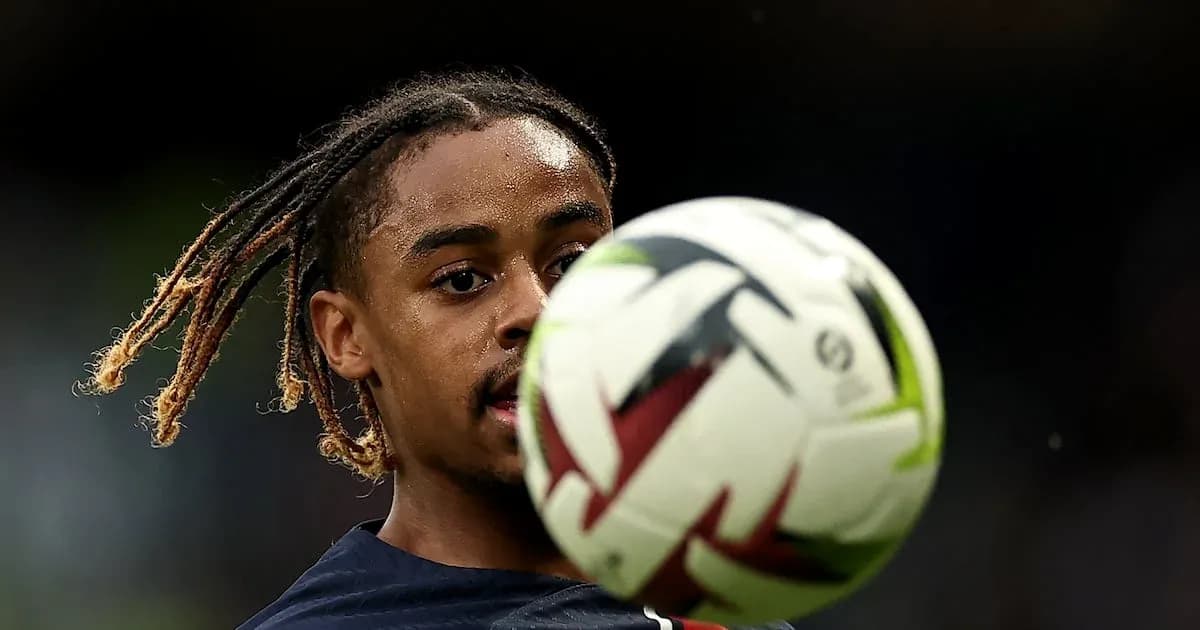
Bradley Barcola: From Lyon to Liverpool's Dream Transfer
Bradley Barcola has been talking about Liverpool since he was a boy. Amaury Barlet, one of his youth coaches at Lyon, remembers it clearly. “As a kid, he always spoke to me about Liverpool,” he says. So when the call finally came from Anfield, the forward “didn’t ask any questions”.
You don’t quibble when your childhood dream lands on the table with a £123m (€143m) price tag attached.
From Lyon’s late bloomer to PSG’s record sale
Barcola arrives on Merseyside after three seasons at Paris Saint‑Germain, but his story really began at Lyon’s academy, where every returning youngster sits down for an interview at the start of a new campaign. It was in one of those chats, around 15 or 16, that he told Barlet outright: Liverpool was the dream.
“Maybe that changed when he was 19 or 20 …” Barlet reflects. It didn’t.
Leaving PSG this summer became a priority. On paper, he was tied down until 2028 by the European champions. In reality, he was drifting towards the margins of an attack stacked with elite talent. Barcola belongs in that bracket as well, yet the biggest nights kept passing him by.
Last season he started every Champions League game up to and including the last‑16 second leg against Chelsea. Then the tap was turned off. From the quarter-finals onwards he was back among the substitutes. He has played in each of the past two Champions League finals, but only as a late entrant from the bench.
Luis Enrique’s decision to start Khvicha Kvaratskhelia ahead of him was hardly outrageous. The Georgian’s arrival in January 2025, though, changed everything. Kvaratskhelia nailed down the left flank, and Barcola’s limitations elsewhere – less convincing on the right, not a natural through the middle – began to bite. The biggest games slipped away from him just as he had proved he could handle them: three of his six goals for France came at the most recent World Cup in North America.
The pressure finally told. Not in tantrums or transfer requests, but in cold logic. If he wanted to be a leading man, he had to go.
A windfall for PSG, a lifeline for Liverpool
For PSG, the timing could hardly have been better. Barcola’s World Cup performances helped inflate his value to the point where the club banked close to €100m profit on a player they had signed for €45m. He leaves as PSG’s most expensive departure, surpassing the €90m Al‑Hilal paid for Neymar, and as a central figure in a remarkable summer: about €350m raised in player sales, a record for a Ligue 1 club.
Inside the dressing room, his exit hurt. Team‑mates flooded social media with goodbye messages. There was no bitterness from the club either. Despite his clear desire to join Liverpool, he never forced the issue. His absence from early‑season matchday squads was not a punishment but a protective measure as negotiations intensified.
“He’s got good people around him,” Barlet says. He coached Barcola at under‑12 and under‑13 level, then again at under‑16s. “His parents always said the same things as us, the coaches … I know his family. He has the perfect entourage to come through at an academy.”
The evidence is there in the family tree. His brother Malcolm, now 27, is a professional goalkeeper with Ittihad Tanger in Morocco, another graduate of Lyon’s system, even if he never broke into their first team. Neither brother was fast‑tracked through the age groups. Bradley did not debut for Lyon’s senior side until 19. Rayan Cherki, by contrast, was playing for the first team at 16.
“He wasn’t small, but he was … very fresh,” Barlet recalls. “He was very thin. He hadn’t yet grown.” At under‑16 level, Barcola spent the whole season with his age group, save for a couple of under‑17 international games late in the year. “He was someone we were waiting to develop on an athletic level.”
When the growth spurt finally arrived, the impact was immediate. He broke into Lyon’s first team midway through the 2021‑22 season and needed just one full campaign to convince PSG to pay €45m for him.
A striker’s instincts on the wing
That late physical development shaped his style. “Because he was playing against defenders that were stronger than him, he always wanted to get ahead of them,” Barlet explains. “He was very often offside … he is always someone who has had a habit of making a lot of runs in behind the defence.”
He didn’t start out wide. “He was a bit of a fox in the box; he scored a lot of goals,” Barlet says. Acrobatic volleys, toe‑pokes, left foot, right foot – he had a full striker’s toolbox. Heading was the only obvious weakness.
Those instincts never left. They simply migrated to the flank.
His most explosive season came in 2024‑25: 21 goals, 21 assists. Even that did not silence doubts over his end product. The perception of wastefulness stuck, sharpened by one glaring night in November 2023 against Newcastle in the Champions League, when a string of missed chances led a French pundit to brand him a “little lamb”.
Barcola insulated himself. “I didn’t know what was being said about me, but I knew that there would be criticism,” he told Le Parisien. “I don’t pay any attention to it, whether what they say is good or bad.”
There are voices he does heed. “I don’t have many friends. I have very few, in fact, so when they say, ‘You’re doing something stupid,’ it is because they’re right, and if they say that I played well, it’s also because it’s true. I don’t listen to what is said on the outside. To be completely honest, it’s my friends who send me the things [being said] in the media. Sometimes we laugh about it, but it doesn’t go any further than that.”
Barlet remembers a tight‑knit core at Lyon: Barcola alongside Castello Lukeba, now at RB Leipzig, and Billy Koumetio, once of Liverpool and currently at Charlton. “He’s a very loyal person,” Barlet says. “When he was young, he had tears in his eyes; he was annoyed when he lost, but he wouldn’t criticise his team‑mates. He was more annoyed with himself because he is a real competitor.”
For Barlet, he was “the ideal team‑mate”, “endearing”. Liverpool will now judge for themselves.
The dribbler Liverpool have been waiting for
The 24‑year‑old steps into a club searching for a new attacking reference point. A heavy price tag, a stuttering start to life under Andoni Iraola and a restless fanbase could create a volatile mix. Barcola’s ability to block out the noise will be tested as never before.
He at least brings a profile Liverpool badly lack. Luis Enrique called him “one of the best dribblers in Europe”. The Premier League’s tactical landscape is shifting towards rapid, ruthless use of space in transition. That is Barcola’s playground.
Liverpool have laboured against low blocks in recent weeks, shuffling the ball side to side without the incision to break packed defences. Barcola offers a different route: direct running, one‑on‑one domination, repeated sprints in behind. When games stretch, he thrives.
Iraola has been clear about what he wants from his wide players: “game‑changers”. Barcola has waited years for that kind of responsibility. Now, finally cast as a leading man at the club he dreamed of as a teenager, he has the stage to prove he really belongs among Europe’s elite – and to drag Liverpool’s season with him.
Related News
Eberl's Ballon d'Or Insights on Yamal and Olise
Michael Olise Shines with Hat-Trick and Neymar Tribute
Manchester United's Troubled Start: Chaos and Challenges
Radja Nainggolan on Roma vs Inter Milan: A True Stress Test
Zidane's First France Squad: A Bold New Era
Arteta Moves Past Brighton Row as Arsenal Pursues Record Start