
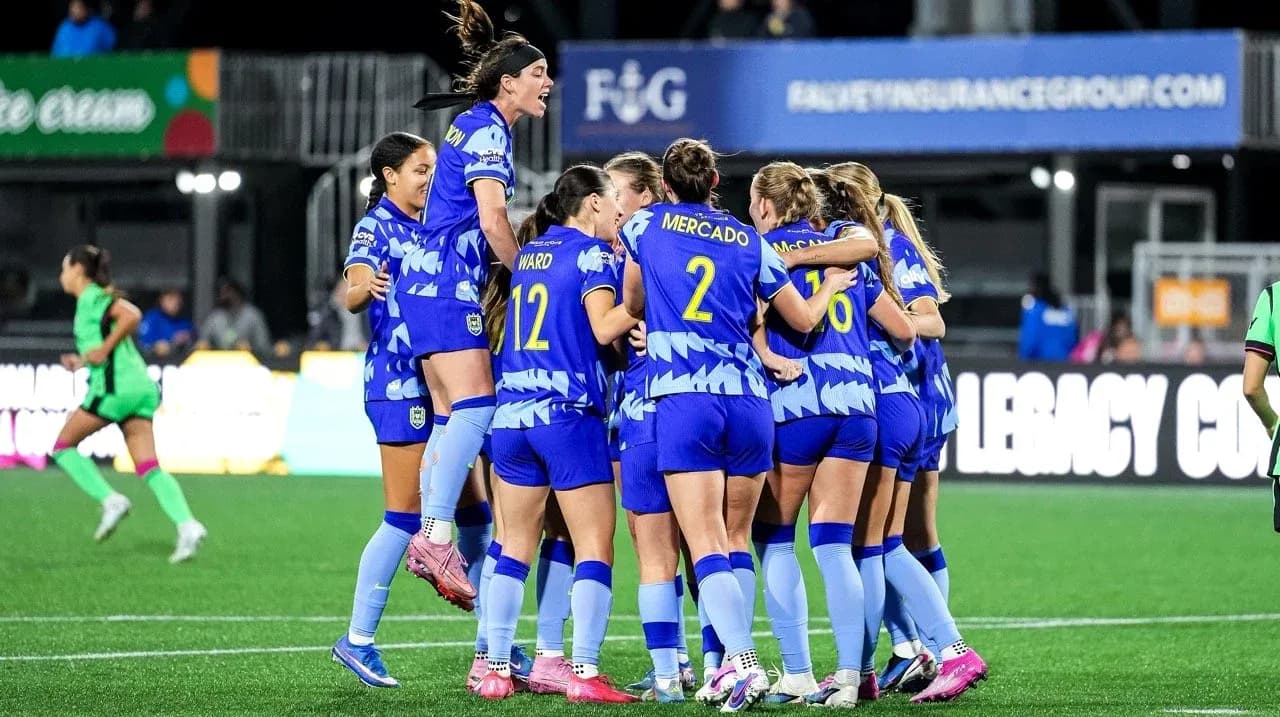
Boston Legacy W vs Seattle Reign FC W: NWSL Women 2026 Match Analysis
Under the lights at Centreville Bank Stadium in Pawtucket, Boston Legacy W’s 2–1 home defeat to Seattle Reign FC W felt like a snapshot of where both clubs stand in this NWSL Women 2026 campaign. Following this result, the table tells a blunt story: Boston sit 14th with 9 points from 11 matches, their overall goal difference at -7 (11 scored, 18 conceded). Seattle, by contrast, are 8th on 14 points from 10 games, with a tighter overall goal difference of -2 (9 scored, 11 conceded) and a live foothold in the playoff race.
The tactical identities on show matched the season-long data. Boston leaned into a bold 3-5-2, trying to turn their home scoring profile — 9 goals at home with an average of 1.3 — into a weapon, even as they concede 1.6 on average at Centreville Bank Stadium. Seattle arrived with a well-drilled 4-2-3-1, a system they have used in 7 league matches, mirroring their season-long balance: on their travels, they have 4 goals for and 4 against, averaging 1.0 scored and 1.0 conceded away.
The half-time scoreline of 0–1 and full-time 1–2 mirrored those patterns. Boston were again dangerous enough to score, but not secure enough to protect their own box. Seattle, meanwhile, were typically economical: they rarely blow teams away — only 9 goals overall in 10 games — but they manage moments, control distances, and lean on structure.
Tactical Voids and Discipline
Both sides entered without any officially listed absentees, so the “voids” were less about missing names and more about structural gaps. For Boston, the most glaring remains at the back. Across the season they have not kept a single clean sheet, home or away, and the 3-5-2 here put a heavy defensive burden on the back three and the two-way midfielders.
Jorelyn Carabalí, a central pillar in that line, has been one of Boston’s most active defenders: over the season she has made 15 tackles, intercepted 13 passes, and, crucially, blocked 4 shots. Those numbers underline her value as a last-ditch shield, but also how exposed she often is. In a 3-5-2 that can easily become a 3-3-4 in possession, Carabalí and fellow defenders Laurel Ansbrow and Emerson Elgin are frequently defending large spaces in transition.
Discipline is another recurring theme. Boston’s yellow-card distribution is spread but spikes between 16-30 minutes and 76-90 minutes, each band accounting for 21.74% of their cautions. That pattern suggests a team that starts a bit rash and finishes increasingly desperate. Red cards have also crept into their story: one in the 31-45 range and another in the 76-90 range this season. Even when no dismissal appears in a single match, that history shapes how aggressively players can defend late on.
Seattle’s disciplinary profile is more controlled but not spotless. Their yellow cards peak late: 25.00% between 76-90 minutes and another 25.00% from 91-105. For a side that often protects narrow leads — their overall goalsAgainst average is 1.1, with 1.0 on their travels — that late-card tendency hints at a team willing to foul to break rhythm, especially when defending the box.
Key Matchups
For Boston, Aissata Traoré is both spearhead and symbol. She leads the club with 3 goals and 1 assist in the league, from 19 shots (9 on target). Her 96 duels and 19 dribble attempts, with 7 successful, show a forward who thrives on physical contact and individual battles. Against a Seattle defence that has conceded only 4 goals away and averages 1.0 against on their travels, Traoré was always going to be the “hunter” trying to pry open a compact back four.
The “shield” on Seattle’s side is collective rather than individual. Phoebe McClernon and Jordyn Bugg at the heart of the back line, flanked by Sofia Huerta and Madison Curry, fit neatly into a structure that is used to absorbing pressure. Seattle’s overall defensive record — 11 conceded in 10 matches — is not elite, but it is significantly more stable than Boston’s. The 4-2-3-1 also gives them a natural double pivot in front of the defence, with Angharad James-Turner and Ainsley McCammon screening passing lanes into Traoré’s feet.
Engine Room
The true tactical battleground lay in midfield. Boston’s trio of Annie Karich, Alba Caño, and Samantha Rose Smith is the side’s engine. Karich, ever-present with 11 starts and 922 minutes, has completed 548 passes with an 84% accuracy and added 28 tackles plus 2 blocked shots. She is Boston’s metronome and first presser. Caño brings a sharper edge between the lines: 2 goals, 8 shots on target from 14 attempts, and 32 tackles underline her box-to-box profile. Smith adds verticality, with 27 dribble attempts and 13 successful, plus 5 blocked shots and 14 interceptions — a ball-winner who can also break lines.
Across from them, Seattle’s double pivot of James-Turner and McCammon had a simpler brief: compress space, deny central progression, and funnel Boston into wide areas where the wing-backs could be trapped against the touchline. In a 4-2-3-1, that zone between the lines is guarded zealously; the match flow suggested that Karich often had to drop deeper to find clean possession, pulling Boston’s creative hub away from dangerous zones.
Statistical Prognosis
Following this result, the broader statistical arc is clear. Boston’s overall scoring average sits at 1.0 per game, while they concede 1.6. At home, that becomes 1.3 for and 1.6 against. Seattle, by contrast, average 0.9 goals for and 1.1 against overall, with a symmetrical 1.0 scored and 1.0 conceded on their travels.
Overlay those numbers with tactical structure and the expected goals narrative writes itself. Seattle’s compact 4-2-3-1, combined with their ability to keep three clean sheets overall (two at home, one away), naturally suppresses opponent xG. Boston’s lack of any clean sheet this season and their tendency to concede in every environment inflate the opposition’s xG almost by default.
If you simulate this matchup again using only the underlying profiles, you would forecast a narrow Seattle edge: Boston likely generating chances around their 1.0–1.3 goal expectation, but Seattle, with their away scoring rate of 1.0 and Boston’s porous defence, projecting close to or just above a single expected goal themselves. The 2–1 scoreline fits that template — Seattle outperforming their modest attacking averages slightly, Boston matching their ability to find a goal but once again undone by defensive frailty.
In narrative terms, Boston remain a side with a lively front line and an industrious midfield, anchored by the intensity of Traoré, Karich, Caño, and Smith, but held back by structural looseness and disciplinary risk. Seattle, meanwhile, continue to look like a playoff-chasing unit: not spectacular, but organised, system-first, and increasingly adept at turning small xG margins into real points on their travels.
Related News
Orlando Pride W vs Portland Thorns W: Playoff Showdown

San Diego Wave W vs Kansas City W Predicted Lineups: Team News for NWSL Women
Orlando Pride W vs Portland Thorns W Prediction: Key Stats and Betting Tips

San Diego Wave W vs Kansas City W: Key NWSL Clash Preview
San Diego Wave W vs Kansas City W Prediction: Key Stats and Betting Tips
Portland Thorns and Chicago Red Stars Draw in NWSL Showdown