
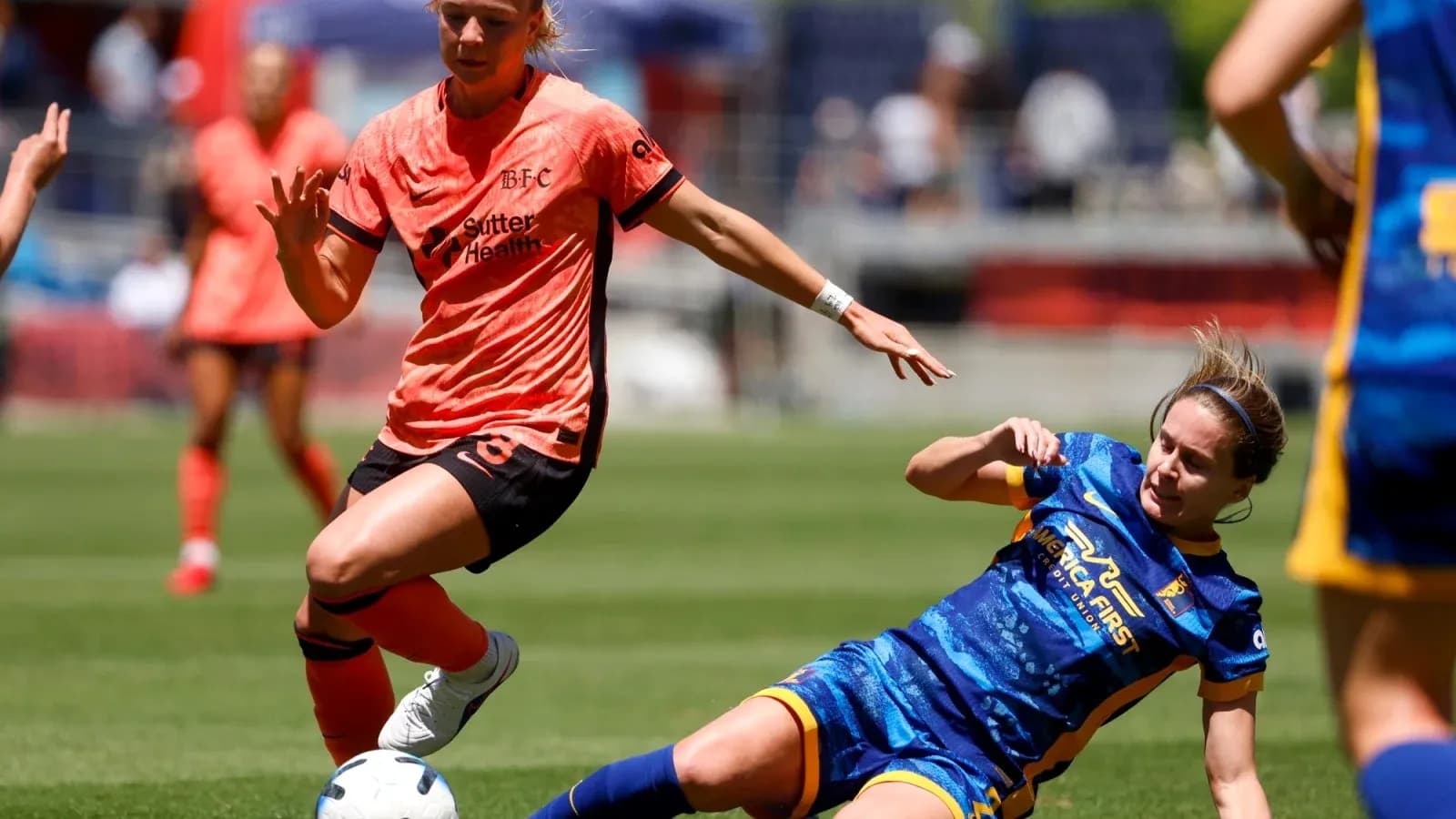
Bay FC and Utah Royals W Battle to Tactical Stalemate
Under the San Jose lights at PayPal Park, Bay FC and Utah Royals W played out a 0-0 that felt less like a stalemate and more like a tactical arm wrestle between two sides with very different seasonal identities. In the NWSL Women group stage, a point apiece means different things: Bay remain a mid-table chaser, 10th with 10 points and a goal difference of -3, still searching for consistency; Utah, 4th with 17 points and a goal difference of 6, continue to build a quiet case as one of the league’s most balanced outfits.
Both coaches leaned into familiarity, mirroring each other with a 4-2-3-1. Emma Coates stayed true to Bay’s season-long structure – they have lined up in a 4-2-3-1 in all 7 league fixtures – while Jimmy Coenraets reverted to the shape Utah have used in 8 of their 9 matches. The symmetry on the tactics board set up a game of details rather than surprises.
Team Structures
For Bay, the spine was clear. J. Silkowitz anchored a back four of S. Collins, A. Cometti, J. Anderson and A. Denton. In front, the double pivot of H. Bebar and C. Hutton was tasked with both protecting a defence that has conceded 10 goals in total and connecting to a creative band of three: T. Huff, D. Bailey and the explosive R. Kundananji, all working behind central forward K. Lema.
On their travels, Utah matched that structure almost line for line. M. McGlynn stood behind a back four of J. Thomsen, K. Del Fava, K. Riehl and N. Rabano. The midfield base paired A. Tejada Jimenez and N. Miura, with C. Delzer, Minami Tanaka and C. Lacasse supporting lone striker K. Palacios. It is a group that has underpinned a quietly impressive campaign: heading into this game, Utah had scored 12 goals in total and conceded just 6 across 9 matches, with a remarkably even split between home and away.
Statistical Insights
The tactical voids, in truth, were less about absences and more about structural limitations. There were no listed injuries or suspensions, so both managers had near-full squads. But Bay’s season data exposed the underlying tension in their game plan: at home they average only 0.8 goals for while conceding 1.5, a profile that forces them into risk management rather than all-out aggression at PayPal Park. They had kept just 1 clean sheet at home before this, and failed to score in 2 of their 4 home fixtures.
Utah arrived with almost the opposite problem – or luxury. Their defensive platform has been elite: they concede only 0.7 goals on average both at home and on their travels, with 5 clean sheets in total, including 3 away. That allows Coenraets to be patient, trusting that their structure and game management will eventually tilt matches in their favour. They had failed to score just once in 9 outings heading into this fixture, a testament to the balance between their attacking line and midfield.
Discipline and Cards
Discipline loomed over the contest as a hidden subplot. Bay’s card profile this season shows a distinct late-game edge: 23.53% of their yellows come between 76-90 minutes, and another 23.53% between 91-105, suggesting a side that often ends matches on an emotional edge. They also carry a red card in the 91-105 range, and T. Huff’s season already includes a yellow-red combination, while C. Hutton has collected 3 yellows. Utah, meanwhile, bring their own edge: A. Tejada tops the league’s yellow charts with 3, and T. Milazzo – on the bench here – carries both multiple yellows and a yellow-red this season. Utah’s yellow distribution spikes between 61-75 minutes (27.78%) and 46-60 (22.22%), with a red recorded in the 76-90 window. This is a fixture that, on paper, should have simmered most dangerously as legs and minds tired.
Key Matchup
The “Hunter vs Shield” matchup was embodied by C. Lacasse against Bay’s defence. Lacasse arrived as one of the league’s most efficient attackers: 3 goals and 2 assists in 9 appearances, with 8 shots and 6 on target, plus 20 key passes and a 7.2 average rating. She is not just a finisher but a creative hub, and Bay’s back four – supported by Bebar and Hutton – had to track her drifting from the left half-space into central pockets. That they emerged with a clean sheet against a Utah side averaging 1.3 goals for in total, and 1.3 on their travels, is a significant defensive statement.
Midfield Duel
In the “Engine Room” duel, Hutton and Bebar were pitted against the technical pair of Tejada and Miura, with Tanaka floating between lines. Hutton’s season profile – 262 passes at 75% accuracy, 18 tackles, 2 blocked shots and 14 interceptions – marks her as Bay’s primary enforcer and organiser. Her opposite number in creative terms was Tanaka, who came into the game as the league’s top assist provider with 3, plus 1 goal, 176 passes and 7 key passes. Tanaka also brings a combative edge: 5 tackles, 1 block, 5 interceptions and 19 fouls drawn show how often she lives at the heart of contact zones.
That clash of styles defined the midfield story. Bay needed Hutton to break Utah’s rhythm and prevent Tanaka from turning between the lines; Utah needed Tejada and Miura to absorb Huff and Bailey’s runs while tracking Kundananji’s inside movements. The result was a central zone that often felt congested, with both sides forced wide or into longer build-up sequences.
Conclusion
From a statistical prognosis perspective, Utah’s defensive solidity always gave them a slight edge. Heading into this game they had a goal difference of 6, built on 12 goals for and 6 against, and had pieced together a form line of “LLDWWWWWD” that spoke of a team learning quickly from early setbacks. Bay, by contrast, carried a more volatile “WLWLLWD” and a total goal difference of -3 (7 scored, 10 conceded). The expectation, in xG terms, would lean toward Utah generating the cleaner chances and Bay needing moments of individual brilliance from Kundananji or Lema to tilt the balance.
Instead, the night belonged to the defensive structures. Bay finally produced the kind of home performance their numbers had not yet promised: organised, compact, and supported by a double pivot willing to do the ugly work. Utah, for their part, simply extended their identity – another away clean sheet to add to a campaign built on control.
Following this result, Bay can frame the 0-0 as a platform: a rare home shutout against one of the league’s most efficient attacks, and evidence that Coates’ 4-2-3-1 can hold its shape against high-level opposition. Utah leave San Jose with their unbeaten run intact, their defensive metrics reinforced, and a reminder that in a long group-stage campaign, nights like this – controlled, disciplined, and point-earning – are as valuable as the statement wins.
Related News
Orlando Pride W vs Portland Thorns W: Playoff Showdown

San Diego Wave W vs Kansas City W Predicted Lineups: Team News for NWSL Women
Orlando Pride W vs Portland Thorns W Prediction: Key Stats and Betting Tips

San Diego Wave W vs Kansas City W: Key NWSL Clash Preview
San Diego Wave W vs Kansas City W Prediction: Key Stats and Betting Tips
Portland Thorns and Chicago Red Stars Draw in NWSL Showdown