
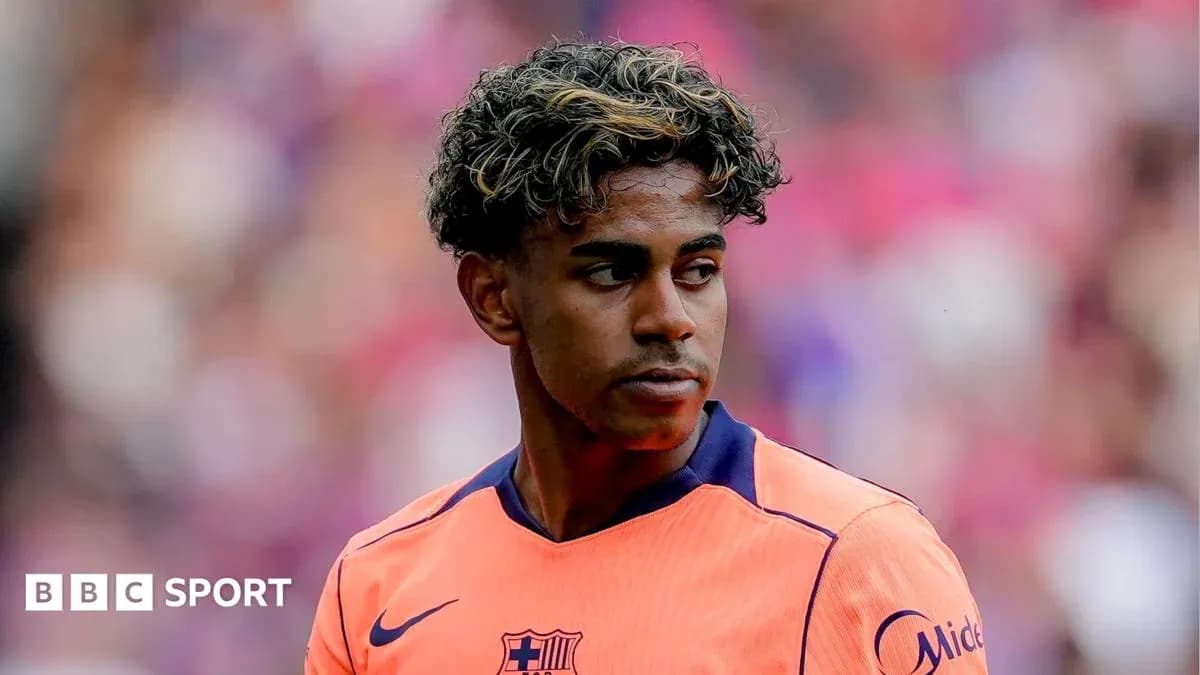
Barcelona's Summer Rebuild: The Quest for a Striker
Barcelona have spent the summer loading every line with talent. Midfield, wings, depth, youth. On paper, the Spanish champions look stronger. On the pitch, though, there is a glaring hole.
They still do not have a striker.
A supercharged rebuild – with one missing piece
The headline signing is Rodri from Manchester City, a Ballon d'Or winner and World Cup-winning captain dropped straight into a midfield that was already overflowing with quality. It is a power move, the kind of transfer that reshapes a dressing room as much as a tactical plan.
Out wide, Hansi Flick has demanded speed and directness. He has been given both.
Anthony Gordon arrives to attack space, stretch defences and drag full-backs into places they hate. Karim Adeyemi brings raw pace and sharp movement, a runner who can flip a counter-attack in a heartbeat. Behind them, Belgian winger Jesse Bisiwu, just 18, has been brought in as a longer-term project, a nod to the future in a squad built to win now.
The squad looks deeper, more flexible, more dangerous.
But when Barcelona kick off their La Liga campaign away to Elche on Sunday, 23 August, they could do so without a recognised number nine. If no striker arrives before the window closes on 1 September, that would not just be a quirk of recruitment. It would be a calculated gamble.
Life after Lewandowski and Torres
The change up front is brutal in its clarity.
Robert Lewandowski, 37, has gone. His contract expired at the end of last season and he chose a new adventure with Chicago Fire in Major League Soccer. The guarantee of goals, the presence between centre-backs, the old-school reference point in the box – all gone with him.
Ferran Torres followed him out of the door, joining Paris St-Germain for about 50m euros (£42.7m). His numbers last season underline the scale of that loss: 21 goals in 49 appearances, often stepping inside to operate as an alternative to Lewandowski through the middle.
Remove both, and what remains is stark. Barcelona do not have an established senior striker in their first-team squad.
The Alvarez question
Inside the club, the preferred solution is clear: Julian Alvarez.
The Argentina international, 26, has become the name at the top of Barcelona’s list. During the World Cup he made it known he would be looking for a move away, a line that alerted Europe’s elite and set off a quiet tug-of-war behind the scenes.
Atletico Madrid’s response has been just as emphatic. They have no intention of selling to anyone – not Barcelona, not Real Madrid, not at any price that currently exists in the market. Chief executive Miguel Angel Gil Marin has drawn the line publicly, insisting the club would not sell Alvarez, not even for 200m euros (£170.8m).
So the ideal target is blocked. The clock is ticking. And Flick must plan for a season that may start, and possibly unfold, without the orthodox striker he would naturally want.
Flick’s internal solutions
Flick has not tried to hide the issue.
"We know we have to do something," he said this month, fully aware that the question of a number nine will follow him into every press conference until the window shuts. Yet he also pointed to the options already in the building, players who can bend his system into something more fluid, more unpredictable.
At the heart of that conversation is Lamine Yamal.
The teenager has already become Barcelona’s attacking focal point. He is coming off a season in which he scored 24 goals and lifted the World Cup with Spain, numbers that would be remarkable for a seasoned forward, let alone someone still in his teens.
Yamal can play as a false nine. He can drop off the line, link play, drag centre-backs into awkward pockets. But his greatest threat still comes from the right, isolating a full-back, shifting inside and conjuring chances from angles that look closed to everyone else. Flick’s own preference reflects that. He wants Yamal facing up defenders from the wing, not wrestling centre-backs with his back to goal.
Dani Olmo offers another route into a striker-less system. He can operate as a false nine, finding spaces between the lines, pulling markers away and opening channels for runners from deep. Raphinha has also been used centrally by Flick, a different type of central option, more direct and aggressive in his movement.
Fermin Lopez is another name in that advanced mix. He has already said he is comfortable playing as a false nine, giving Flick yet another variation if he chooses to lean fully into a rotating, interchangeable front line.
Gordon and Adeyemi change the picture again. Neither is a conventional number nine, but both provide pace, width and relentless running in behind. With them on the pitch, Barcelona can pin back defences without a fixed striker, attacking the spaces created by constant movement rather than a single target man.
A fluid front line – genius or risk?
One option now sits clearly on the tactical whiteboard: abandon the traditional number nine altogether.
Barcelona could set up with a fluid forward line, a front three or four in which nobody stays between the centre-backs for long. Players would rotate constantly, dropping into midfield, darting wide, attacking the half-spaces. Marking assignments would blur. Defensive structures would be stressed.
On their best days, that kind of system can be a nightmare to defend. Centre-backs lose their reference points. Full-backs get dragged inside. Midfielders are forced into emergency covering runs they do not want to make. For a side packed with intelligent, technically gifted attackers, it is an enticing prospect.
Yet the caveat hangs over it all. Barcelona know exactly what they would prefer.
They want a specialised striker. A player who lives between the posts, who offers a clear focal point, who fits the profile they have in mind for the next phase of this team.
For now, they have a supercharged midfield, electric wingers, a generational talent in Lamine Yamal and a manager open to tactical risk. What they do not have is a number nine.
The season starts on Sunday. The window closes on 1 September. Which comes first for Barcelona – a new striker, or a new identity?
Related News
Transfer Rumors: Haaland’s Two Options; Real Madrid Targets $100 Million Premier League Star
Manchester United Targets Premier League Forward to Strengthen Attack
Liverpool Eyes 17-Year-Old Mexican Midfielder Gilberto Mora for Summer Transfer
Summer 2026 Transfer Window: Manchester United and Tottenham Struggle with New Signings
Liverpool Maintain Interest in Real Madrid Midfielder Amid Transfer Challenges
Transfer Insider Warns Tottenham About Costly Sale of Will Lankshear