
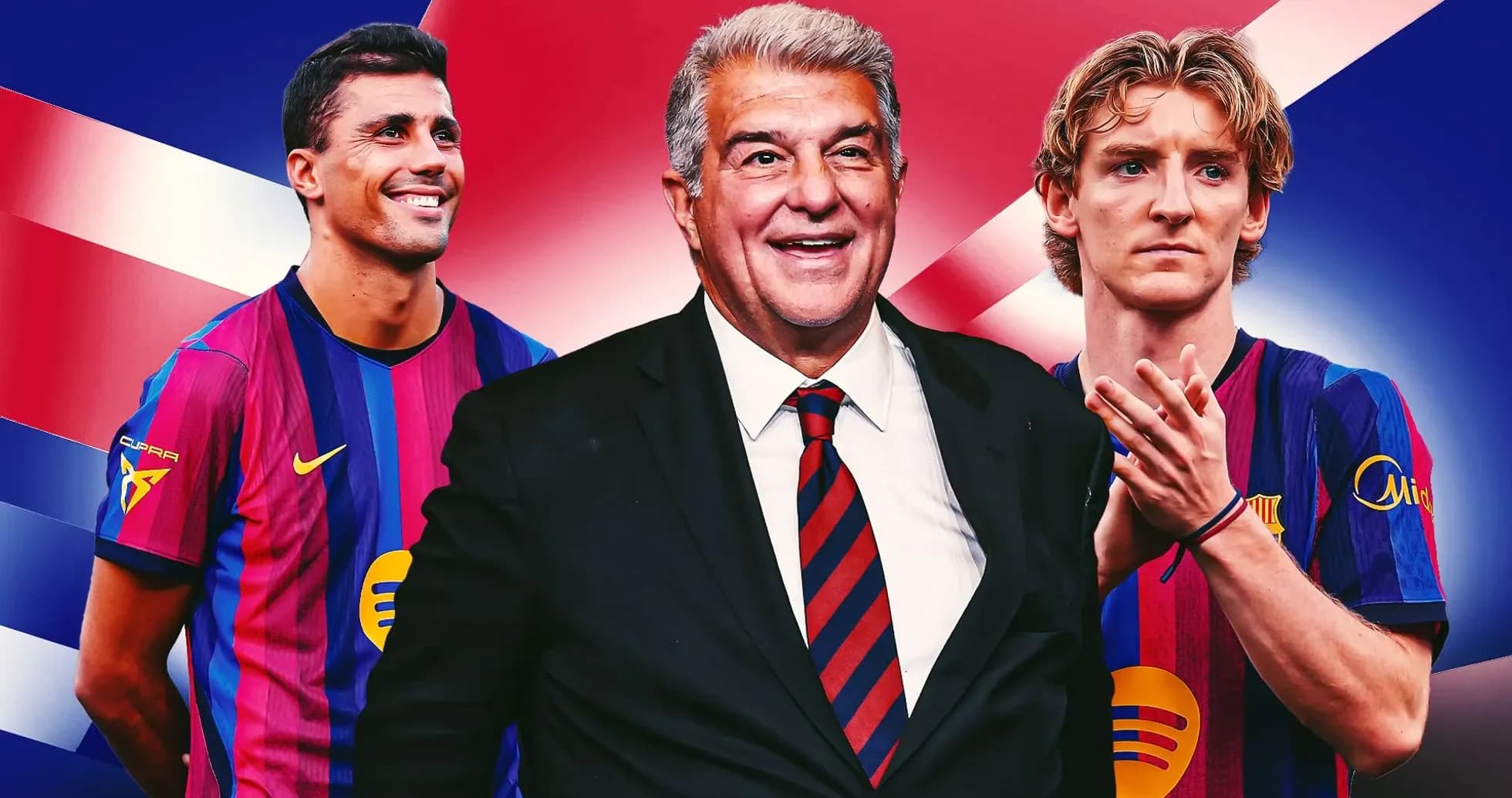
Barcelona's Financial Recovery: Lessons from Bartomeu to Laporta
When Josep Maria Bartomeu finally walked away from the presidency in October 2020, Barcelona were not just bruised. They were broken. A club that had once set the standard for everyone else staggered towards bankruptcy, its greatest era ending in chaos and recrimination.
On paper, Bartomeu’s record did not look disastrous: four La Liga titles and the 2014-15 treble. In reality, he left behind a financial crater. He has never accepted that. Even now, he points the finger at Covid-19, insisting the pandemic alone wrecked Barça’s balance sheet.
“With the pandemic, we don't have the stadium open, there’s no ticketing, no season tickets, the shop is closed, there's no museum, no football schools,” he told EFE earlier this year, arguing that the collapse in income simply forced the club to borrow, just like “the vast majority of clubs in Europe”.
But very few giants were hit as hard as Barcelona. And that was no accident.
Bartomeu’s billion-euro bet
Between his re-election in July 2015, buoyed by that treble, and his fall in October 2020, Barça spent just over €1 billion on 29 signings. Not one proved an unqualified success.
Some were outright disasters. Ousmane Dembele, Philippe Coutinho, Antoine Griezmann – three huge bets that never came close to justifying their fees and wages. Those deals did not just miss; they warped the club’s entire financial structure.
La Liga had urged clubs to keep salaries below 70 per cent of annual revenue. Bartomeu shrugged and pushed on.
“The LFP and UEFA make recommendations but nobody sets a salary cap. We are above what is recommended but the important thing is to be sustainable,” he said. “We can afford it.”
They couldn’t. Not once the pandemic shut the turnstiles.
When Covid hit, Barcelona were left with an ageing, overpaid squad and no market for their big earners. So when Joan Laporta returned as president in March 2021, he inherited a wage bill that made the unthinkable inevitable.
Lionel Messi, the club’s greatest player and its highest earner by a distance, walked away for nothing when his contract expired that summer. Laporta framed it as a necessary, if brutal, reset.
“I did what I had to do,” he told El Pais. “Leo was nearing the end of his career and we needed to build a new team. Would I have liked to build the new team with Leo's help? Yes, and we tried. But it wasn't to be.”
Messi’s departure, though, barely scratched the surface of the problem.
Laporta’s fork in the road
The scale of the crisis forced Laporta into a stark choice.
“Laporta basically had two options,” explains Marc Menchen Alba, CEO of Barcelona-based company 2Playbook. “The first would have involved focusing solely on reducing the wage bill and selling players, which would have obviously reduced the competitiveness of the squad and basically meant travelling through the footballing wilderness for two or three years.
“The second option, though, was to try to raise as much revenue as possible, and as quickly as possible, by effectively selling off future assets to start winning again immediately.”
Laporta chose the second path.
In the summer of 2022, Barcelona pulled the most famous of their “economic levers”: selling 25 per cent of their La Liga broadcasting rights for the next 25 years to investment firm Sixth Street, raising €582m. It was the boldest of several asset sales designed to plug the holes left by years of mismanagement.
In simple terms, Barça mortgaged a slice of their future income to survive – and compete – in the present. Laporta gambled that short-term success would accelerate long-term recovery.
“I remember thinking at the time, this is a bold move,” Menchen says. “But I didn't like it because I thought there were safer ways to go about it.”
Early on, the gamble seemed to work. Lever money funded moves for Robert Lewandowski, Raphinha and Jules Kounde in 2022, with Lewandowski alone costing €45m from Bayern Munich. Barcelona responded on the pitch by winning La Liga for the first time in four years.
But the bill for that decision kept arriving every summer.
“Laporta's high-risk move led to Barca suffering nearly every summer,” Menchen points out. “We were constantly wondering if the club would be able to register new players.” The summer of 2024 pushed that tension to the limit.
Fans turn on the levers
By then, supporters had grown tired of the constant brinkmanship. The Dani Olmo saga, in particular, crystallised their anger. Another high-profile pursuit, another messy climbdown. The mood turned.
Fan group Som un Clam issued a blistering statement.
“The situation created is inadmissible, and the damage caused to the reputation of the entity is irreparable,” it read. “The bad image is aggravated by the continuous lies and the deception of members with false promises that are never fulfilled and that end up harming the Club.
“In just four years, FC Barcelona's assets have been decapitalised with various 'levers', selling strategic assets for the future to cover holes derived from chaotic and improvised management.
“Despite promises of recovery, the club still lacks a solid financial plan or a coherent strategy to ensure stability in the medium and long term.
“We demand an end to the unfulfilled promises, constant improvisation and irresponsible sale of assets that are mortgaging the model of collective ownership that makes us unique.
“A change of course is urgent. It is necessary to recover the transparency, planning and values that have made Barca 'more than a club'. The future of Barca depends on us, its members, and we will not sit idly by while the institution degrades.
“Faced with this situation, Som un Clam insists that the vicious circle in which we have entered due to the management of the board endangers the heritage of our club and its ownership model.
“For this reason, we ask for the resignation of the president and the board of directors, while we call on Barca fans to mobilise, reverse this situation and make their voices heard.”
The backdrop was grim: a toxic atmosphere around Camp Nou, endless construction works, a fanbase split over the president. Yet Laporta did not fall. He rode out the storm.
Eighteen months on, the landscape looks very different.
Back to basics: La Masia and discipline
The transfer market told its own story last season. Barcelona made just one significant signing: goalkeeper Joan Garcia, snapped up from Espanyol for €25m thanks to a release clause.
On the other side of the ledger, they cashed in. A string of departures, many of them La Masia products, brought in almost double Garcia’s fee. For the balance sheet, those sales were gold: academy graduates count as pure profit.
“You can see with the likes of Lamine Yamal and Pau Cubarsi just how important La Masia is to Barcelona in terms of producing players for the senior squad,” Menchen says. “The players that come through the academy know exactly how to play for the first team, so that reduces the need to spend money on transfers.
“But La Masia also means producing players with a relatively high market value and, very significantly, over the past few windows, we've seen Barca do really well in terms of the sale of academy graduates.
“In the past, a lot of these players left for nothing and that was because Barca was trying to find space for these players in the first team but it wasn't possible, so they ended up leaving for free. Now, we are seeing 18 and 19 year olds that most fans have never even heard of leaving for 5 or 10 million euros, which is very helpful when it comes to meeting budgetary requirements.
“And remember, Real Madrid is doing the same thing, selling a lot of players that came out of La Fabbrica, which is why they were able to pay for Yan Diomande and other big names this summer.
“Every year Barca and Madrid invest 20 to 30 million in their academies, and they're really reaping the rewards of doing so this year.”
This summer, Barcelona have finally spent again, leading to a hefty net outlay. Yet key exits eased the pressure. Paris Saint-Germain paid €48.5m for Ferran Torres. Lewandowski left on a free, removing one of the heaviest salaries from the books. Liverpool agreed to cover all of Ronald Araujo’s wages during his loan at Anfield.
The wage bill, once the club’s biggest enemy, suddenly looks manageable.
One more big striker… and one more big sale?
The obvious question now hangs over the forward line. With Lewandowski gone, can Barça find the money to land Julian Alvarez?
Menchen is cautious.
As things stand, he doubts Barcelona can complete such a deal without another significant outgoing. But he also points to the same mechanism that has underpinned their recent recovery: selling academy products at peak value.
“You always have to remember that this is a cash-flow business, so if you sell Marc Casado, for example, for thirty million, you could cover the cost of Julian Alvarez for this season, as the cost of a new signing is amortised, meaning it's spread out over the duration of his contract,” he explains.
That is the new Barça equation: youth-team sale here, marquee signing there. And there is more relief on the way.
“Also, selling players from La Masia, combined with the eventual completion of the new Camp Nou, the increase in museum revenue tied to the recovery of tourism in Barcelona, means Barca will probably be able to operate with complete financial freedom next summer for the first time since before the pandemic.”
So are Barcelona finally out of the woods?
The last shadow of the levers
“They are for now,” Menchen says. One concern lingers: the annual payment to Sixth Street.
“My one minor concern is the 40 million that Barca continues to pay to Sixth Street for the Liga rights. It might not seem like a lot of money for a club that earns a billion in revenue on an annual basis but it's still a game of small margins and it could prove the difference between Barca signing a player that Madrid also want.
“However, I do think we are seeing the beginning of the end of Barca's most serious financial problems. Laporta made a high-risk move, the kind of decision that a president sometimes has to make, and I think he'll feel with the passing of time that he was right to do so - particularly with Barca winning three of the last four La Liga titles.
“I still believe it would have been better to review the spending and avoid some of the deals that he did. I think avoiding some of the signings he made would have saved Barca some money, and meant that they would haven't have to sell future Liga rights.
“We still don't know exactly what will happen further down the line. But we can say that Barcelona are no longer in a position where they have to pull any more levers.”
For a club that spent years living off financial stunts and last-minute fixes, that alone marks a profound shift. Now comes the real test: can Barcelona stay true to this harder, more disciplined version of themselves when the next superstar becomes available and the old temptations return?
Related News
Transfer Rumors: Haaland’s Two Options; Real Madrid Targets $100 Million Premier League Star
Manchester United Targets Premier League Forward to Strengthen Attack
Liverpool Eyes 17-Year-Old Mexican Midfielder Gilberto Mora for Summer Transfer
Summer 2026 Transfer Window: Manchester United and Tottenham Struggle with New Signings
Liverpool Maintain Interest in Real Madrid Midfielder Amid Transfer Challenges
Transfer Insider Warns Tottenham About Costly Sale of Will Lankshear