
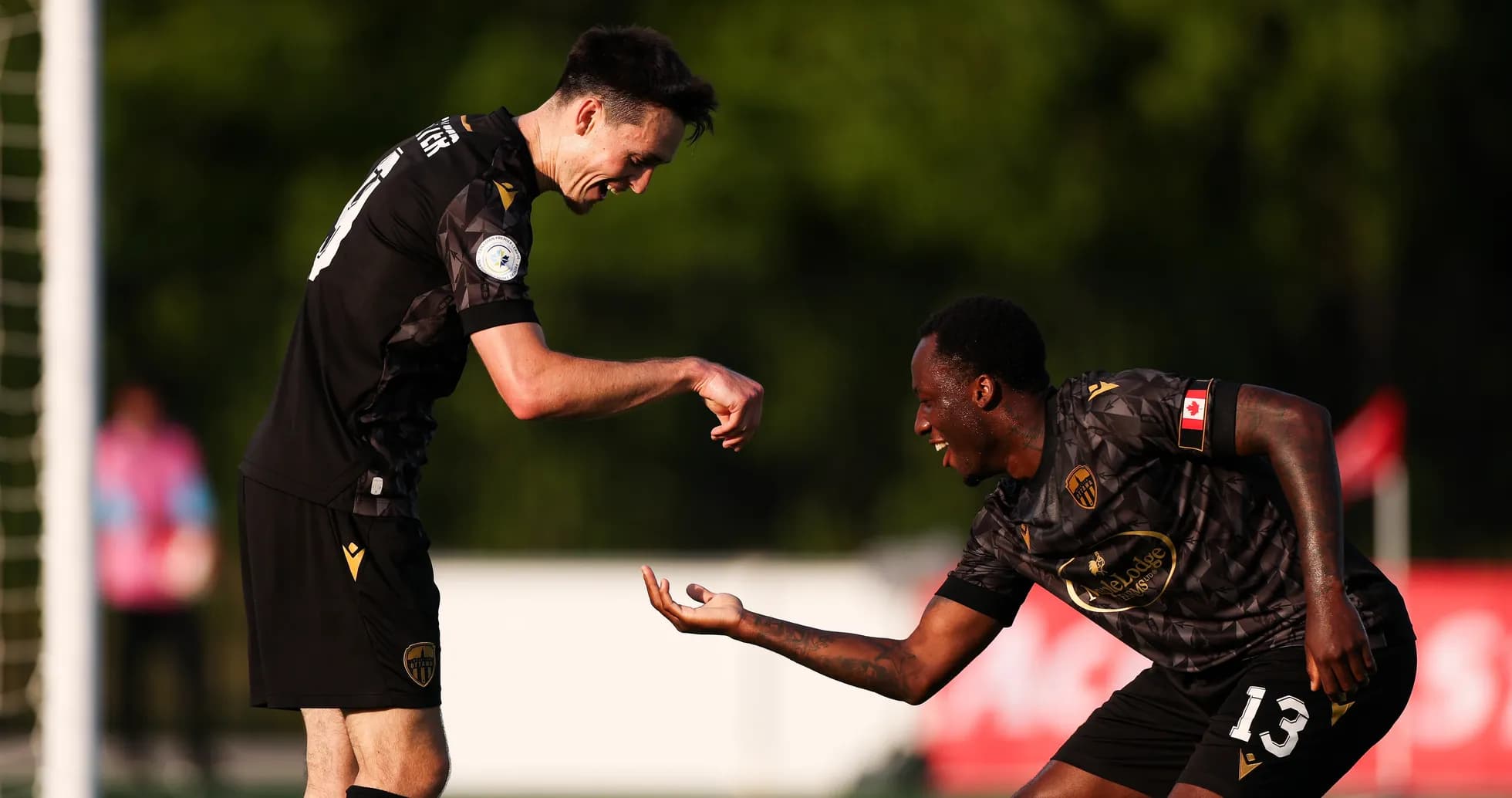
Atlético Ottawa vs York United: A Comeback Victory
Under the late lights at TD Place Stadium, this Canadian Premier League Group Stage fixture closed with a scoreline that told only half the story: Atlético Ottawa 2–1 York United, a comeback that underlined the contrasting identities of a top-three side and a team fighting to escape the lower reaches of the table.
Heading into this game, Atlético Ottawa were firmly in the title conversation. They sat 3rd with 33 points from 20 matches, built on 10 wins, 3 draws and 7 defeats. Their overall goal difference was exactly balanced: 34 scored and 34 conceded, giving a GD of 0. At home they had been formidable: 10 games at TD Place had yielded 7 wins, 2 draws and just 1 loss, with 21 goals scored and 13 conceded. On their travels, York United arrived in Ottawa in a very different state: 7th in the table, with 18 points from 17 matches, and a fragile defensive record. Overall they had 22 goals for and 37 against, a GD of -15, and away from home just 1 win, 4 draws and 4 defeats, scoring 7 and conceding 18.
First Half
The first half followed the script of York’s season: competitive but brittle. They went into the break 1–0 up, but the half-time score of 0–1 felt precarious against an Ottawa side that at home averaged 2.1 goals for and 1.3 against. The second half swung the match back toward the statistical baseline: Ottawa’s attacking volume and York’s defensive vulnerability converged, and by full time the hosts had flipped the game to 2–1.
From a squad perspective, Drew Beckie’s Ottawa selection blended established leaders with emerging end-product. In the starting XI, the spine of C. Kalongo, D. Aguilar and M. Aparicio gave structure, while the attacking line of B. Tabla, G. Antinoro, K. Habibullah and N. Fleuriau Chateau offered a mix of creativity and direct threat.
Tabla remains the headline act. As the league’s top-rated attacker in this dataset, he came into this fixture with 5 goals and 1 assist in 20 appearances, operating as a high-usage wide forward. His 16 shots with 10 on target, plus 19 dribble attempts with 9 successful, frame him as Ottawa’s primary “hunter” in the final third. Crucially, he is also a penalty reference: 1 scored from the spot this season, with no misses. Around him, Ottawa’s attack is unusually well-distributed. N. Fleuriau Chateau, who started here, had already produced 3 goals and 2 assists in just 188 minutes, a remarkable rate that makes him a devastating impact player between the lines. E. García, on the bench, brought 3 goals, high defensive work (16 tackles, 2 blocked shots, 5 interceptions) and the capacity to change the game when introduced.
Behind them, Aparicio is the metronome and enforcer in equal measure. With 562 passes at 82% accuracy and 11 key passes, he dictates tempo; his 22 tackles, 4 blocked shots and 17 interceptions show how much defensive traffic he handles. His 5 yellow cards underline a willingness to walk the disciplinary tightrope to protect Ottawa’s structure. Alongside him, Aguilar is another volume worker: 441 passes at 85% accuracy, 18 tackles, 2 blocked shots and 5 interceptions. Between them, they form the “engine room” that allows the front line to stay aggressive.
Antinoro is the wild card in that midfield band. His profile is that of a high-risk, high-impact carrier: 39 dribble attempts with 18 successes and 10 key passes. He also brings edge—2 yellow cards and 1 red this season, meaning Ottawa’s only dismissal has come through his aggression. That red card is significant in the context of team discipline: Ottawa’s season-long yellow-card distribution shows a late-game surge, with 36.36% of their bookings arriving between 76–90 minutes, and a further 20.45% in added time between 91–105 minutes. This is a side that pushes the limit in closing phases, and that edge once again shaped the intensity of their second-half comeback.
York United
York United’s starting XI, under Mauro Eustaquio, carried a different profile: more reactive, more reliant on a few standout individuals. I. Pavela in goal anchored a back line including L. Singh, F. Sturing and O. Leon, with C. Guzman and S. Yeates tasked with linking play to a front unit led by S. Gonzales, B. Badibanga and A. Almagro.
Yet York’s most dangerous figure this season has been T. Skublak, who did not start here but loomed as a potential game-changing substitute. With 4 goals and 1 assist in 15 appearances, 14 shots (7 on target) and 66 duels contested (35 won), he is both finisher and focal point. His disciplinary line is just as striking: 6 yellow cards already and prominent in both yellow and red-card leaderboards, even without a straight dismissal. Gonzales, who did start, also carries a red card this season and 2 yellows, underscoring the risk baked into York’s attacking choices.
Badibanga, meanwhile, is York’s creative fulcrum. With 3 assists in 13 appearances, 10 key passes and 81% passing accuracy, he is the conduit through which York try to escape their low-scoring away profile of 0.8 goals per game. His 12 fouls drawn show how often he becomes the pressure release when York are pinned back.
Tactically, the match played out as a collision between Ottawa’s attacking volume and York’s defensive frailty. Ottawa’s overall scoring rate of 1.7 goals per game, combined with that 2.1 home average, always suggested that a single York goal would not be enough. York’s overall concession rate of 2.2 goals per match, including 2.0 on their travels, hinted at exactly the kind of second-half unraveling that unfolded.
In the “hunter vs shield” dynamic, Tabla, Fleuriau Chateau and García were always likely to overwhelm a York defence that has already suffered heavy defeats, including a 5–0 loss away in their biggest away defeat. Ottawa, by contrast, have a high ceiling at TD Place, with a biggest home win of 4–0 and the ability to score in bursts.
Discipline and penalties added further texture. Ottawa’s season shows 4 penalties awarded, with 2 scored and 2 missed; that 50.00% conversion rate is a vulnerability that prevents them from being fully ruthless from the spot. York, by contrast, have yet to take a penalty this campaign, with 0 scored and 0 missed, so there is no evidence of either strength or weakness in that phase.
Statistically, then, the 2–1 full-time scoreline felt like a convergence of probability rather than an upset. Ottawa’s superior attacking metrics, strong home record, and deeper bench of productive attackers—Tabla, Fleuriau Chateau, García, Assi—tilted the balance. York’s reliance on a few key figures like Skublak and Badibanga, combined with a porous defence and a history of disciplinary volatility through Gonzales and Skublak, left them exposed once Ottawa raised the tempo after the break.
Following this result, the narrative of both squads crystallises. Ottawa look every inch a contender: balanced overall GD, dominant at home, and rich in attacking options that can flip a game. York remain a side with flashes of quality in the final third but undermined by structural and defensive fragility, especially on their travels. At TD Place, the numbers and the story aligned: the stronger squad, in form and depth, found a way to turn a half-time deficit into a full-time statement.
Related News

Forge vs Pacific FC Predicted Lineups: Team News and Tactics
Supra du Quebec vs Vancouver FC Stats: Head-to-Head Record
Thrilling 3-3 Draw: Forge vs HFX Wanderers Analysis
York United Upsets Cavalry FC in Canadian Premier League Showdown
Forge vs Pacific FC Prediction: Preview and Betting Tips
Forge vs Pacific FC Stats: Head-to-head Record and Historical Overview