
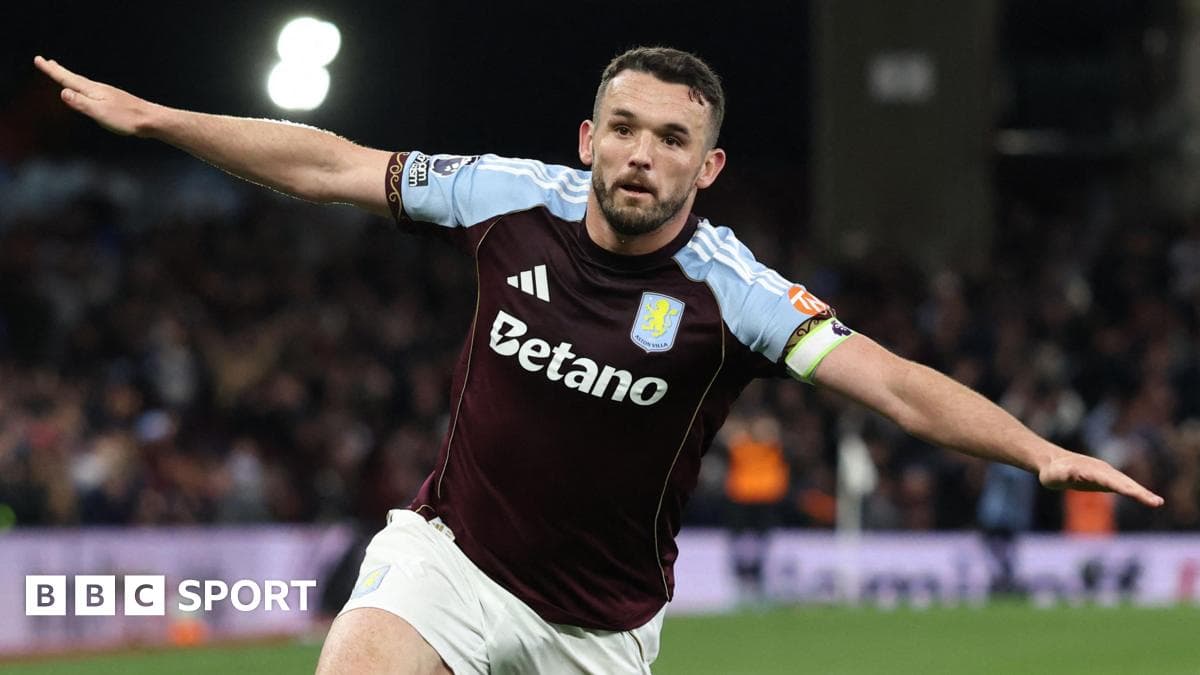
Aston Villa's Return to Champions League and European Final
Aston Villa are back where they believe they belong. Among the aristocracy.
A 4-2 dismantling of last season’s champions Liverpool on Friday did more than light up Villa Park under the floodlights. It sealed a return to the Champions League, confirmed the club’s second qualification for Europe’s top competition in three years and closed a wound that had been festering since the final day of last season.
From Old Trafford pain to European vindication
Twelve months ago, Villa’s season ended in anger and disbelief. They missed out on the top five on goal difference after a 2-0 defeat at Manchester United, a game scarred by a mistake from referee Thomas Bramall that denied Morgan Rogers an opener and saw Emiliano Martinez sent off. It felt like a sliding-doors moment, a campaign defined by what might have been.
This time, there is no asterisk. No caveat. Villa have healed that scar in the most emphatic way possible, leapfrogging Liverpool into fourth and moving out of reach of sixth-placed Bournemouth.
Now comes Wednesday and the Europa League final against Freiburg in Istanbul – the club’s first major European final since lifting the European Cup in 1982. The schedule has been brutal, Thursdays and Sundays stitched together for months, but Unai Emery has refused to lean on that as an excuse.
“I am so demanding. Competing on Thursdays and Sundays are not excuses,” he said. It shows. In three years, Villa have “more or less achieved” their objectives, as Emery put it, and the trajectory is unmistakable.
The league’s great overachievers
Strip away the emotion and the story becomes even more striking. According to Opta’s expected table, Villa should be sitting 12th. Instead, they are eight places and 15 points better off than the model suggests – the Premier League’s biggest overperformers.
Only Sunderland and Everton join them in beating the metrics by more than two places. No one else is even close.
The numbers paint a fascinating picture. Villa’s 54 league goals rank only seventh, one fewer than 10th-placed Chelsea. Their 471 shots put them ninth in the division, below every other side in the top six and also behind Chelsea. Shots on target? Eighth, again trailing the rest of the top six plus Brighton and Newcastle United.
Yet when they pull the trigger, they make it count. Their shot conversion rate stands at 11%, bettered only by Brentford (14%), Manchester City (13%) and Arsenal (13%). Only Tottenham, with +8.33, have outperformed their expected goals (xG) by more than Villa, who sit at +7.58 from an xG of 46.42.
Crucially, that xG total is far lower than their closest rivals. Every other club in the top six has generated an xG above 58. Villa are not drowning teams in chances; they are striking with precision.
They have also become specialists from distance. Fifteen of their goals have come from outside the box – 28% of their league total. Only Bournemouth and Fulham, both at 21%, even break the 20% barrier.
There is a twist. For all their clinical finishing in open play, Villa have been remarkably wasteful with what Opta calls “big chances”. They have created 84 of them and scored just 24 – a conversion rate of 29%, the lowest in the league. Nottingham Forest, by contrast, have put away 46% of their big chances.
So this is not a team living off freakish finishing alone. It is a side walking a thin line between the margins of elite football and the cold logic of data, and still coming out on top.
Emery’s balancing act
The most impressive part of this surge is that Villa have done it while juggling a deep run in Europe. Reaching the Europa League final would be a crowning achievement for any club outside the traditional elite. For Villa, whose last major European moment came in 1982, it feels like a reawakening.
“I want to build our own way and with our possibilities and our capacity to be facing the better teams in the league or in the world in Europe,” Emery said. There is clarity there, a sense of a manager who knows exactly what he is trying to construct.
He talks of balance. The reality is more complicated.
Handbrake on, points on the board
Since Emery’s appointment in 2022, Villa have not spent like a club crashing the Champions League party. Only Wolves, Brentford, Brighton and Everton have a lower net spend than their £73.5m over that period. For a side aiming to sit at the same table as Manchester City, Arsenal and Liverpool, those numbers are modest.
This is not about a lack of ambition. It is about a financial tightrope.
Profit and sustainability rules (PSR) have forced Villa to move carefully. As the club celebrated Champions League qualification in May 2024, Emery and head of football operations Damian Vidagany sat at the end-of-season dinner worrying about something else entirely: how to avoid a PSR breach.
The answer came quickly and painfully. Douglas Luiz was sold to Juventus for £43m in a deal that felt rushed but necessary. Jacob Ramsey had already gone to Newcastle for £40m last summer. Another major sale this year would surprise nobody.
Morgan Rogers, signed from Middlesbrough for £16m two years ago, has grown into one of the club’s most valuable assets. A strong World Cup with England would hand Villa the leverage to ask for close to £100m. That is the reality of their model: Champions League qualification strengthens their bargaining position, but selling one key player a year remains the simplest route to staying on the right side of the rules.
The financial stakes are stark. Villa reported a profit of £17m for 2024-25, the season they played in the Champions League, after a loss of nearly £90m the previous year. They had lost £120m in 2022-23. European football is not just a sporting ambition for this club; it is a financial lifeline.
Building a heavyweight off the pitch
The drive to increase revenue has been relentless and, at times, unpopular. Higher ticket prices have alienated sections of the fanbase, but they have also helped push revenue to £378m.
Villa Park is changing too. Work has begun on rebuilding the North Stand, a project expected to finish by the end of next year and lift capacity to just over 50,000. The new Warehouse entertainment venue at the stadium is already complete. These are not vanity projects; they are revenue engines, designed to help Villa close the gap on the clubs they now share a competition with.
Still, catching up has not been straightforward. A move for Conor Gallagher this season underlined the constraints. Villa spent months working on the deal, only for Tottenham to produce the cash required to sign the Atletico Madrid midfielder. Villa, again, felt the limits of their budget.
Their frustration with the financial landscape is no secret. Premier League and Uefa rules do not align. From next season, England’s top flight will switch to a squad-cost ratio (SCR) model that allows clubs to spend up to 85% of their income on player costs. Uefa’s equivalent limit sits at 70%. One club, two sets of rules, two different ceilings.
Vidagany has been clear on one point: football needs regulation. He simply does not believe that separate domestic and European systems, pulling in slightly different directions, make sense for clubs trying to compete on both fronts.
A new kind of Villa
For now, Villa have been operating with the handbrake on. That makes their rise even more remarkable. They have outperformed the data, navigated strict financial controls, sold key players, and still forced their way into the Champions League and a European final.
This qualification, their second in three years, should ease that grip. It will not turn Villa into free spenders overnight, but it gives them room to breathe, to plan, to keep more of what they build.
The question is no longer whether they belong in this company. It is how far, with the brakes finally loosening, they intend to go.
Related News

Raphinha’s Hat-Trick Powers Barcelona to 7-2 Victory Over Racing Santander

Carabao Cup Fourth Round Draw: Liverpool Set to Clash with Chelsea, Arsenal to Face Fleetwood Town
Key Football Matches to Watch in Azerbaijan This Autumn

Raphinha's Hat-Trick Drives Barcelona to 7-2 Triumph Over Racing Santander

Hansi Flick Leads Barcelona to Record-Breaking Seven Wins in a Row

Gavi Reflects on Injury Return as Barcelona Dominate Racing Santander 7-2