
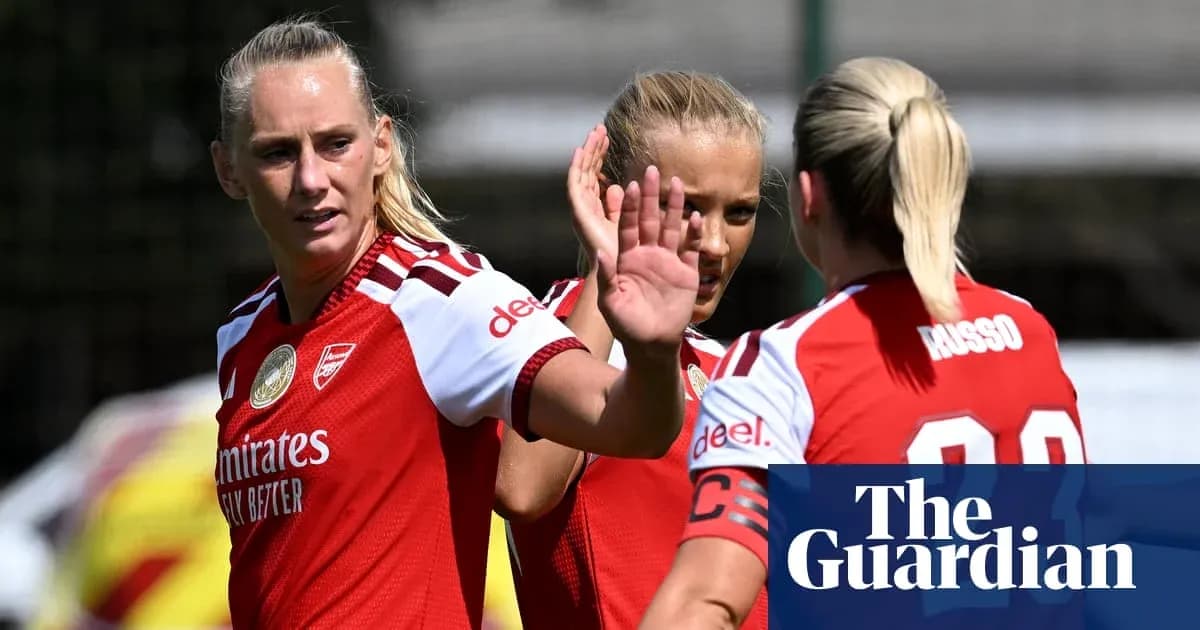
Arsenal's Ambitious Title Push After Summer Overhaul
Arsenal finished last season with a Champions League crown in the cabinet and a hollow feeling in the pit of their stomachs. Europe was conquered; England was not. Second place in the Women’s Super League for a second year running, and no domestic silverware, left a club built on trophies staring hard at its own reflection.
This summer, they smashed the mirror.
Eleven players have gone, including two of the defining figures of the modern Arsenal era. Beth Mead to Manchester City. Katie McCabe to Chelsea. Not eased out, not gently phased away – allowed to leave, direct to rivals. Seven have come in. The squad is younger, sharper, and unmistakably shaped to Renée Slegers’ design.
Prospects: no more excuses
The sense of drift that clung to the end of last season has been replaced by something far more pointed. Slegers has, for the first time, a full pre-season and a squad that looks like hers, not a hand‑me‑down from the Jonas Eidevall years.
Arsenal’s transfer business has been unapologetically ambitious. Spain full-back Ona Batlle brings Champions League pedigree and attacking thrust from deep. Georgia Stanway, a two-time European champion with England, arrives as the headline act in midfield. Switzerland’s Géraldine Reuteler adds guile and energy between the lines. German forward Selina Cerci offers direct running and end product in the final third. All are established internationals. All are in their prime or approaching it. All drag the age profile down without sacrificing quality.
The cost? Letting go of Mead and McCabe, two players who have carried this club through leaner years. Whether their moves to City and Chelsea come back to bite Arsenal will hang over the season like a subplot. For now, the club has bet on evolution over sentiment.
This time, there is nowhere to hide. No major international tournament has sliced up pre-season. No early Champions League qualifiers to derail preparations. After two slow WSL starts in a row – four draws and a defeat in their opening nine games last season – Arsenal enter the new campaign with a clean runway and a clear target.
And they are not pretending otherwise. “We’re in a great place of course, but we would have liked to have won more trophies last season and that is our huge ambition coming into this year,” said technical director Jodie Taylor. “I’ll flat out say it: we want to win the league and want to take that next step.”
The league picture is unforgiving. Manchester City are now juggling Champions League commitments of their own. Other clubs have recruited with purpose. The margins at the top will be brutal. But Arsenal know this is their best chance in years to end a seven-year wait for a league title.
Money, crowds and a club still leaning on its giant
Off the pitch, the numbers tell a story of growth – and dependence.
The latest accounts, for the year ending May 2025, showed revenue rising by £6.5m to £21.5m. The Emirates Stadium has become a genuine home, not just an occasional showpiece. Across eight games there last season, average attendance hit 29,833, generating just under £6m in matchday revenue.
Those figures should climb again when the impact of last season’s WSL crowds is fully logged. Arsenal averaged more than 34,000 at home across all 11 league matches, a staggering contribution that accounted for more than 40% of all WSL attendances. Broadcast revenue has surged past £2m, more than double the £956,000 recorded in 2024, boosted heavily by Champions League success. Commercial income has jumped from £649,000 to £1.77m.
Yet the women’s side still leans heavily on the broader Arsenal machine. Group income – effectively support from the parent club – rose from £9.3m to £11.85m, more than half of overall revenue. Arsenal are leading the domestic pack on and off the field, but they are not self-sustaining yet.
The stadium question underlines that tension. Every WSL home game and any European knockout tie will be staged at the Emirates. Domestic cup fixtures and Champions League league‑phase matches stay at Meadow Park. Arsenal have outgrown the latter in atmosphere and ambition, but the Emirates remains too big, and scheduling around the men’s team too complex, to host every game. The club sits awkwardly between two homes, a victim of its own rapid rise.
Slegers’ team, at last
For Slegers, this is the season when the debate stops being about inheritance and starts being about identity.
The 37-year-old stepped in as interim after Eidevall’s departure and transformed a drifting campaign into a European triumph. She stabilised an established squad; now she has ripped it up and rebuilt. This is her second full season in charge, but in practical terms it feels like the first with a blank canvas.
The overhaul gives her the freedom – and the pressure – to shape Arsenal in her image. A side that already moved the ball with fluency now has more bite, more speed, and more options in transition. The expectation is clear: this is no longer a team that can hide behind transition talk.
Stanway’s steel at the core
Of all the new arrivals, Stanway is the one that changes the temperature of the room.
Arsenal have signed big names before, but they have often leaned towards technicians and creators. Stanway brings that, but she also brings something Arsenal have long been accused of lacking: edge. The 27-year-old is a combative, physical midfielder who described herself as “ruthless and robust” in a recent interview. She plays on the front foot, presses aggressively, and relishes duels.
Her existing relationships with England teammates already at the club should ease the bedding-in period, but this is about more than chemistry. Stanway strengthens the spine. In tight games, in title run-ins, that kind of presence can decide whether a team draws or wins.
The numbers behind last season’s frustration underline the point. Arsenal topped Opta’s expected points metric in the WSL in 2025-26 and lost only once all season. They still finished behind Manchester City. The reason was simple and infuriating: six draws to City’s one.
Expected goals data suggested Arsenal comfortably deserved to win three of those drawn matches. One, against Chelsea, they probably should have lost. With Arsenal and City trading a win apiece in their head-to-heads, those stalemates became the fault line that cracked their title bid. Stanway has been brought in to tilt those fine margins.
Young talent on the comeback trail
Not all of Arsenal’s “new” weapons are summer signings.
Last year was supposed to be the breakout season for 20-year-old forward Michelle Agyemang, fresh from a stunning Euro 2025, and 19-year-old defender Katie Reid, who had burst into the domestic campaign with authority. Both saw those hopes shredded by anterior cruciate ligament injuries.
Now, after close to a year out, they are edging back towards the pitch. Their minutes will be managed carefully. Form will not return overnight. But their re-emergence gives Slegers two high-upside options at either end of the pitch, and two players with a point to prove to themselves as much as to anyone else.
Inside the dressing room, the mood is one of construction, not completion. “It’s like you’re cooking the most beautiful recipe and then you add the final small ingredients that make the marginal difference, that elevate, and you create something that’s beautiful and that you can relish and enjoy,” said defender Lotte Wubben-Moy. “That’s what we’re in the process of.”
Arsenal have made their choice. They have broken up a beloved core, banked on a younger, harder-edged squad and nailed their colours to the mast: this is a title push, not a gentle rebuild.
The question now is simple. After all this change, and all this intent, can they finally turn promise into a league trophy – or will another season slip by as a story of what might have been?
Related News

Transfer Rumors: Haaland’s Two Options; Real Madrid Targets $100 Million Premier League Star

Manchester United Targets Premier League Forward to Strengthen Attack

Liverpool Eyes 17-Year-Old Mexican Midfielder Gilberto Mora for Summer Transfer
Summer 2026 Transfer Window: Manchester United and Tottenham Struggle with New Signings
Liverpool Maintain Interest in Real Madrid Midfielder Amid Transfer Challenges
Transfer Insider Warns Tottenham About Costly Sale of Will Lankshear