
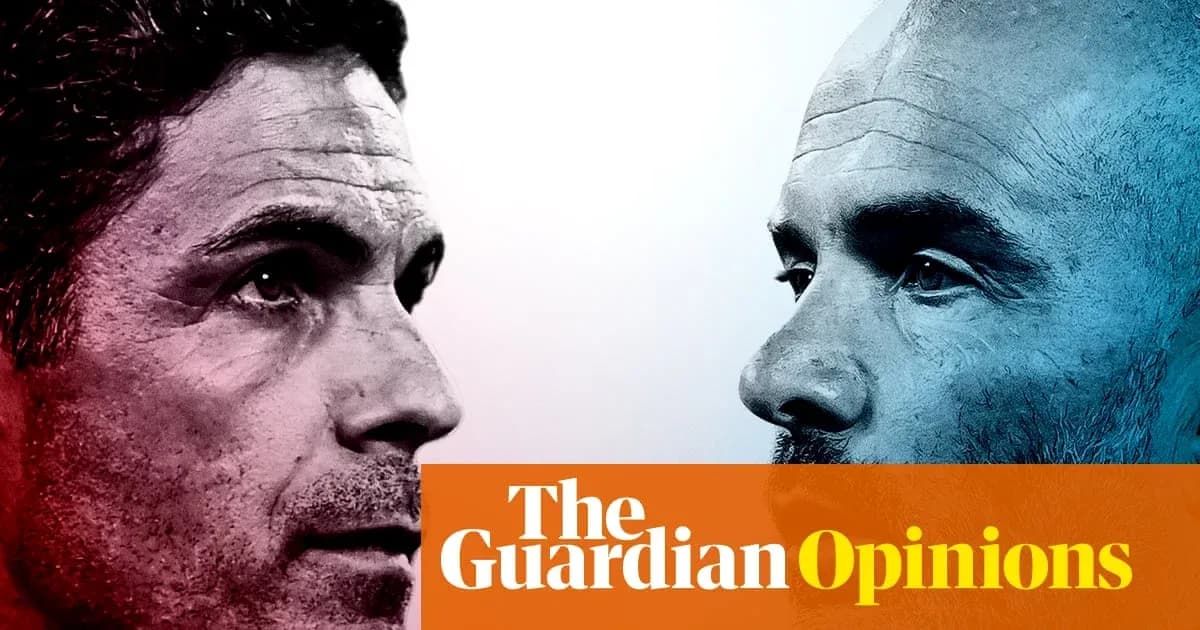
Arsenal's Title Defence: Challenges and Changes Ahead
Arsenal’s title defence begins with an awkward question, one every champion eventually has to answer: what happens when the thing you’ve chased for years is finally yours?
They waited 22 years for a 14th league crown. They finished runners-up three seasons in a row, pushed themselves to the brink, and finally tore the Premier League trophy from Manchester City’s grip in May. The cost was obvious by the time the World Cup rolled around: Declan Rice running on fumes, Bukayo Saka flickering in and out of games, William Saliba nursing a back problem. The bodies were drained; the emotions even more so.
Now comes the reset. And it looks anything but straightforward.
A league without its giants on the touchline
The new campaign opens in strange light. World Cup summers always warp the early weeks – tired legs, short pre-seasons, uneven rhythms – but this one feels especially unstable.
Nine of the 20 Premier League clubs have changed manager. The defining figures of the modern era are gone. For the first time in 40 years, none of Sir Alex Ferguson, Arsène Wenger, José Mourinho, Jürgen Klopp or Pep Guardiola will be in charge of a Premier League side. The league has lost its old totems. The dugouts feel younger, less proven, more volatile.
Even Arsenal, with Mikel Arteta now the longest-serving manager in the division, are not insulated from doubt. The question is not whether they can still play with the same precision and ferocity. It’s whether they can summon the same hunger. A slow start would surprise nobody.
City after Guardiola: same shape, different tension
At the other end of the spectrum sit Manchester City, confronting a different kind of uncertainty. Two seasons that fell short by their own warped standards have been followed by a seismic change: a new manager after a decade of Guardiola.
Enzo Maresca arrives as a curious echo. He looks like Guardiola, talks a similar tactical language and has already worked under him. His City will almost certainly resemble a variation of the same positional play that defined the past 10 years.
But the questions around him are real. He took Leicester up and lifted both the Europa Conference League and Club World Cup with Chelsea, yet never fully convinced large sections of those fanbases. The football often felt sterile, the resources not always maximised. Yes, Chelsea’s squad was unbalanced and fell apart after he left, but it was hard to argue Maresca had squeezed every drop from what he had.
Now he steps into a dressing room conditioned to winning and to a very specific voice. The Community Shield offers the first glimpse of how that relationship might look under pressure, even if the stakes remain low.
A trophy that reveals more in hindsight
The Community Shield has always sat in an odd space. It is the first chance to gauge Arsenal’s edge and City’s adaptation, yet it is also a ceremonial curtain-raiser, its lessons notoriously unreliable.
Not since 2018 has the winner of this game gone on to win the Premier League. In that sense, it functions almost as an anti-indicator. Where it does occasionally matter is not in confirming the strength of a future champion, but in exposing the cracks that later split a season open.
The famous 1974 brawl between Kevin Keegan and Billy Bremner told a deeper story: Keegan’s discomfort at Bill Shankly’s retirement and a broader malaise at Leeds under Brian Clough after Don Revie’s departure. The full significance only became clear with time.
The same was true in 2015. Mourinho arrived for the Community Shield unshaven, in tracksuit bottoms and a loose T-shirt, and suffered his first defeat to Wenger. It looked like a one-off. It turned out to be the opening act of a chaotic Chelsea implosion that cost him his job by December.
Last year’s game, a 2-2 draw before Crystal Palace beat Liverpool on penalties, was loaded with hints about Arne Slot’s side. Mohamed Salah looked detached from the rest of the front line. The defence lurched and creaked. Liverpool twice let a lead slip. The signs were there; the difficulty, as always, lay in telling the difference between pre-season rust and structural problems that would still be there in October.
Arsenal’s new faces and old questions
This Sunday brings fewer obvious storylines, but some are worth watching closely.
Bruno Guimarães came off the bench in Wednesday’s friendly against Como and could feature again, likely alongside Myles Lewis-Skelly. The 19-year-old has been one of Arsenal’s pre-season standouts, his prominence boosted by extended breaks for Rice, Martín Zubimendi and Martin Ødegaard after the World Cup. Yet his own future is clouded by links away from the club.
In that light, his celebration against Como – heart sign, badge tap – carried a little extra charge. It may prove nothing. It may prove a lot.
On the left of Arsenal’s attack, the picture is clearer: they need help. Leandro Trossard has gone. Morgan Rogers chose Chelsea. Vinícius Júnior stayed at Real Madrid. So Arsenal moved for Christos Tzolis, the 24-year-old Greece international from Club Brugge.
The Shield gives an early look at how he meshes with Arteta’s patterns and whether he can shoulder the role alone. If he cannot, the final weeks of the window will demand another solution on that flank.
City’s midfield in flux
City’s most delicate issue sits in the middle of the pitch. Rodri’s proposed move to Barcelona has yet to materialise, leaving the club caught in a holding pattern over a replacement.
Enzo Fernández is the preferred candidate. His passing range and intelligence are clear, but his lack of sheer physical presence raises an obvious question: can he anchor a Premier League midfield in the way Rodri has, even with the added muscle of Elliot Anderson now in the squad?
Around that pivot, the pieces are shifting. Tijjani Reijnders, who started friendlies against Inter and Atlético, is heading to Al-Qadsiah. Bernardo Silva has joined Real Madrid. The core that once defined City’s control is being ripped up and reassembled.
Where does Phil Foden fit in all this? Since being named player of the year in 2024, his form has dipped, but Maresca started him against Inter and Atlético. As others return from World Cup duty and sharpen up, these early weeks offer Foden a window to reclaim authority in a reshaped midfield. If he hesitates, the system will move on without him.
The departure of John Stones, on paper, affects the team less. He started only 11 games across the past two seasons. Yet his absence, coupled with Silva’s and Guardiola’s, strips the dressing room of key voices. This will be a different City, no matter how similar the passing patterns look.
A glimpse, not a verdict
So Sunday at Wembley becomes a kind of soft launch. A first look at what City might be without Guardiola’s shadow looming over every decision. A first sense of whether Arsenal, having finally climbed the mountain, have the appetite to go again.
The temptation will be to read too much into it. A sharp Tzolis debut, a laboured City build-up, a loose Foden touch – each will be seized on, replayed, turned into a storyline.
But it is still only the Community Shield. The real answers, for both clubs, will come when the points start to count and the fatigue, the pressure and the noise return in full. How long will it take before we know whether last season was Arsenal’s peak, or just the beginning?
Related News
Transfer Rumors: Haaland’s Two Options; Real Madrid Targets $100 Million Premier League Star
Manchester United Targets Premier League Forward to Strengthen Attack
Liverpool Eyes 17-Year-Old Mexican Midfielder Gilberto Mora for Summer Transfer
Summer 2026 Transfer Window: Manchester United and Tottenham Struggle with New Signings
Liverpool Maintain Interest in Real Madrid Midfielder Amid Transfer Challenges
Transfer Insider Warns Tottenham About Costly Sale of Will Lankshear