
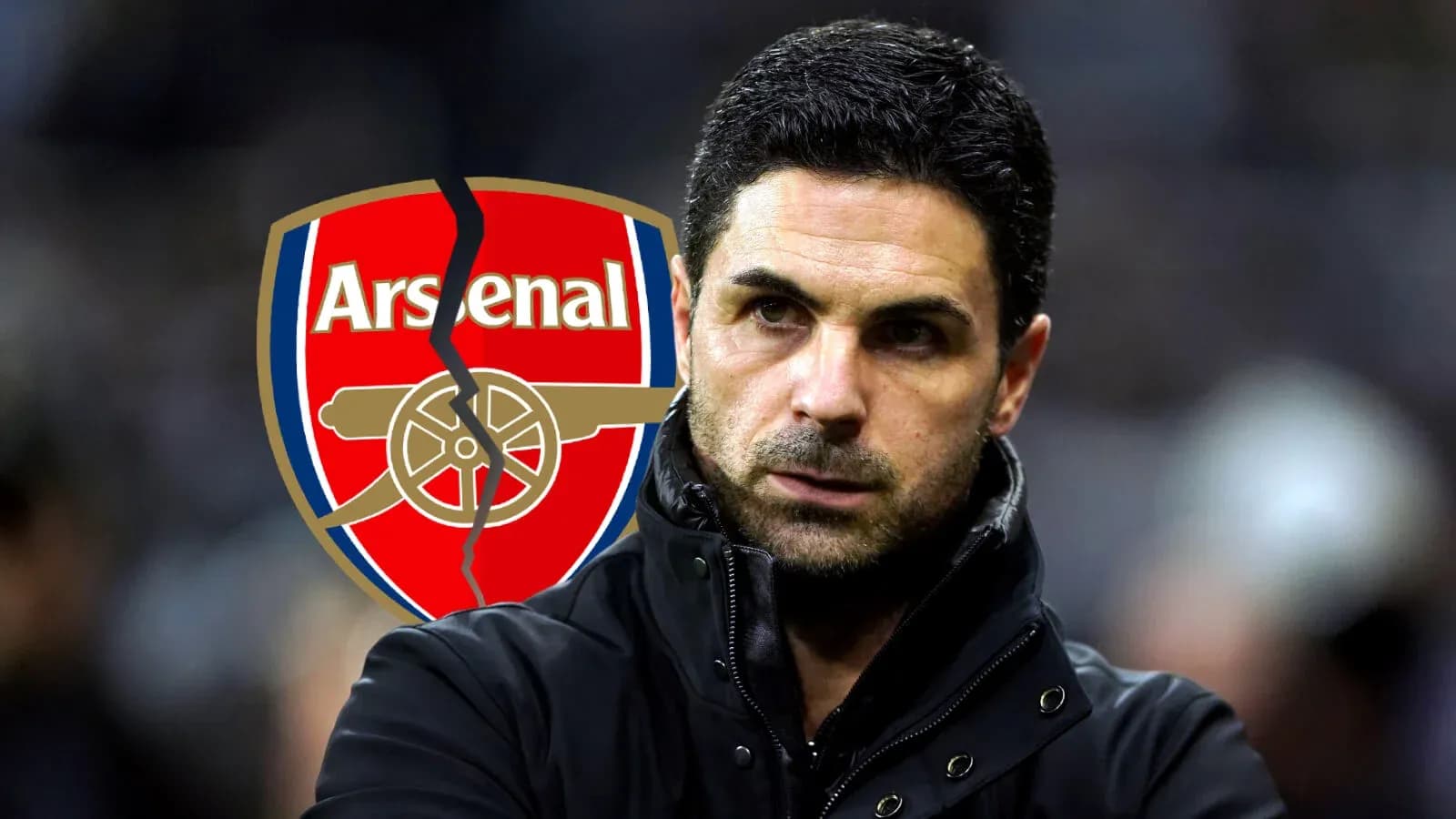
Arsenal's Martinelli Situation: Unpacking the Dressing Room Drama
Mikel Arteta has apparently “lost” part of his dressing room. Arsenal players are said to be “unhappy” and “siding” with Gabriel Martinelli over his treatment this summer.
Except that, once you actually trace the story back, there’s almost nothing there.
The Martinelli narrative that isn’t
The chain starts with ESPN Brasil. One paragraph. One line, really, buried low down in a wider piece on Martinelli’s situation:
“At the start of this season, the Brazilian wasn’t even included in Arsenal’s matchday squad and didn’t even receive a medal for winning the English Super Cup after beating Manchester City 3-0, something that even caused some discomfort among other players in the team.”
That’s it. No mutiny. No revolt. No quotes. Just “some discomfort” that a long-serving player, pushed to the fringes ahead of a likely sale, didn’t even get a medal.
From there, the English headlines did the heavy lifting.
- “Gabriel Martinelli has Arsenal stars on his side after being pushed out by Mikel Arteta.”
- “Arsenal stars ‘side with Gabriel Martinelli’ as Mikel Arteta tries to force him out.”
- “Arsenal squad ‘unhappy’ with Mikel Arteta as Gabriel Martinelli nears £40m Al-Hilal transfer.”
All three pieces lean on the same ESPN Brasil paragraph, then inflate “some discomfort” into a full-blown dressing-room split. The quote marks in those headlines suggest direct phrasing. They aren’t. They’re a translation stretched to breaking point.
Strip it back and what remains is hardly scandalous: a player who has been at Arsenal for seven years, now being eased out before a sale, has the sympathy of some team-mates. If anything, it would be more alarming if Gabriel Magalhaes and Declan Rice were delighted to see him frozen out.
The price of a stalled project
The other half of the Martinelli debate sits in the numbers. John Cross in the Daily Mirror asked the question many Arsenal fans have muttered this summer:
“Why on earth have they not been able to get better value on Martinelli? If Savinho goes to Tottenham in an £85m deal, why is Martinelli cheaper? The £50m price just does not seem enough.”
On the face of it, £50m for a 23-year-old winger who once looked like a cornerstone of Arsenal’s future feels light in a market where Tottenham are prepared to pay £85m for Savinho. But context cuts into the headline.
Martinelli scored one league goal and produced four assists last season. For champions, those are thin returns. His contract situation is also less than ideal: effectively a year left, with an option for another 12 months. That combination drags the price down.
In that light, £50m is not outrageous. Clubs like Chelsea and Manchester City have built entire departments around maximising value from exactly this sort of sale, flipping talented but non-essential players for inflated fees. Arsenal are only just trying to catch up in that part of the game.
As for the comparison with Kenan Yildiz, that one hardly flatters Martinelli either. Yildiz is four years younger, hit ten Serie A goals last season and added seven assists. If Martinelli’s numbers “measure up” to that, the evidence is hard to find.
Even the Mirror piece quietly acknowledges the core issue:
“Martinelli has pace, is dangerous but has he really kicked on in the past two seasons?”
The answer is no. And that’s how a player once talked about as a future superstar ends up at a £50m ceiling rather than smashing through it.
One “condition” that isn’t a condition
While the Martinelli saga rumbles on, Arsenal’s name is inevitably dragged into the other end of the market.
“Mikel Arteta sets one condition for £130m Julian Alvarez transfer as Arsenal plan emerges,” claimed the Mirror’s website.
One condition for a £130m move? That sounds dramatic. Non-negotiables, tactical demands, maybe even guarantees on position or status?
Not quite.
“Mikel Arteta is ready to make a £130m push to sign Julian Alvarez – but will demand assurances the Argentina star wants to move to Arsenal.”
So the grand “condition” is that the player actually wants to join. That’s not a condition. That’s the starting point of any transfer. No club throws £130m at a forward who would rather be somewhere else.
The dressing is elaborate. The substance is obvious.
Newcastle, time-wasting and a different angle
Away from north London, the same pattern of certainty appears in the analysis of Newcastle’s late collapse against Liverpool.
Ian Ladyman in the Daily Mail took aim at new head coach Matthias Jaissle after his side conceded a stoppage-time penalty. He argued that Jaissle was wrong to blame referee Stuart Attwell for the decision, calling the contact from Lewis Hall on Victor Munoz “clear” and pointing instead at the German’s own late substitution.
Jaissle replaced Yoane Wissa with Fabian Schar in the final moments, a switch Ladyman described as “clearly designed to waste some precious moments.” Under new guidelines, players now have ten seconds to leave the pitch once their number goes up or risk a booking, making old-school time-wasting changes even more futile. Attwell simply added 30 seconds on; Munoz won the penalty 15 seconds into that added half-minute.
There is, though, an obvious counterpoint. Newcastle were leading. A forward went off, a defender came on. That pattern has existed in football for decades, long before modern timekeeping rules. Sometimes a substitution is exactly what it looks like: a manager trying to shore up a lead, not just burn the clock.
United, Baleba and the “plan”
Over at Old Trafford, the word “plan” is doing some heavy lifting of its own.
“Manchester United’s transfer plan has paid off with £45million boost,” the Manchester Evening News announced, pointing to Carlos Baleba as the example.
The logic runs like this: last summer, Baleba might have cost around £115m. This summer, United are poised to land him for about £70m. That £45m gap is presented as the product of smart long-term thinking.
Except Baleba has just come off a season of underperformance. United have started the campaign without him, lost to promoted Hull on the opening day, and were forced to lean on Youri Tielemans, whose lack of mobility was brutally exposed. Delaying a move, paying slightly less for a player who has not kicked on, and weakening your midfield in the meantime is an odd way to define a “plan”.
It also sits awkwardly alongside the rest of United’s scattergun recent recruitment. Any supposed long-term strategy around Baleba appeared to include serious flirtations with Elliot Anderson, Mateus Fernandes and even Sandro Tonali at different stages. That’s not so much a straight line as a scribble.
The real story
Strip away the noise and the common thread across all of this is simple: the market is wild, the narratives are wilder, and a single translated sentence can morph into a full-blown crisis if you let it.
Martinelli is on his way out of Arsenal because he stalled at the wrong moment and the club believe they can upgrade. Some team-mates are uncomfortable with how that looks. That’s human, not explosive.
Whether Arsenal use that £50m smartly, whether they really can move at the level of clubs who have mastered the art of selling, and whether the dressing room stays aligned with Arteta as he makes those ruthless calls – that’s where the real story lies this season.
Related News

Transfer Rumors: Haaland’s Two Options; Real Madrid Targets $100 Million Premier League Star

Manchester United Targets Premier League Forward to Strengthen Attack

Liverpool Eyes 17-Year-Old Mexican Midfielder Gilberto Mora for Summer Transfer

Summer 2026 Transfer Window: Manchester United and Tottenham Struggle with New Signings
Liverpool Maintain Interest in Real Madrid Midfielder Amid Transfer Challenges
Transfer Insider Warns Tottenham About Costly Sale of Will Lankshear